In May 2024, I embarked on my first international adventure that blended solo travel with a group experience: a journey to the breathtaking landscapes of Scotland. I spent five days independently exploring the historic charm of Edinburgh and the scenic beauty of Inverness before joining a remarkable group of women on a hiking tour with Wild Women Expeditions (WWE).
Wild Women Expeditions, a Canadian company founded by a woman, partners with local outfitters to lead their international trips. For our Scottish adventure, WWE collaborated with Wilderness Scotland, a company whose professionalism and passion deeply impressed me. So much so, that by the end of the trip I found myself researching how I might return – this time to hike, the iconic West Highland Way with Wilderness Scotland.
While perusing their website, I discovered that Wilderness Scotland has two sister companies: Wilderness Ireland and Wilderness England. Down the rabbit hole I went, and with it, an entirely new world of hiking opportunities opened up.
Ireland had never been high on my travel wish list, but several of Wilderness Ireland‘s itineraries immediately caught my eye. The more I read, the more intrigued I became. What drew me in? For one, Ireland is just a relatively quick, nonstop flight away. English is widely spoken, and the idea of navigating the roads solo – driving on the opposite side – wasn’t something I was keen to tackle. The Wilderness company’s tours have a maximum of eight guests, the perfect size group. Most compelling of all, though, was Ireland’s incredibly diverse landscape: wild coastlines, lush, rolling hills, and craggy peaks just waiting to be explored.
In October 2024, I took the leap and booked two consecutive hiking tours with Wilderness Ireland for May 2025: The Northern Coast and the Deluxe Hiking – Ireland Coast to Coast tours. While I initially intended to only book the coast to coast experience, I couldn’t resist the chance to explore Northern Ireland as well.
On May 1 I arrived in Dublin and then took a bus to Belfast where I spent 1 1/2 days exploring (see Two Days Exploring Belfast) before starting my first Wilderness Ireland tour – The Northern Coast.
Day 1 Belfast to Newcastle
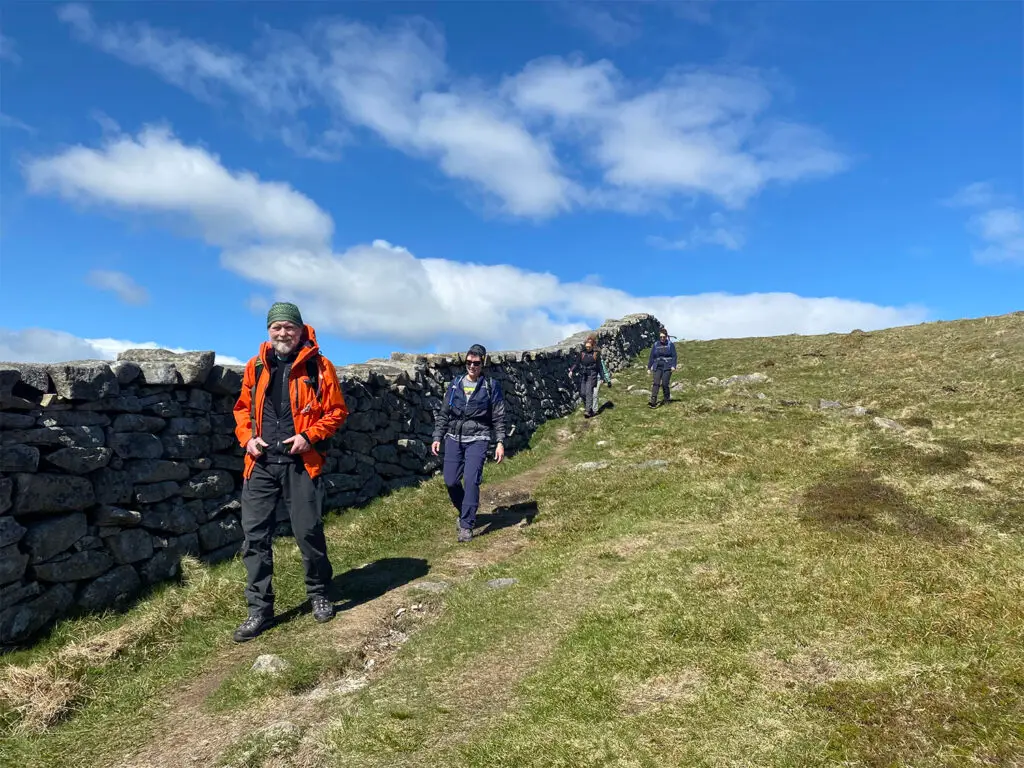
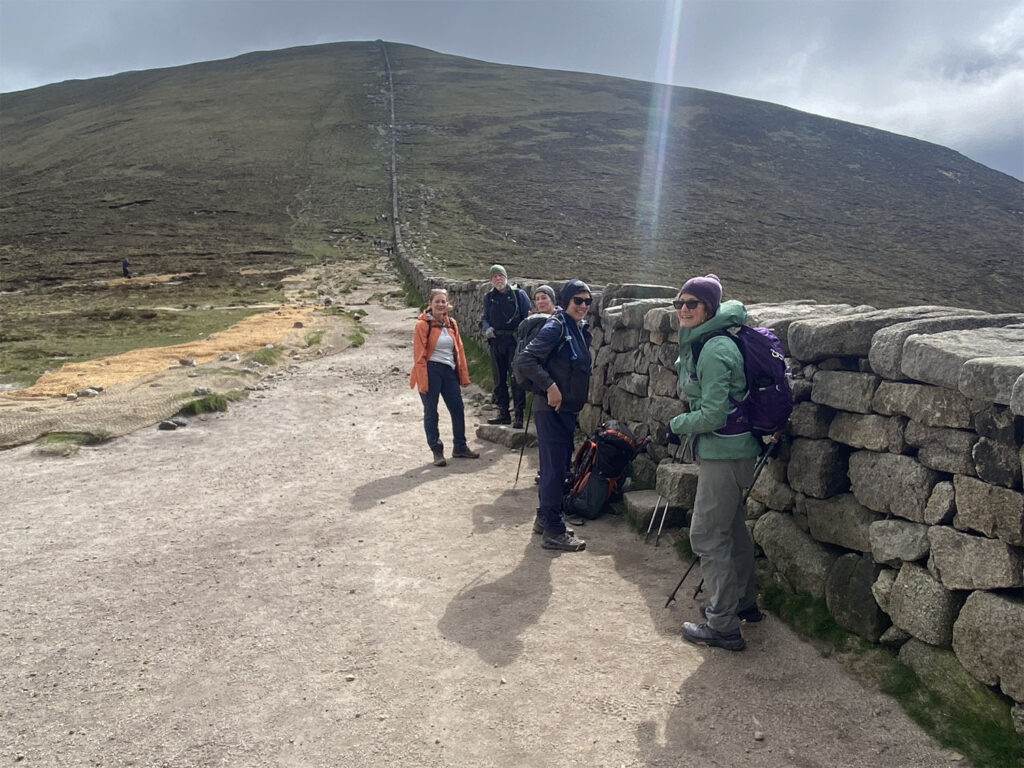
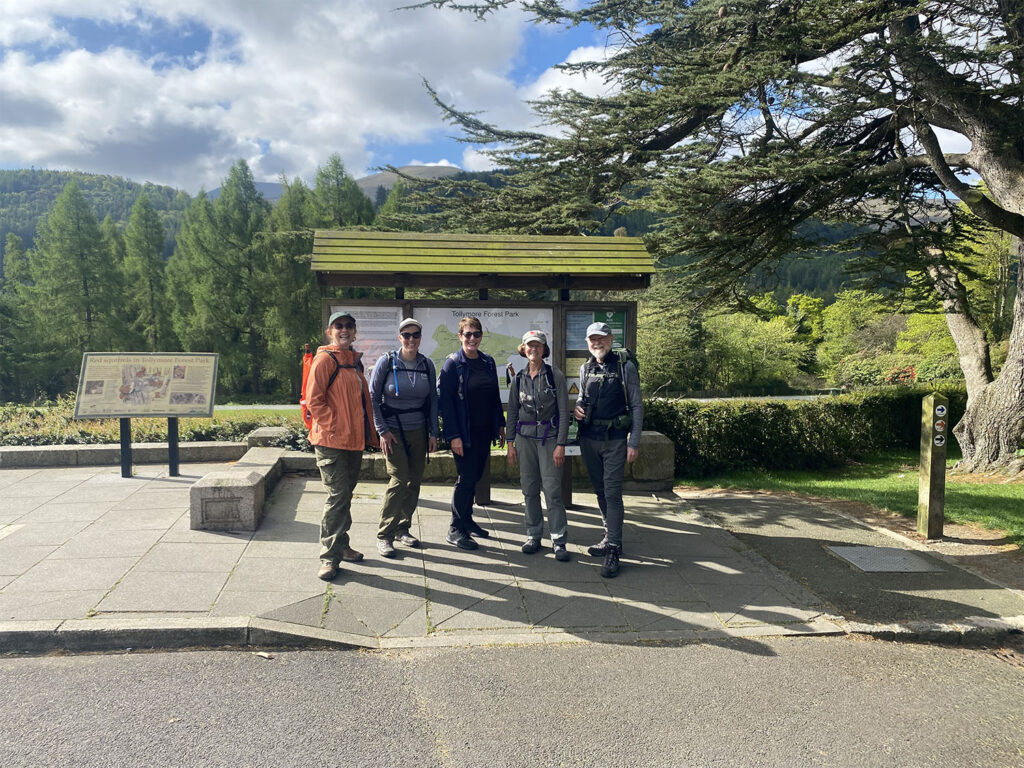
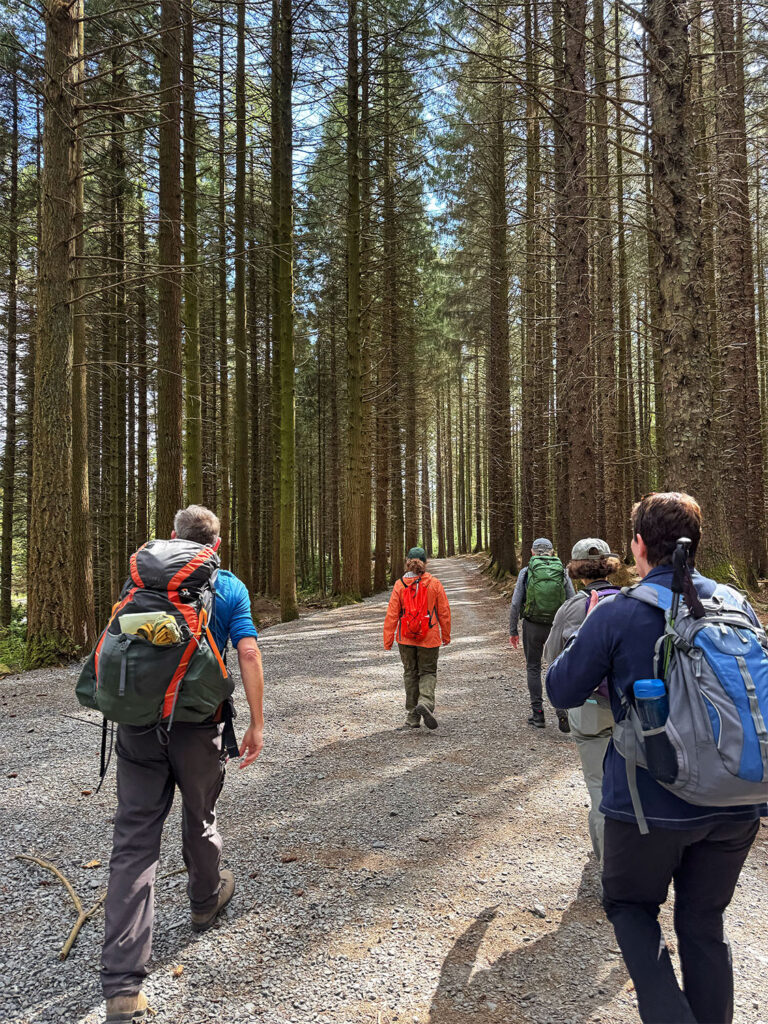
On Saturday at noon, I met my Wilderness Ireland group at the Belfast Grand Central Station. Upon arriving at the station, it didn’t take long to find the rest of the group – our hiking boots, backpacks, and rolling suitcases, made us easy to spot. There were six of us in total, including myself, our guide Paul from Dublin, Dennis from Minnesota, Nancy from Virginia, Nicola from Australia, and Joan also from Rhode Island. After introductions, we boarded a nine passenger van and began our journey south on the A 24 towards Ballynahinch, continuing on to the quaint village of Clough in County Down, where we stopped for lunch at French’s Café and Bistro. Despite having only just met, our group already felt like old friends – there was an easy camaraderie and warmth which boded well for the days ahead.
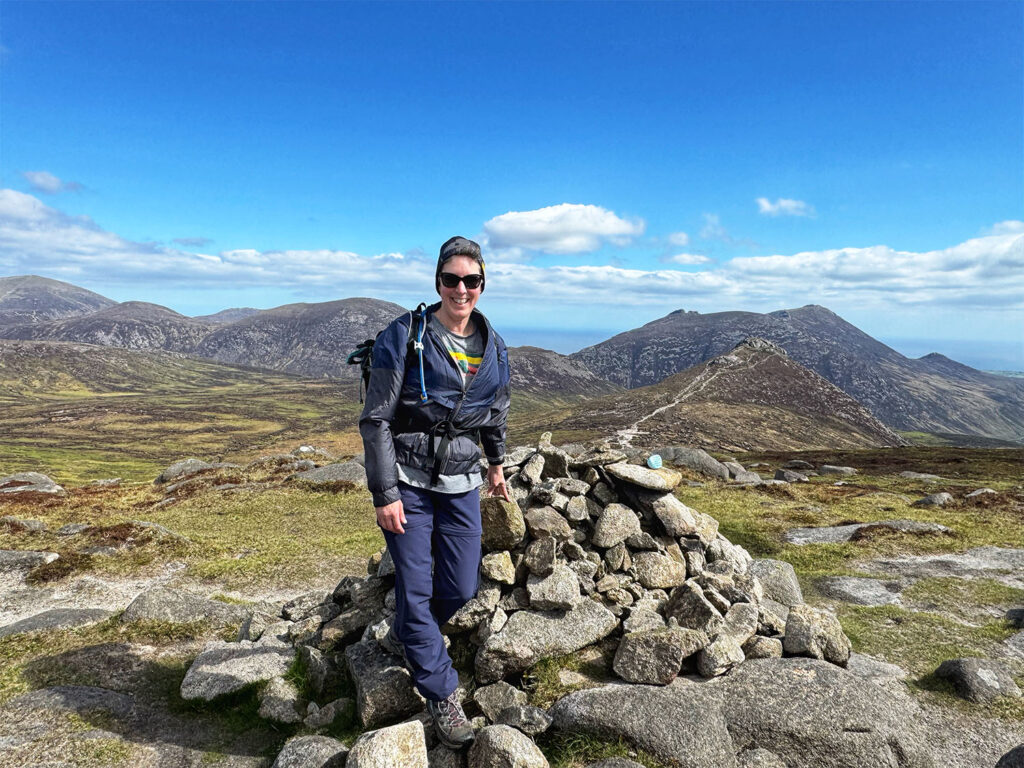
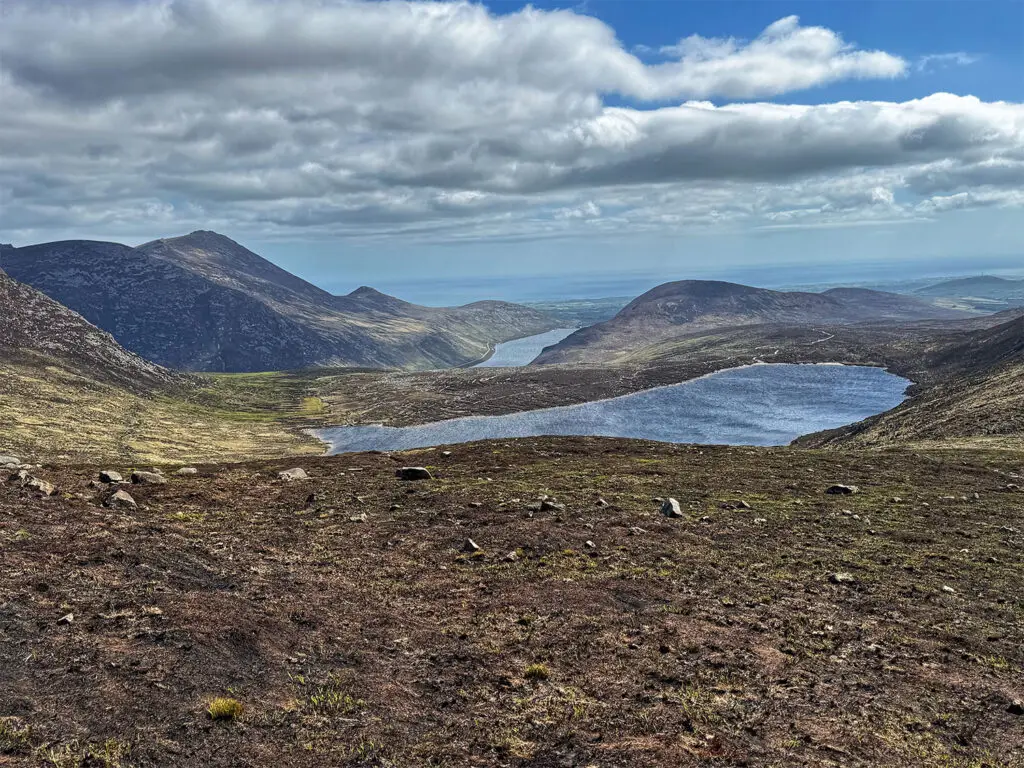
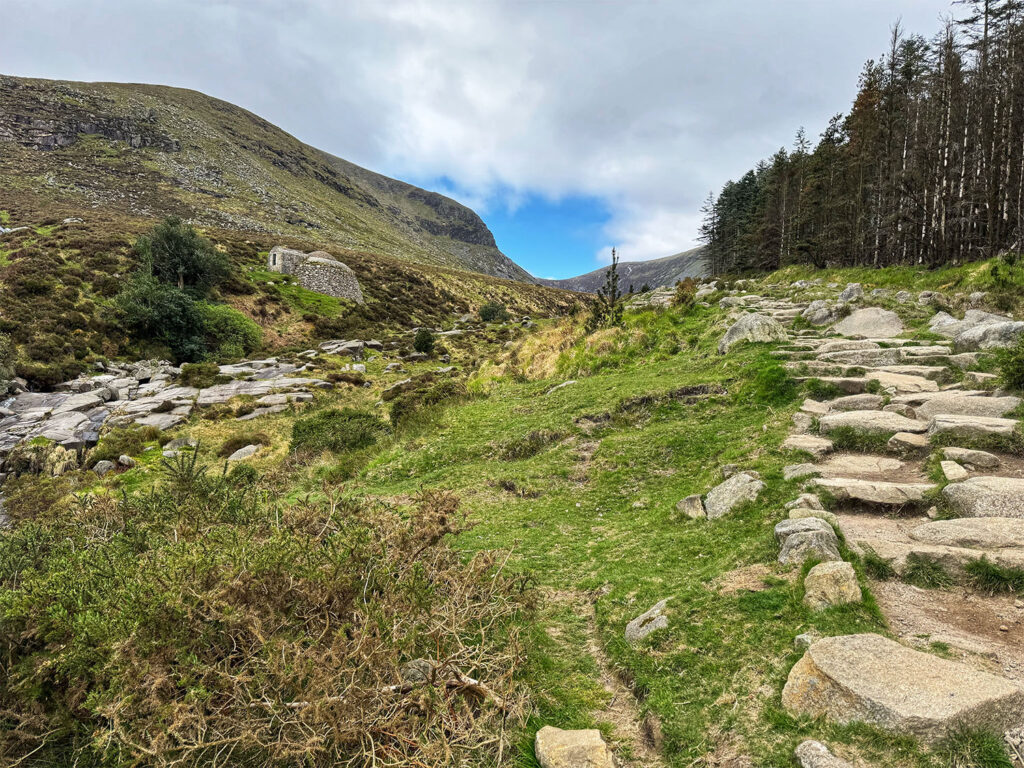
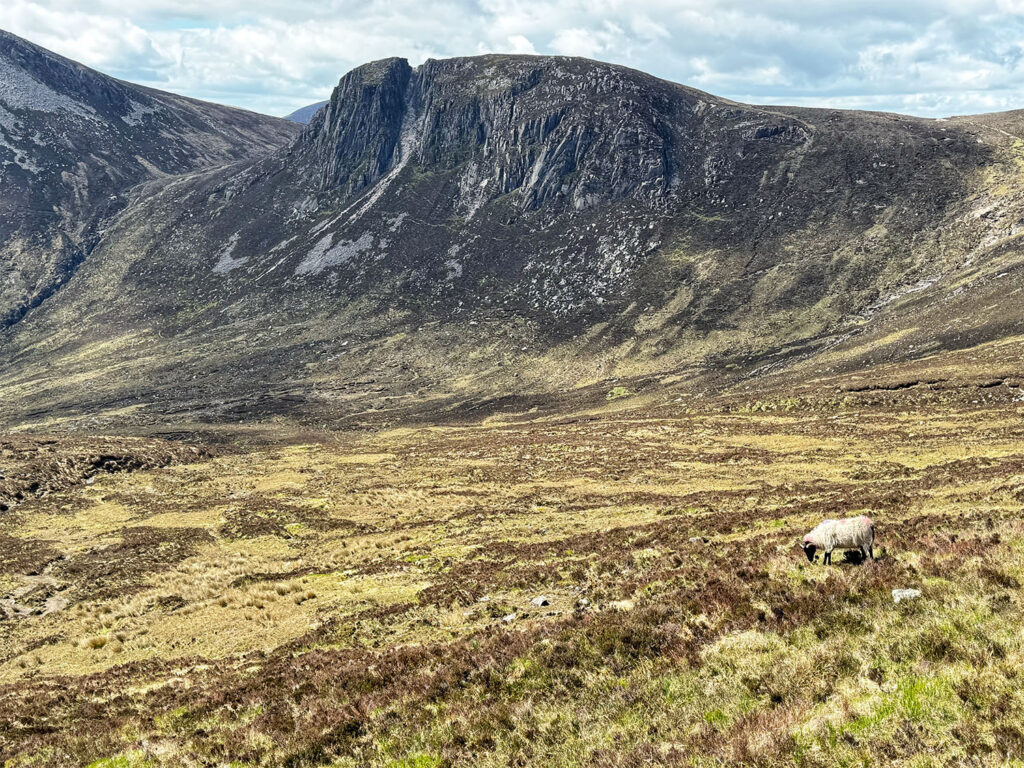
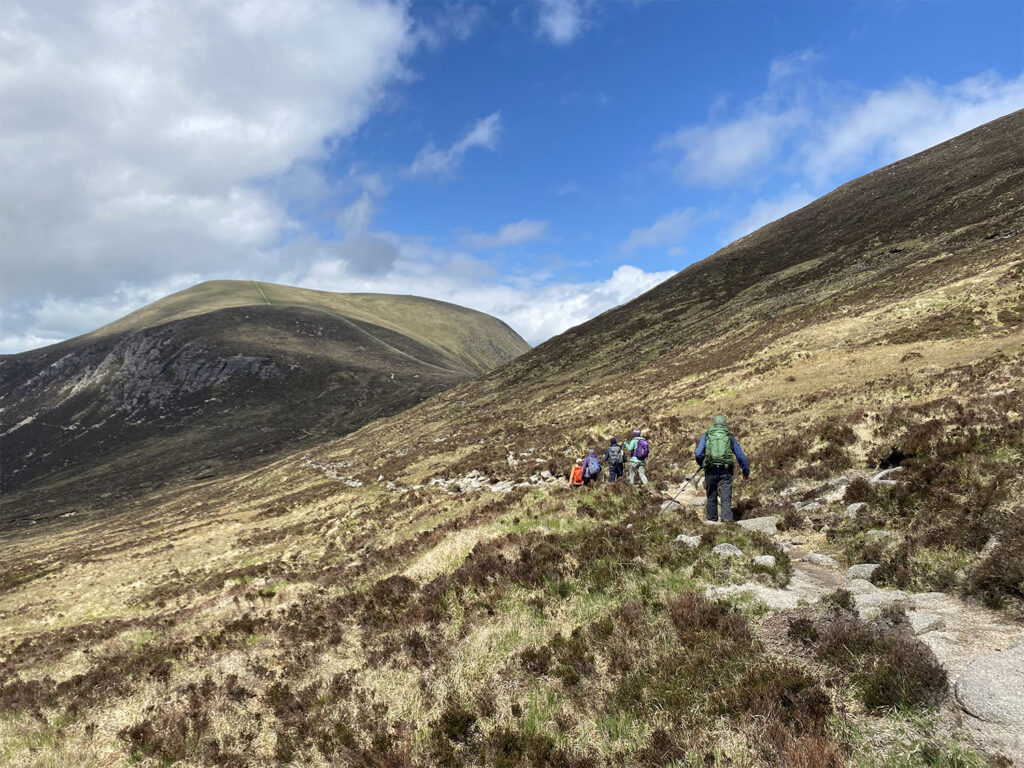
Following lunch, we continued southwest to our first hiking destination. It was a short warm-up hike, presumably to allow Paul to assess our overall fitness levels. We climbed Slieve Loughshannagh in the Mourne Mountains. Though the wind was fierce, the views were spectacular: sweeping vistas of the surrounding range, the Silent Valley and Ben Crum Reservoirs, and the shimmering Irish sea in the distance.
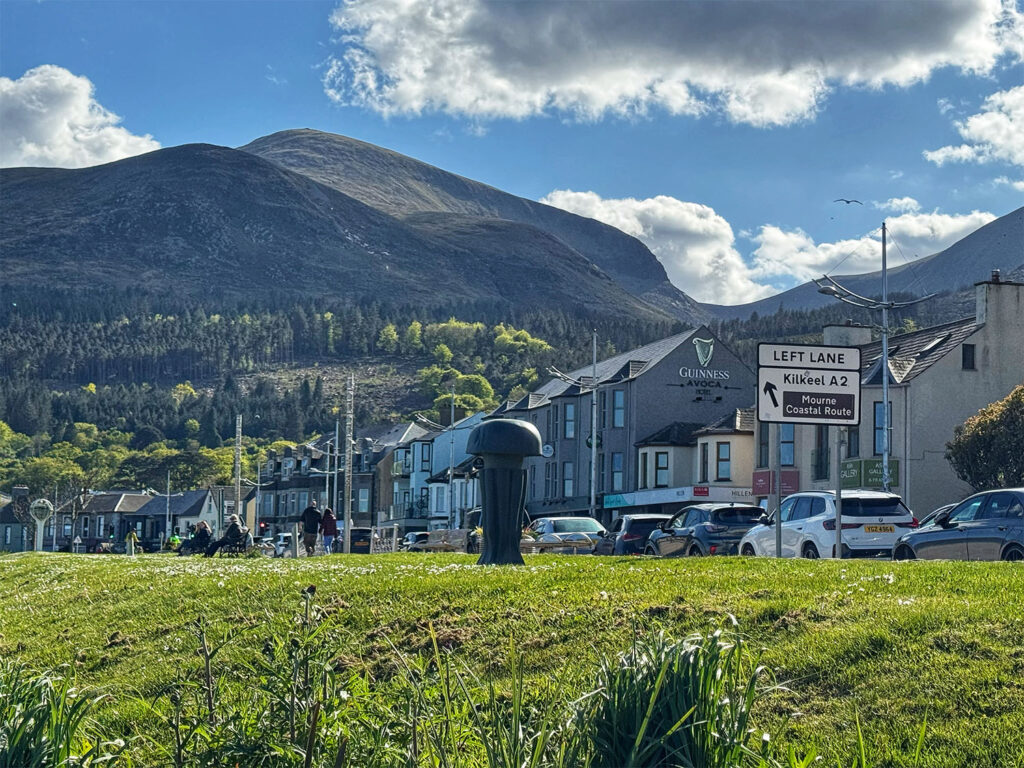
After our hike, we drove northeast to the coastal town of Newcastle, nestled on Dundrum Bay. There, we checked into the Avoca Hotel. We had about an hour to settle in before meeting again for dinner in the hotel‘s pub. It was a bank holiday weekend, and the weather was glorious, so the town was bustling with visitors for dinner, I enjoyed fish and chips and a sticky toffee pudding, all delicious, though the service left something to be desired.
Day 2 Slieve Donard
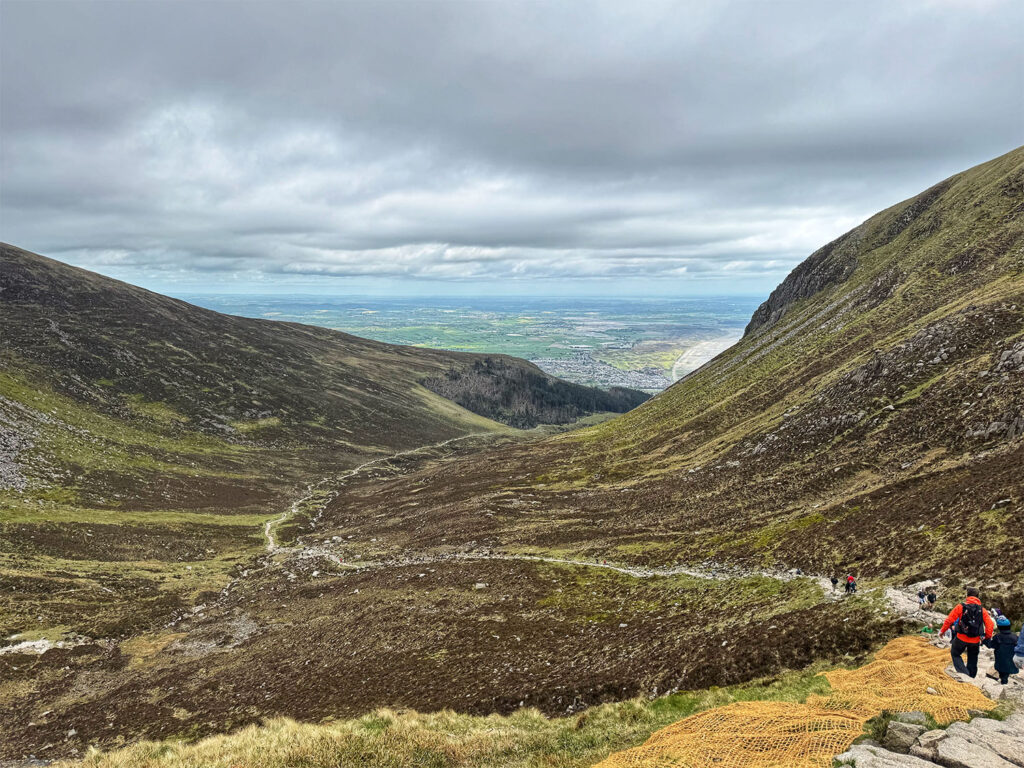
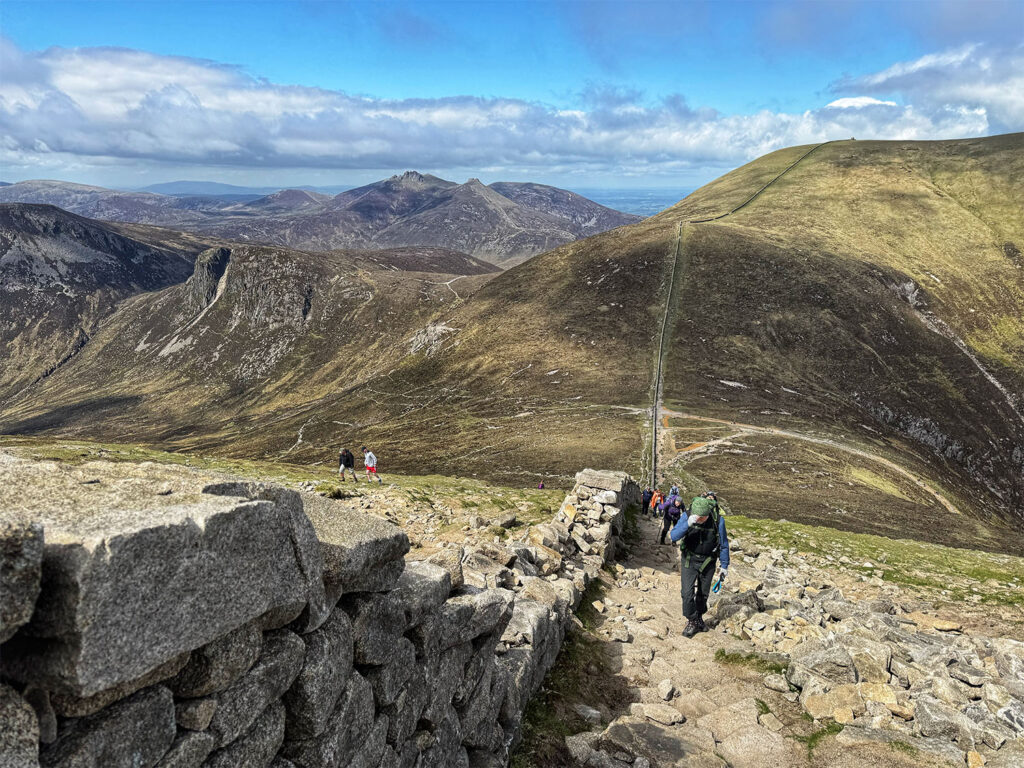
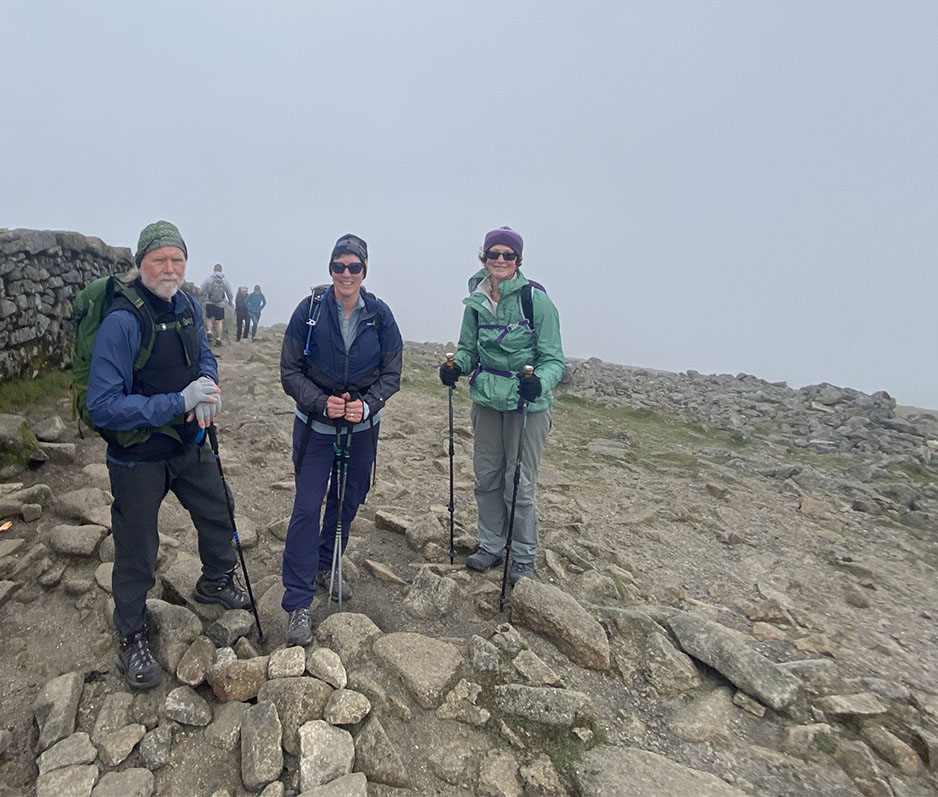
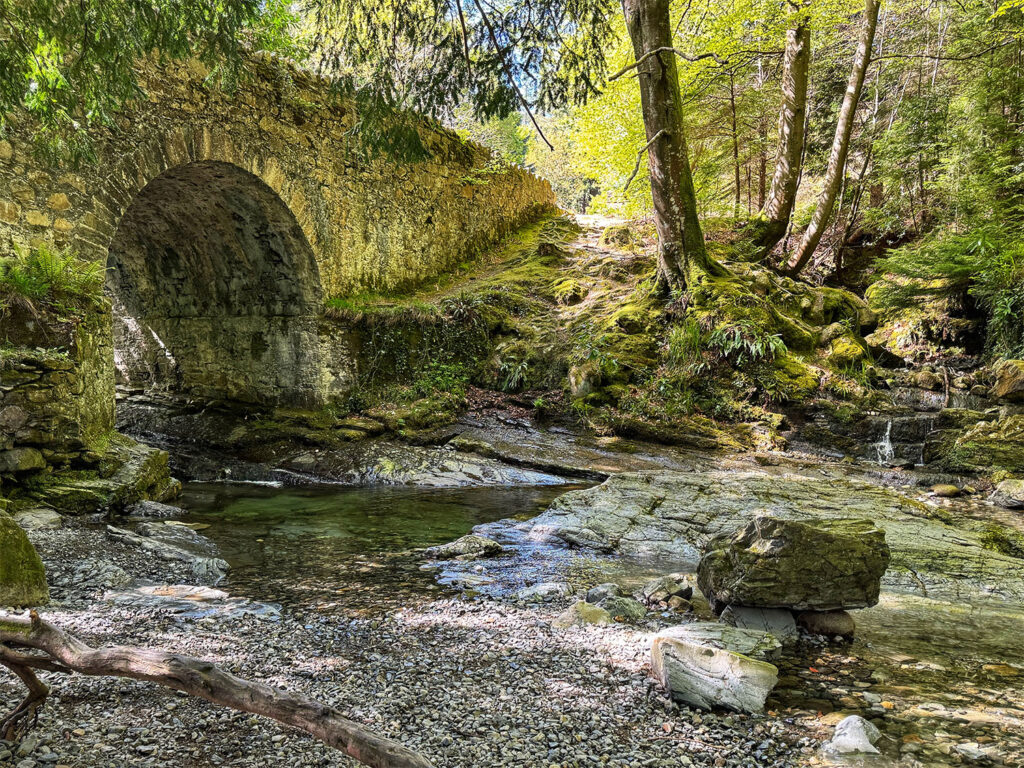
One of the best parts of today’s hike was the convenience – no need to drive anywhere. We simply stepped out of the hotel and walked down the street to the Donard Park parking lot. Our goal for the day was to summit Slieve Donard, the highest peak in Northern Ireland, standing at 2789 feet. While not towering by alpine standards, its prominence is accentuated by the fact that the trail begins at sea level. The trail began gently, following a stream through a wooded area with three charming bridge crossings. Once we emerged from the forest, the terrain leveled out briefly before ascending steeply to the saddle between Slieve Commedagh and Slieve Donard. The weather was ideal, though the temperature steadily dropped as we gained elevation. At the saddle, we paused to add layers – jackets, hats, and gloves, and got out our hiking poles – before tackling the final, steep, push to the summit along a stone wall.
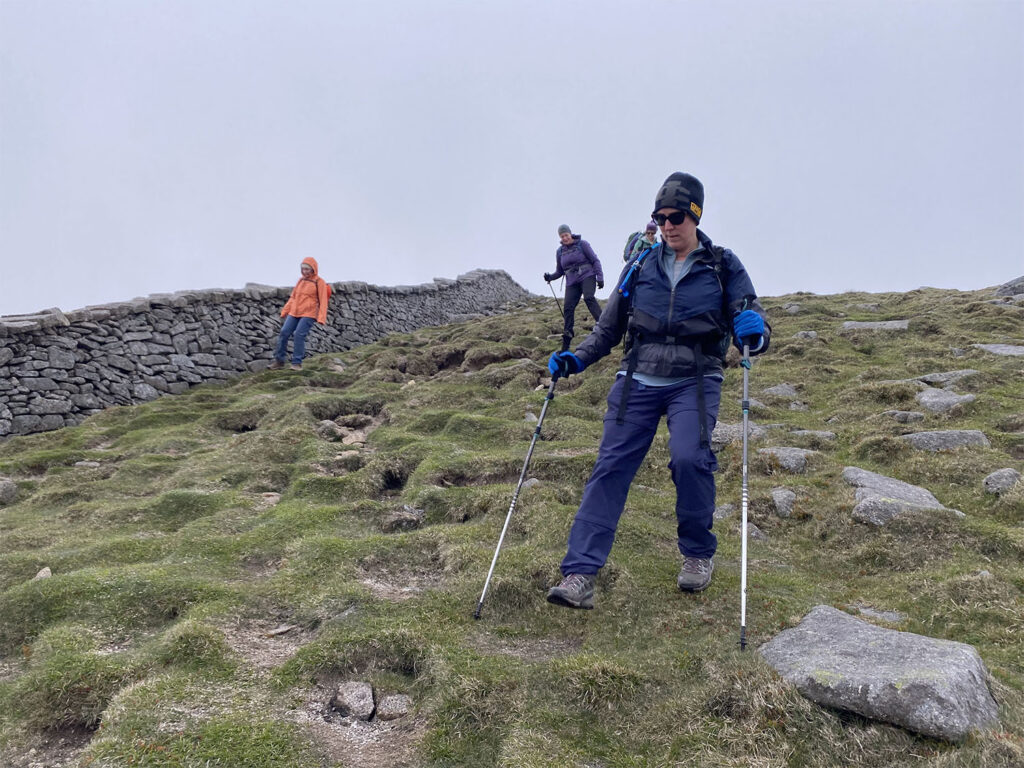
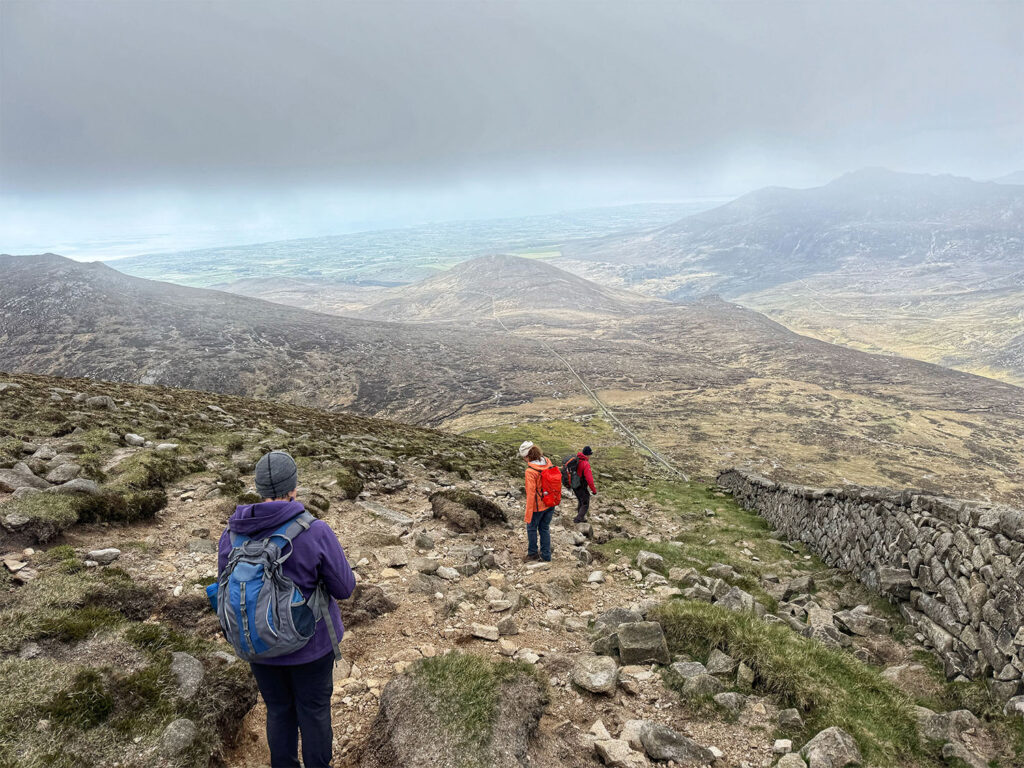
About 3/4 of the way up, a bank of clouds rolled in, shrouding the summit and obscuring any views. The wind picked up and the cold intensified, so we didn’t linger at the top. Our guide, chose an alternate, descent route, guiding us down a trail that followed a wall running perpendicular to the one we had climbed along. The descent was hard on the knees, and I was grateful for my poles.
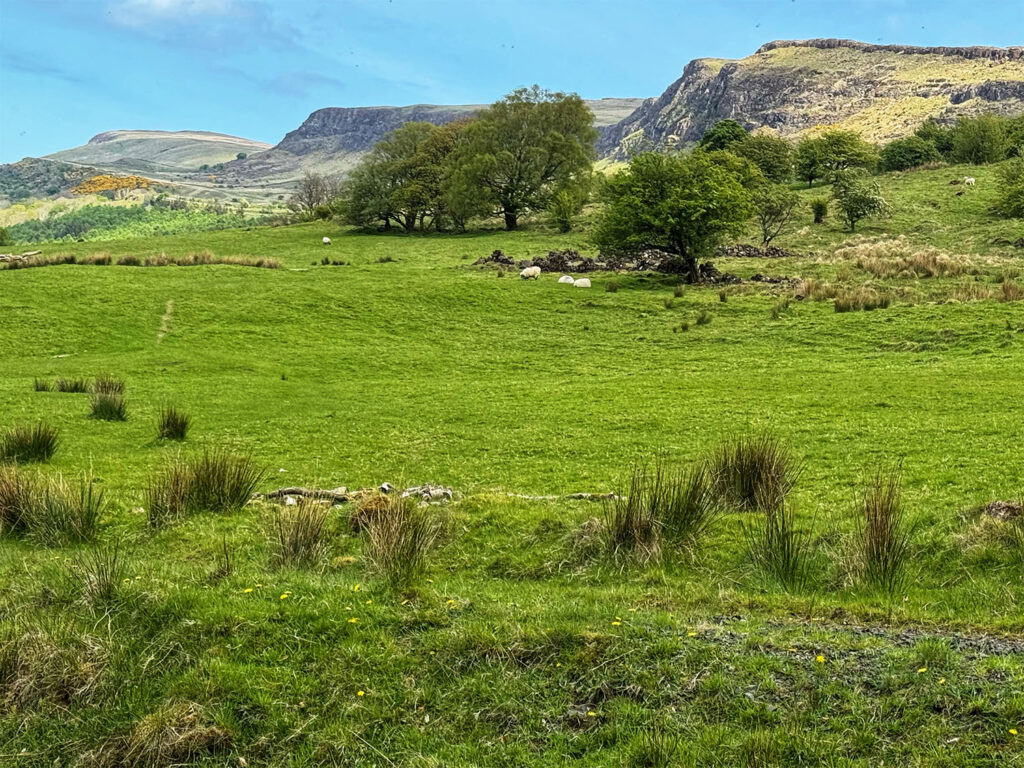
Once we dropped below the cloud cover, we stopped for lunch. After lunch, we turned right once more and followed a relatively level trail back towards the saddle between Slieve Commedagh and Slieve Donard. Along the way, we encountered our first of many close encounters with the local sheep. This portion of the trail offered sweeping, picturesque views of the Mourne Mountains – a truly breathtaking sight.
Back at the saddle, we retraced our earlier steps down the forest trail, through the bridges, and into Donard Park, eventually returning to the hotel on foot.
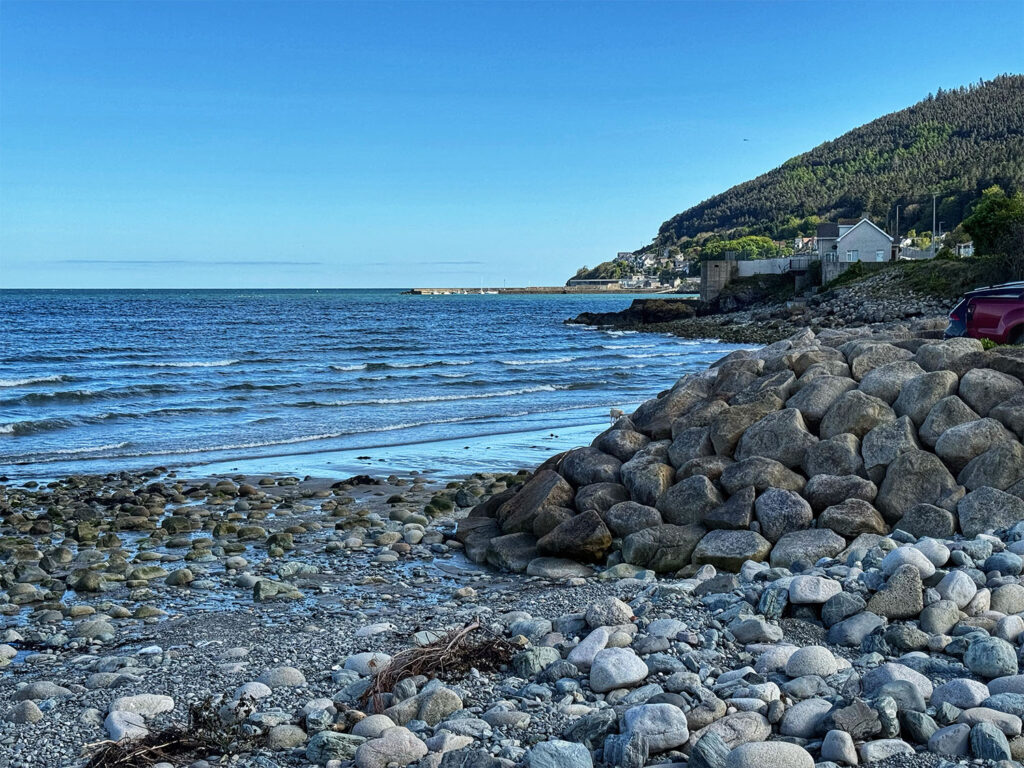
Before heading to dinner, I took a leisurely stroll along the beach across from our hotel. Dinner was at a local restaurant called “Great Jones” that I definitely recommend. We were in Newcastle on a bank holiday weekend and it was very crowded. It definitely helped to have dinner reservations ahead of time.
Day 3 Tollymore Forest Park
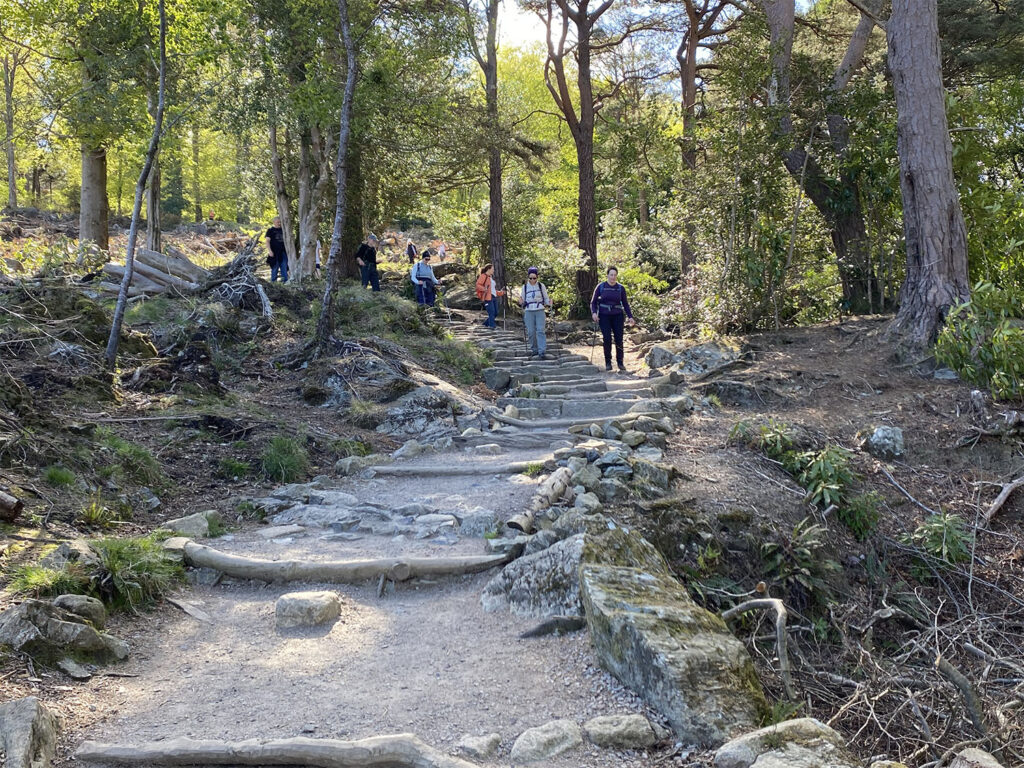
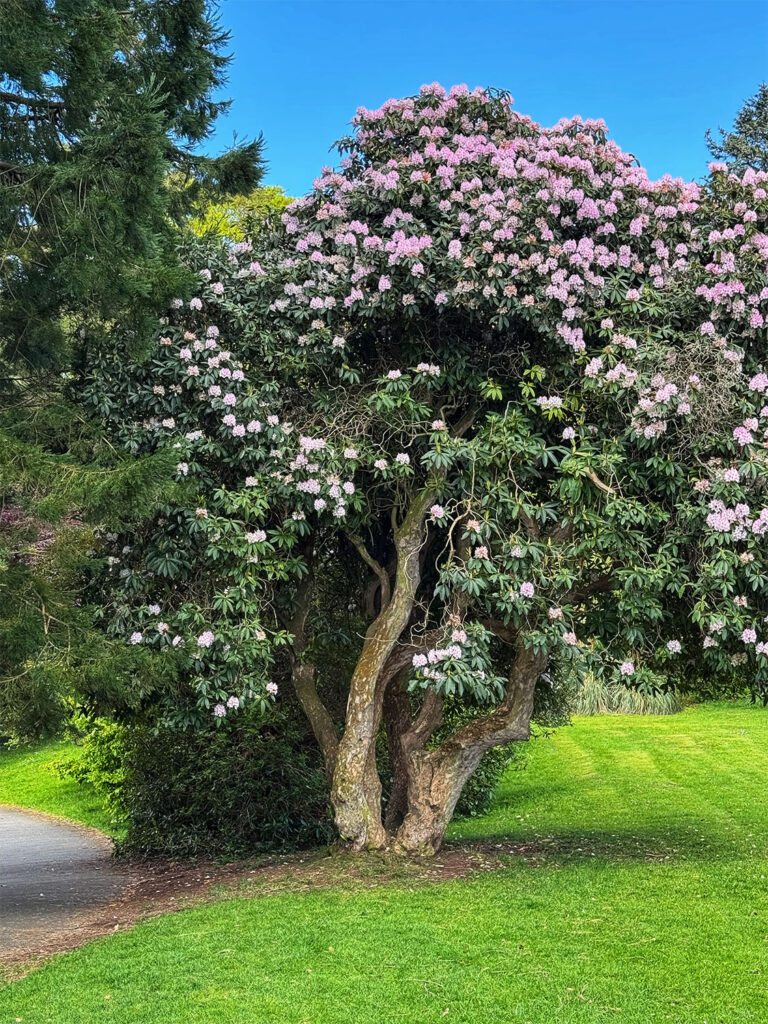
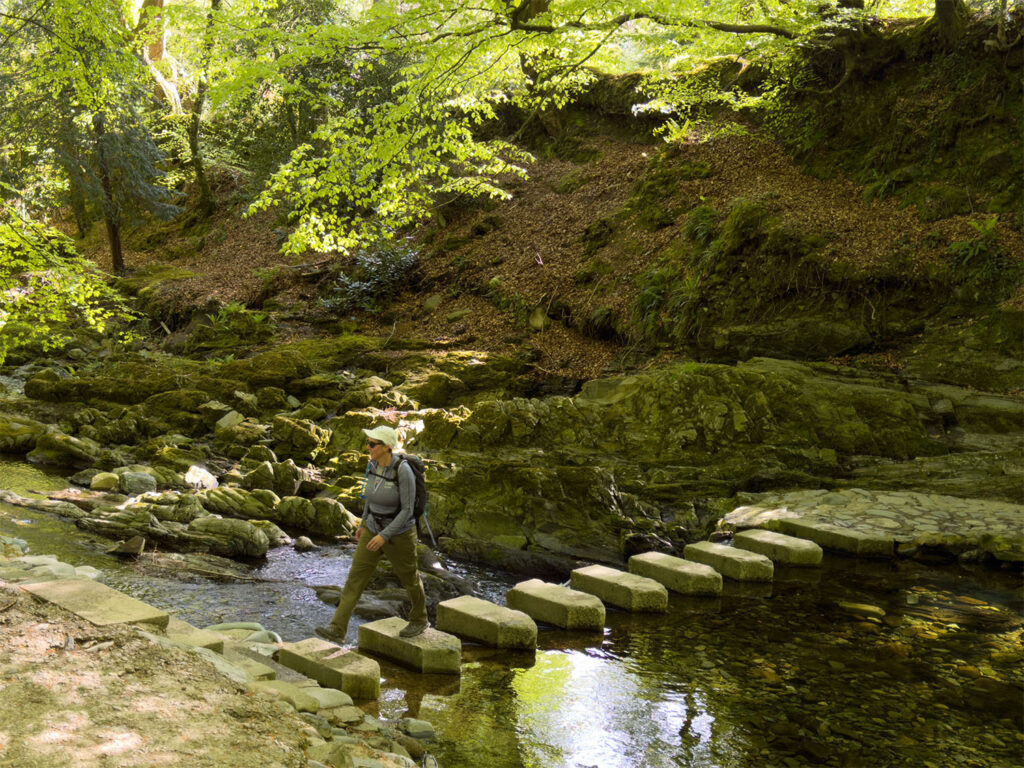
Getting out of bed this morning was a challenge – every muscle protested, and squatting down to do anything felt almost comical. Thankfully, while today’s hike was scheduled to be longer, the terrain promised to be gentle and less demanding than yesterday‘s steep ascent. After breakfast, we climbed into the van for a short 10 minute drive to Tollymore Forest Park. This enchanting woodland is home to several filming locations from Game of Thrones, including the iconic stepping stones and the path leading toward the fabled wall. Our hike began on a level, forested trail before looping back along the Shimna River, where we passed elegant stone bridges, and the well-known stepping stones. We strolled through a stunning rhododendron garden and crossed yet another charming stone bridge.
Our next trail was the Mountain Trail, which ascended gradually. We paused for lunch at a large fallen tree where the trail intersected with the Drinns Trail. The Drinns loop offered sweeping views of the surrounding farmland and the majestic Mourne Mountains – serene and beautiful. After hiking 10 miles in the park, we concluded the day at Brunel‘s, a local restaurant, for a delicious dinner.
Day 4 The Glens of Antrim
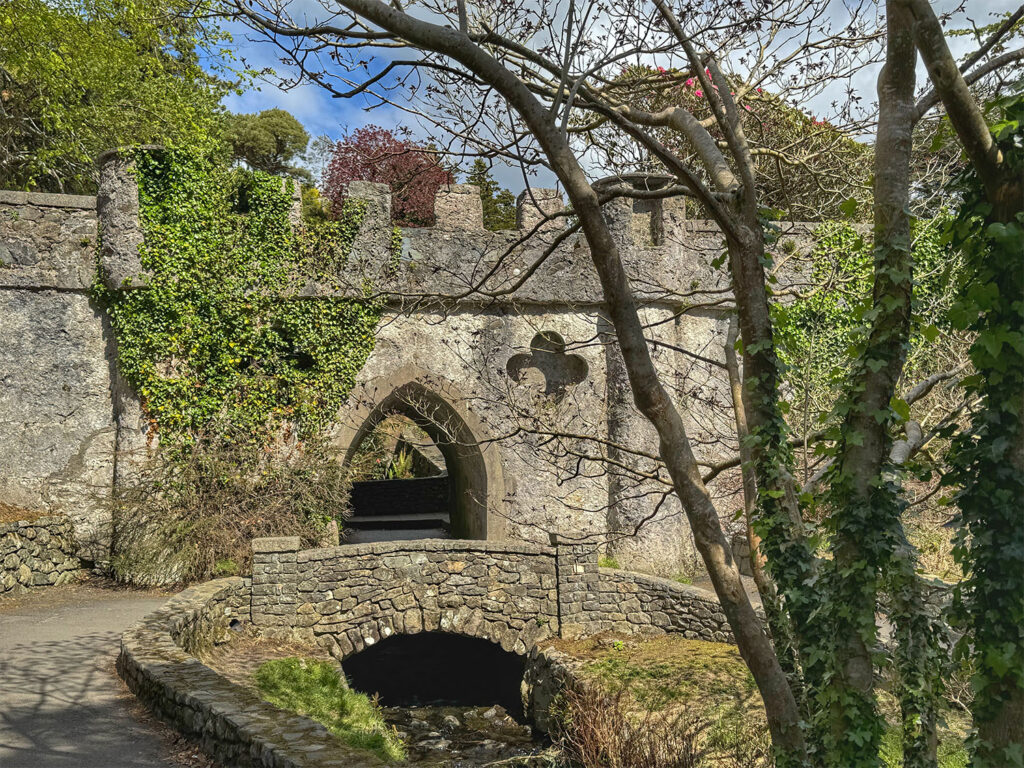
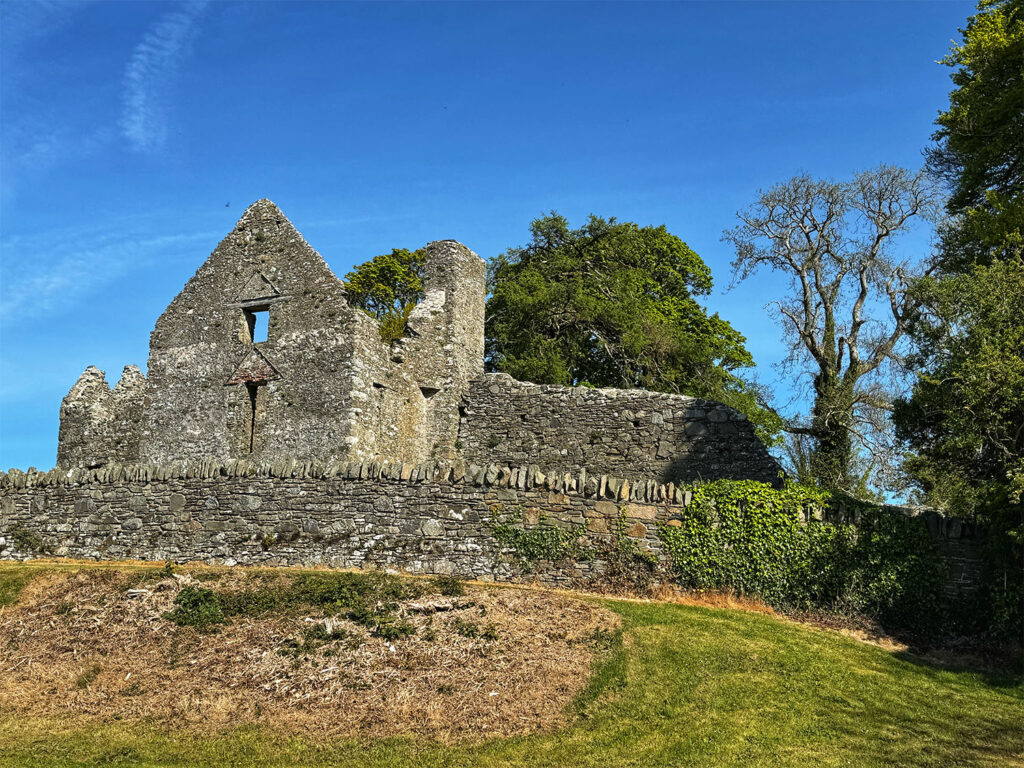
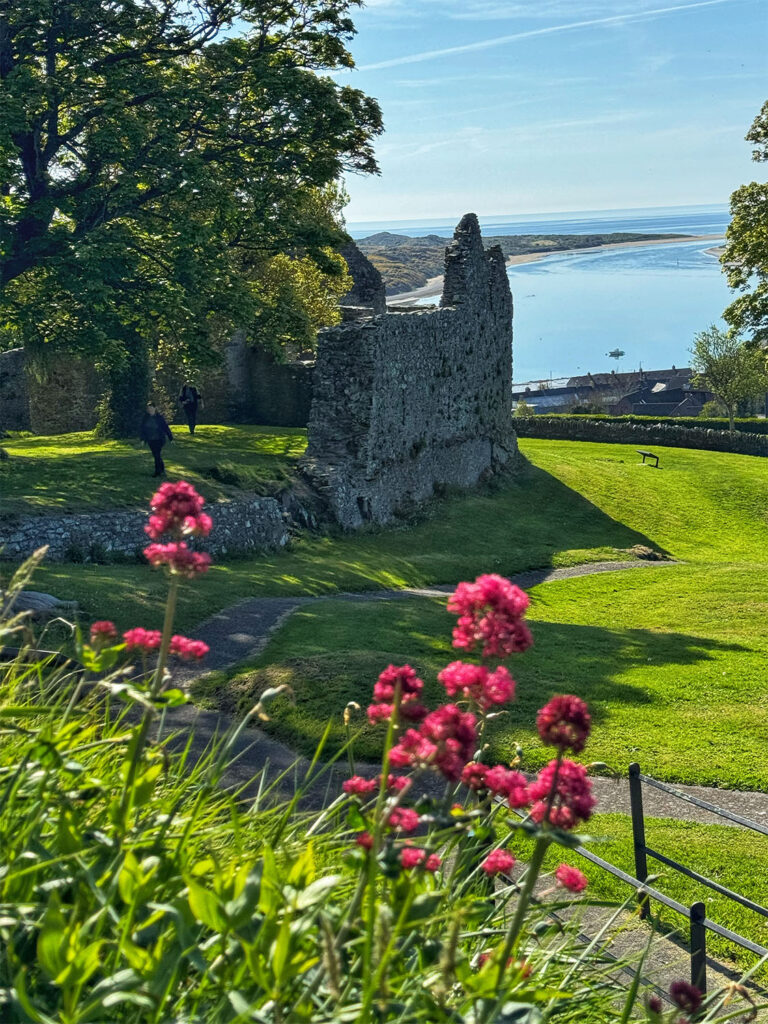
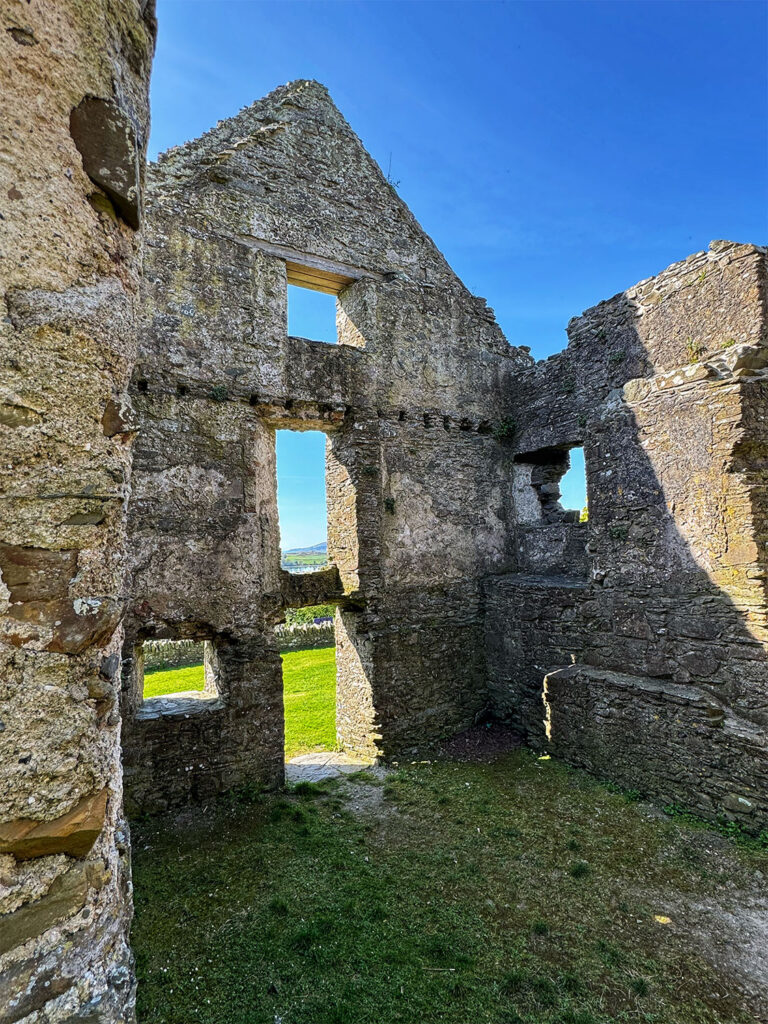
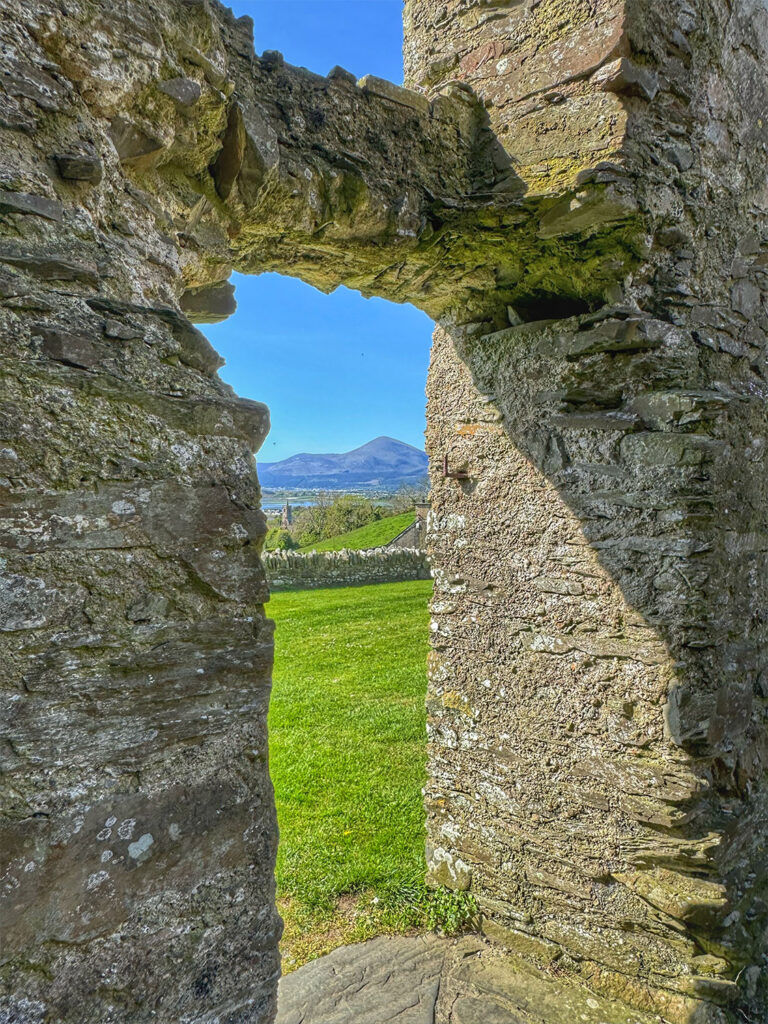
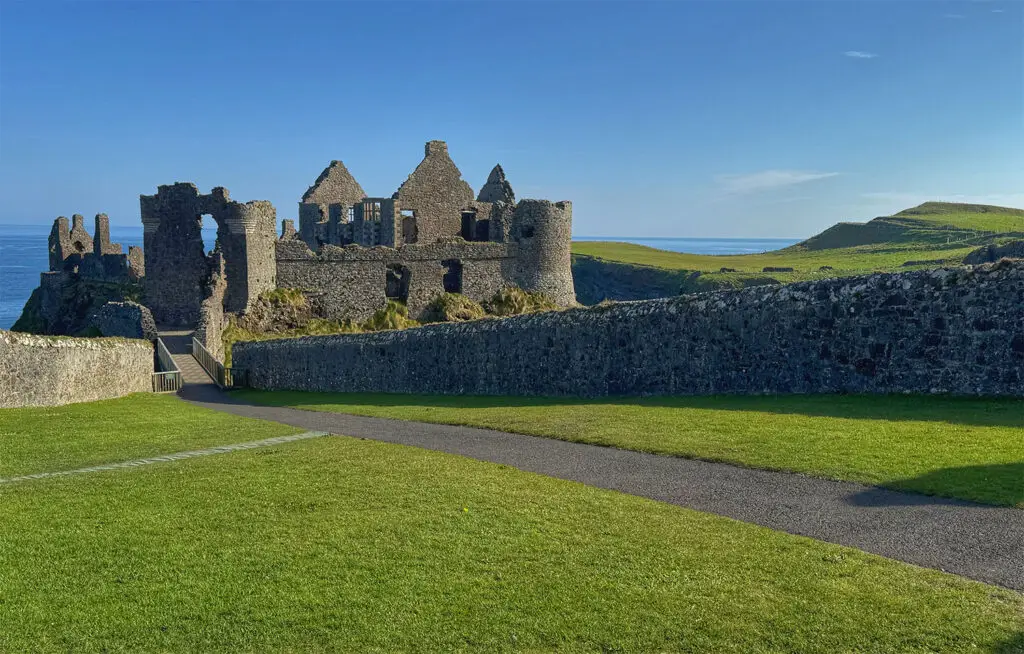
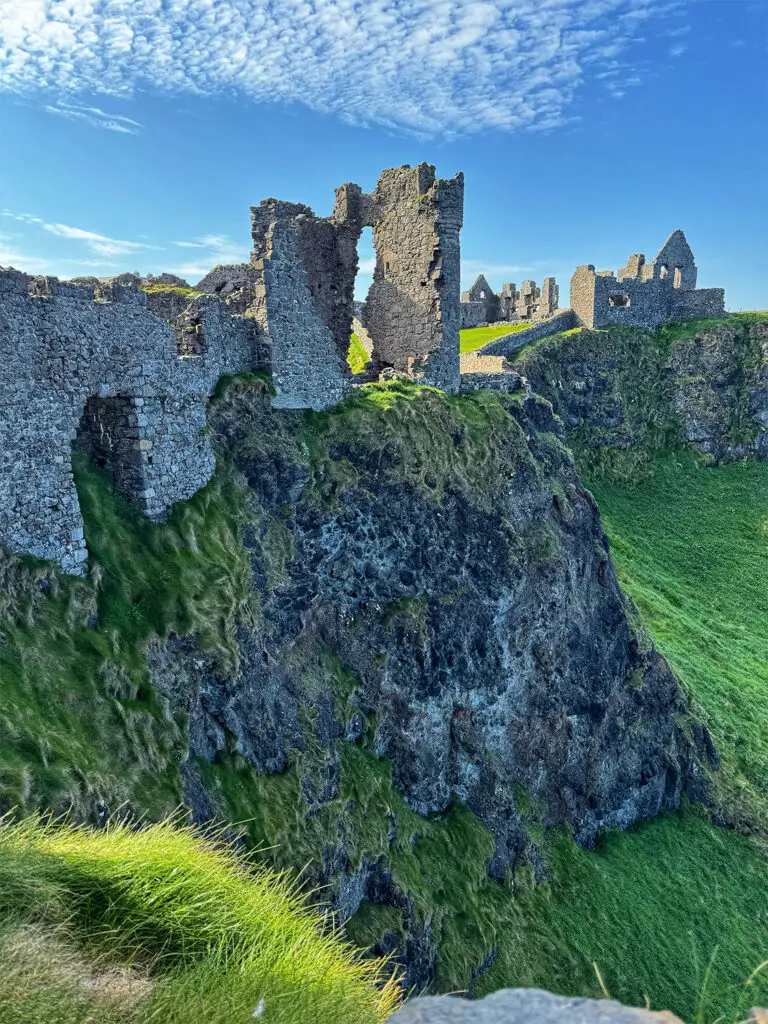
Today we checked out of the Avoca Hotel, and began our journey back toward Belfast. Just minutes outside of Newcastle, our guide surprised us with an unplanned stop at Dundrum Castle – a scenic and historic gem overlooking Dundrum Bay and the Mourne Mountains. The castle dates back to 1177, built by the Anglo – Norman knight John de Courcy, during the invasion of Ireland. It’s believed the site had previously hosted an Irish fort. Later, Hugh de Lacy, de Courcy‘s successor, reinforced the castle’s defenses. Remarkably people continued to live within its walls until the 17th century. The views from the ruins were nothing short of breathtaking, with the surrounding landscape, providing a striking backdrop of sea and mountains.
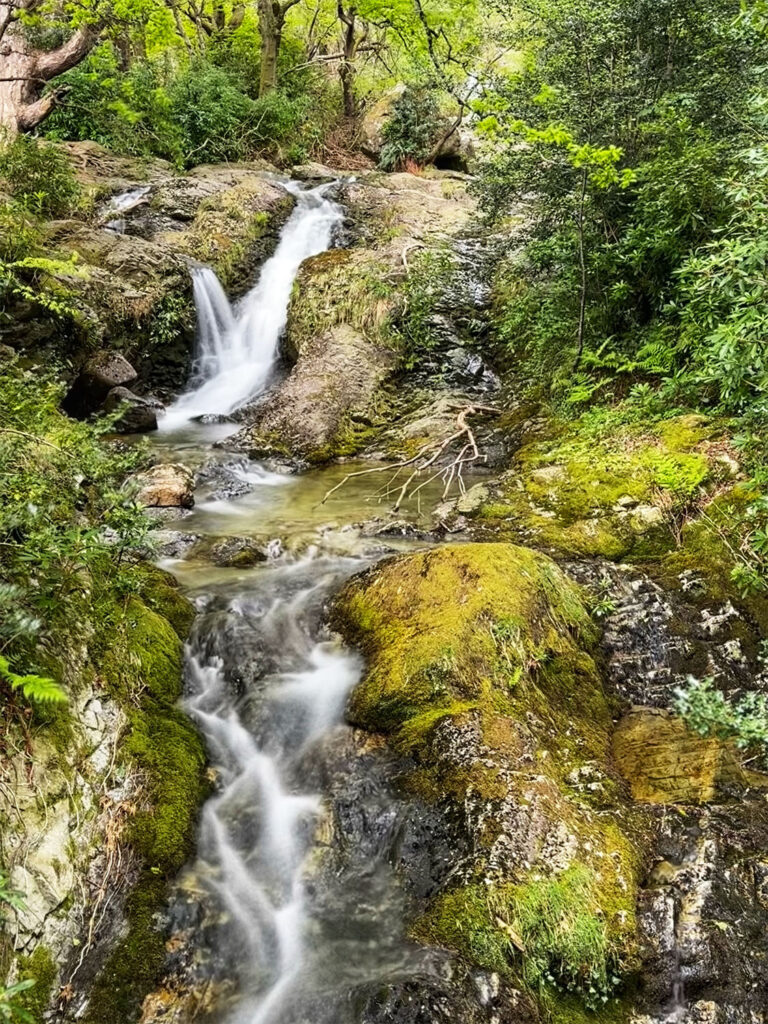
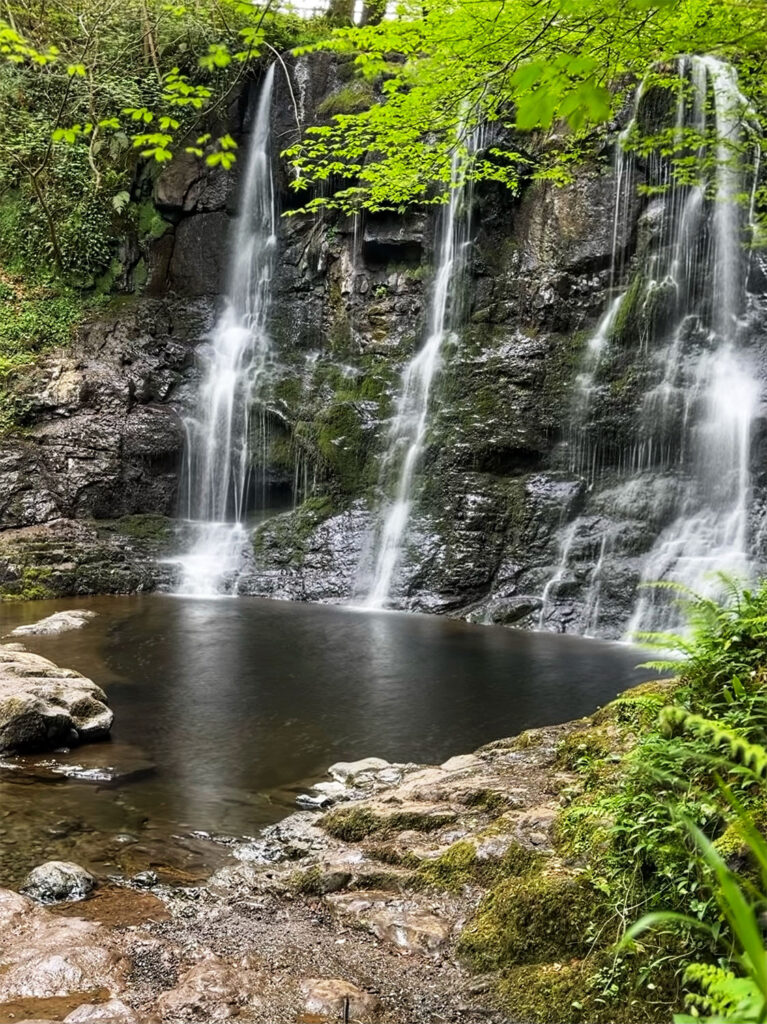
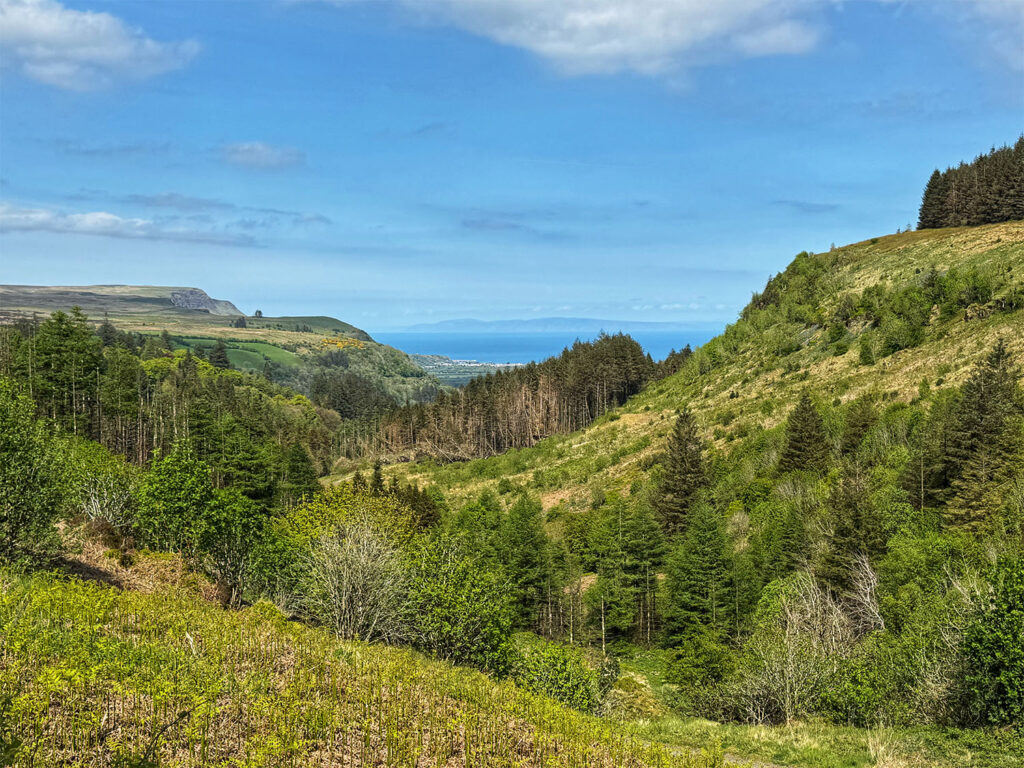
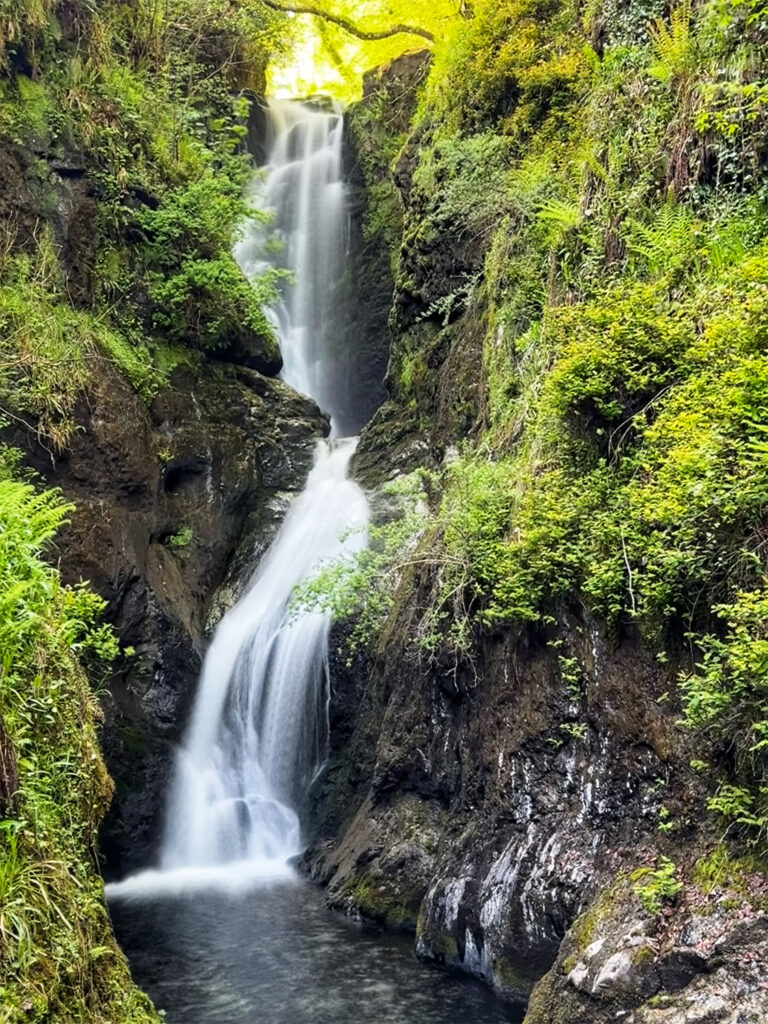
From there, we continued north – passing through Belfast, and into the stunning Glens of Antrim, a region shaped by glacial movement during the Ice Age. There are nine glens in total: Glentaisie, Glenshesk, Glendun, Glencorp, Glenann, Glenballyeamon, Glenariff, Glencoy, and Glenarm. Our destination was Glenariff Forest Park, often referred to as the “Queen of the Glens”. We stopped for lunch at Laragh Lodge Restaurant which was also the starting point for this afternoon‘s hike. The trail began with an immediate reward: the cascading Ess-na-grub waterfall, also known as the “Fall of the Hoof.“ The path climbed steeply before leveling out on a plateau. Due to storm damage, we had to take a detour around a section of the trail littered with downed trees. The route ultimately let us into a dramatic gorge, where we were treated to a series of stunning waterfalls – each one more beautiful than the last.
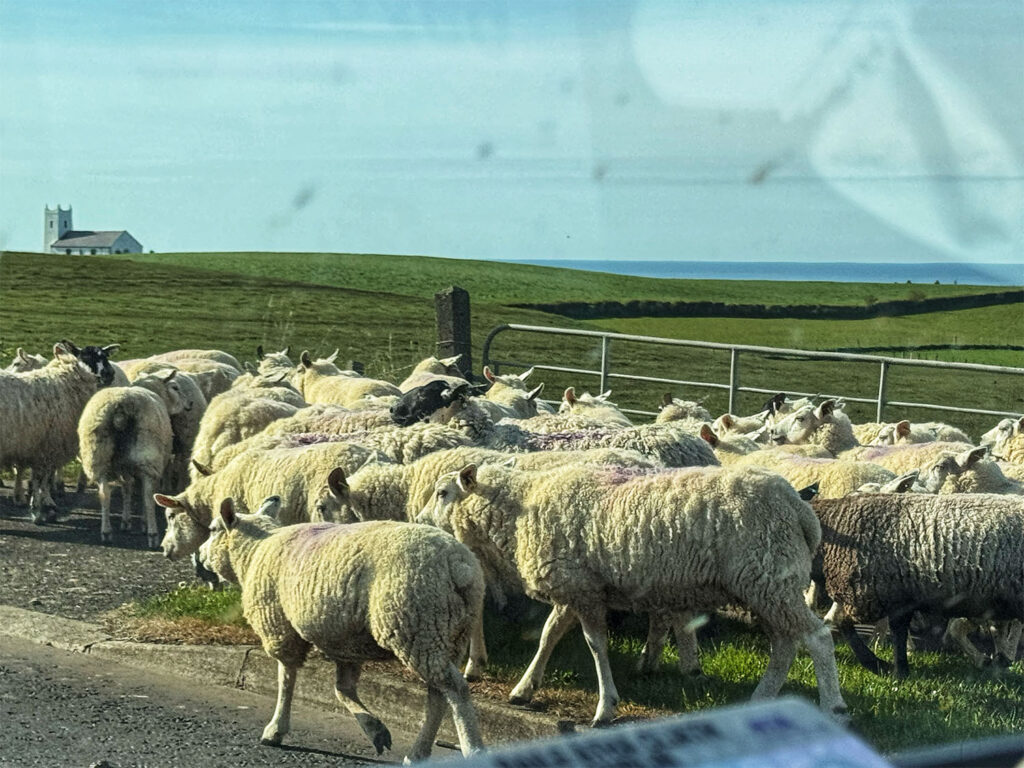
After the hike, we had another hour of driving ahead of us before reaching our final stop for the day: the Causeway Hotel, situated along the iconic Coastal Causeway. The skies were so clear while driving along the coast we could see Rathlin Island, and even the coast of Scotland. I was especially thrilled by the view of a proper “sheep – jam “ in Ballintoy – a delightfully Irish traffic delay.
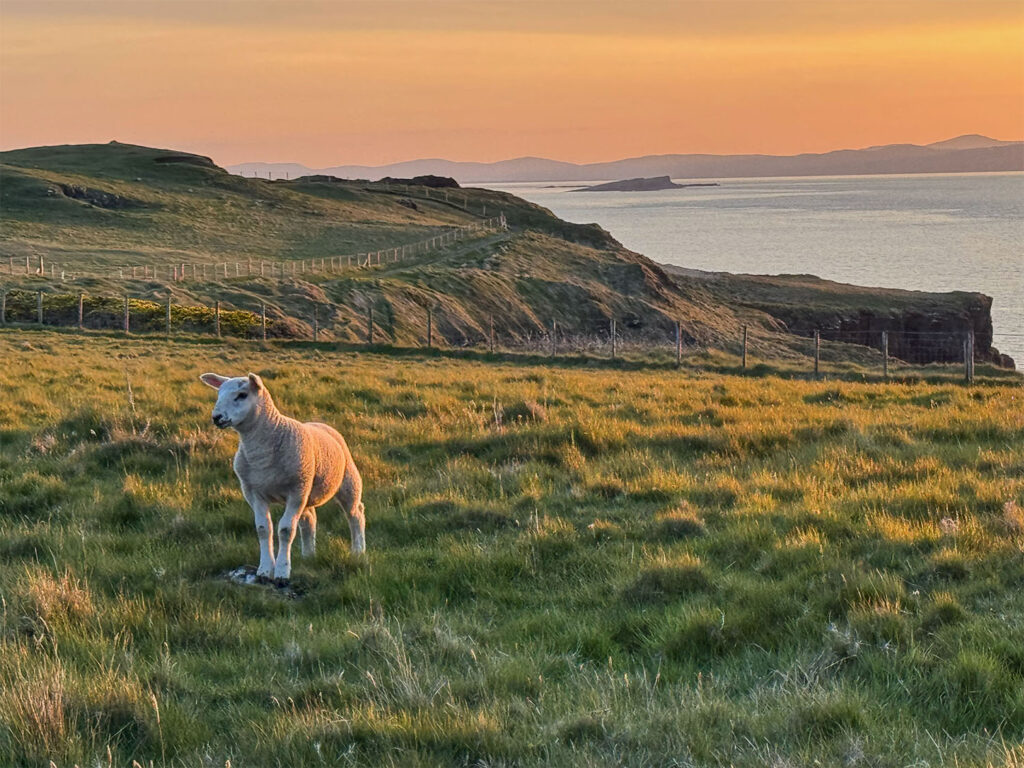
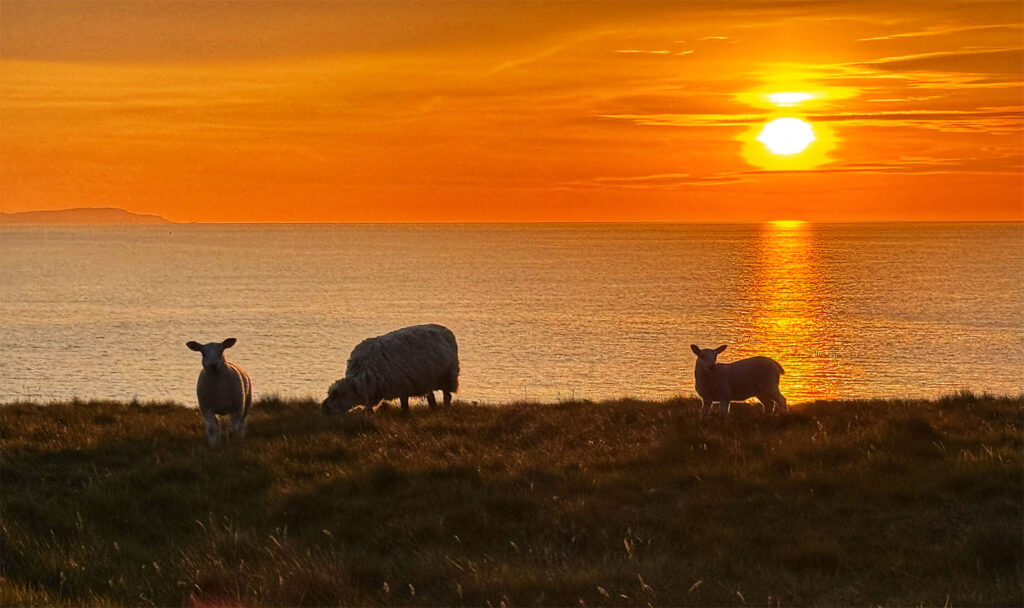
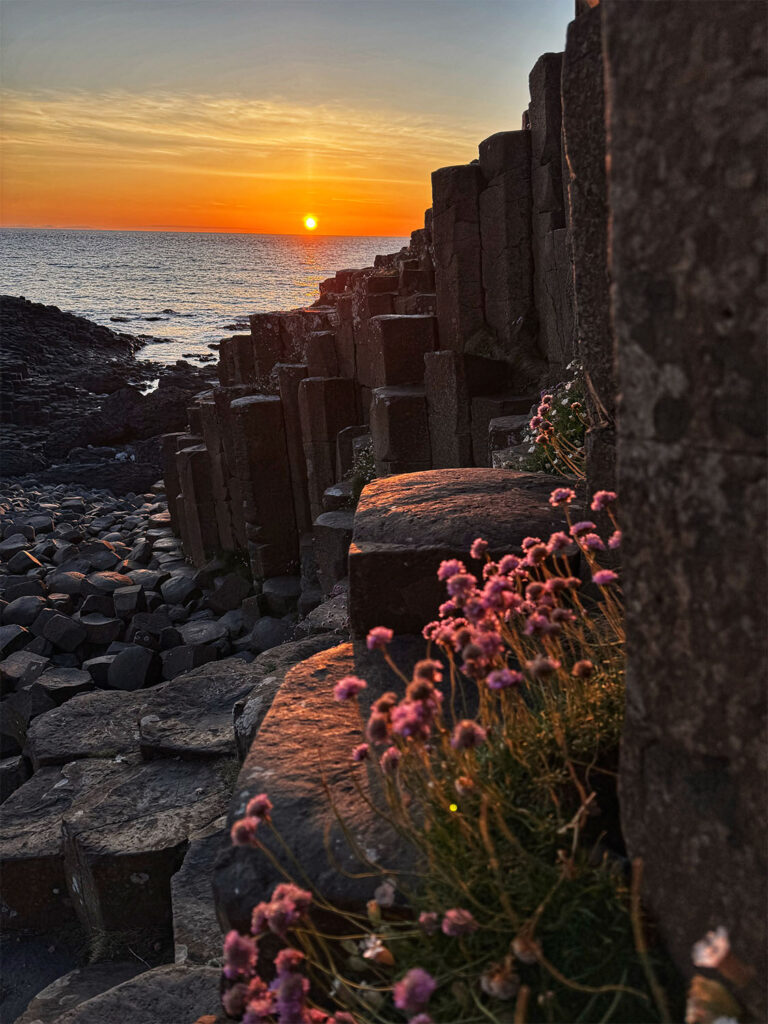
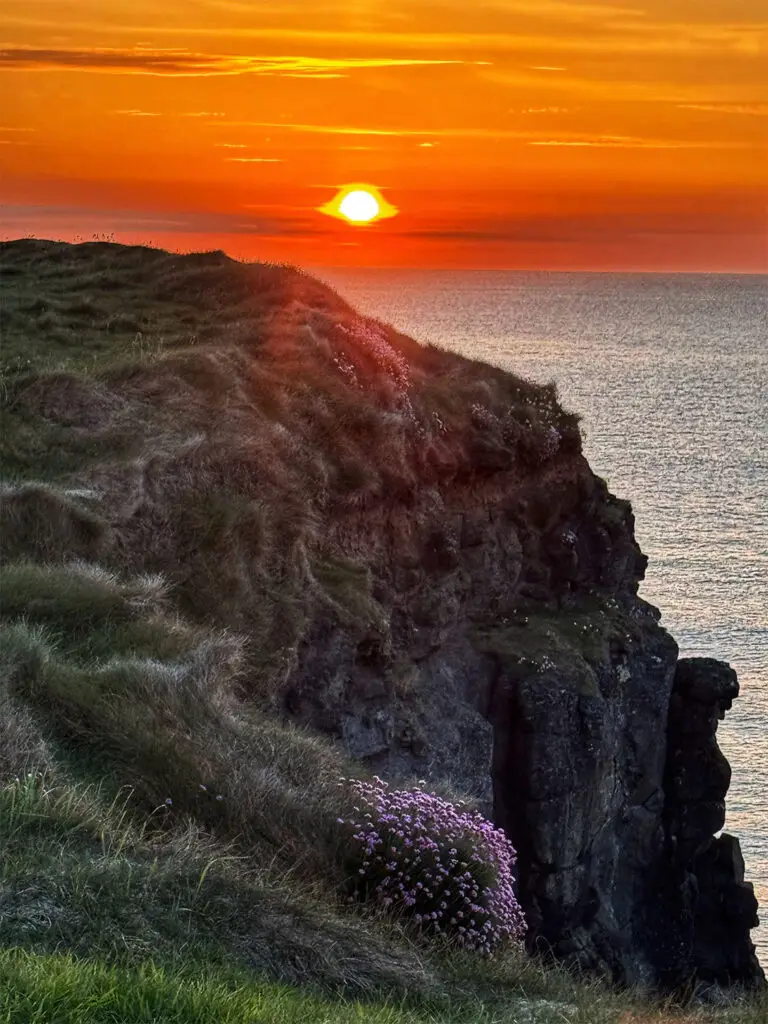
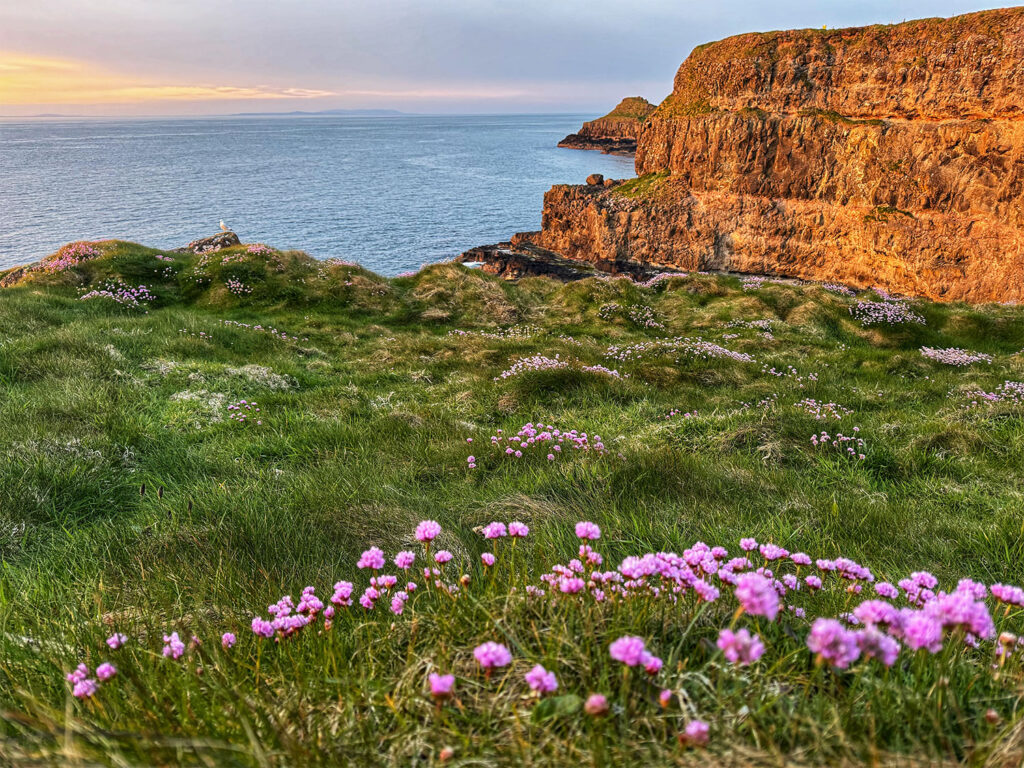
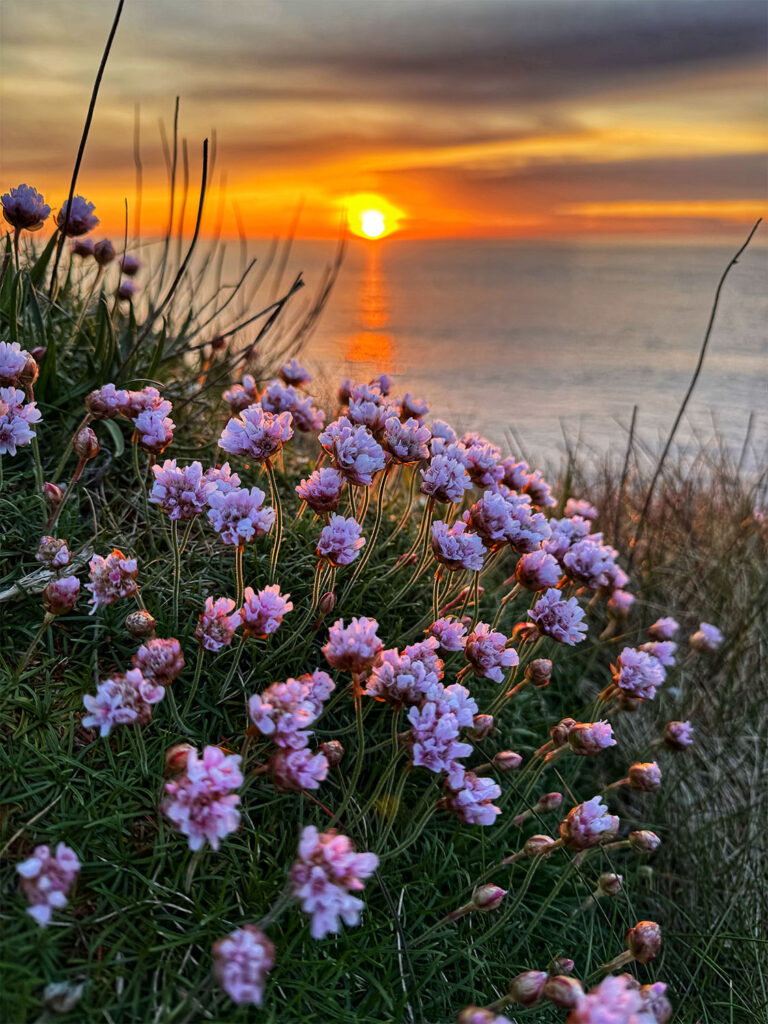
We arrived at the Causeway Hotel around 5:45 PM, just in time to settle in before our 7 PM dinner reservation at the hotel restaurant. Both the accommodations and the meal were wonderful. After dinner I took a stroll along the path just west of the hotel. As the sun began to set, the sky transformed into a masterpiece of color. I snapped dozens of photos at first, eager to capture the moment, but eventually I put my phone away and simply sat in silence, watching the sun dip below the horizon. For about 10 peaceful minutes I was completely immersed in the beauty of it all. It was, without question, my favorite night of the entire trip.
Day 5 The Coastal Causeway & Giant’s Causeway
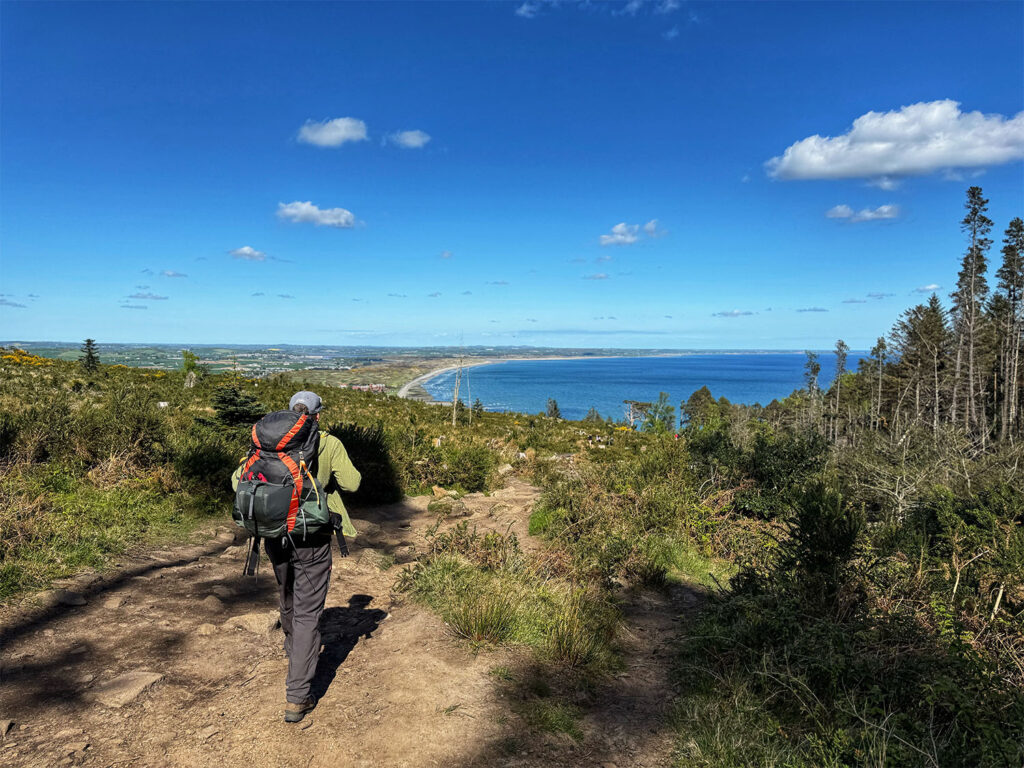
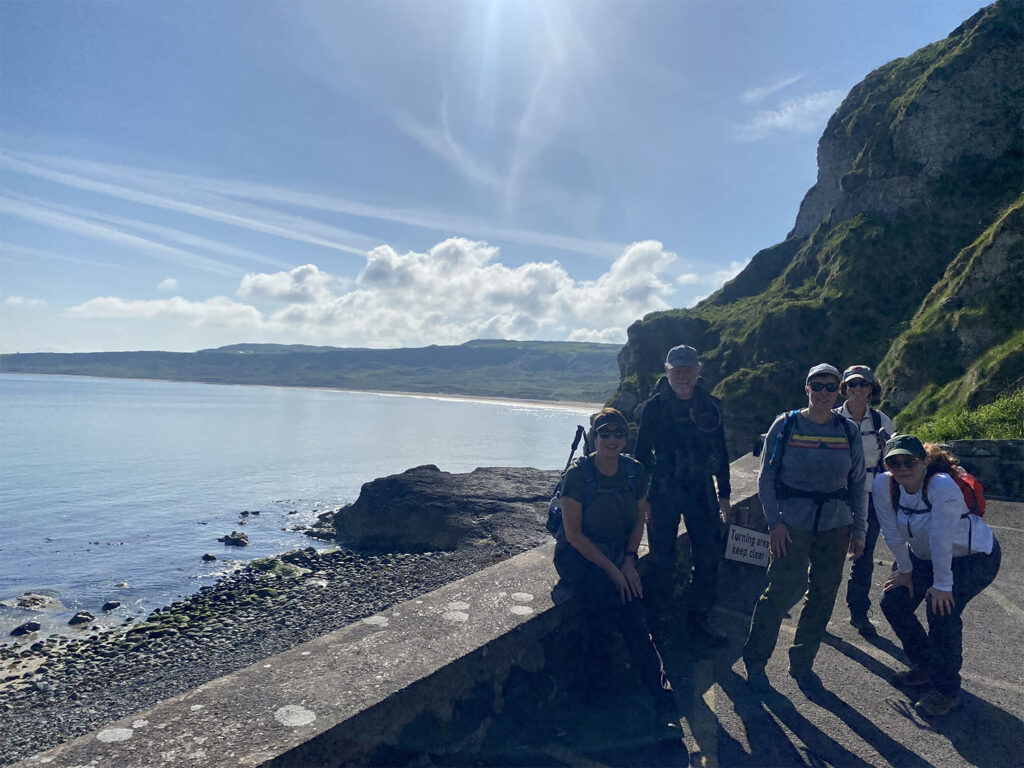
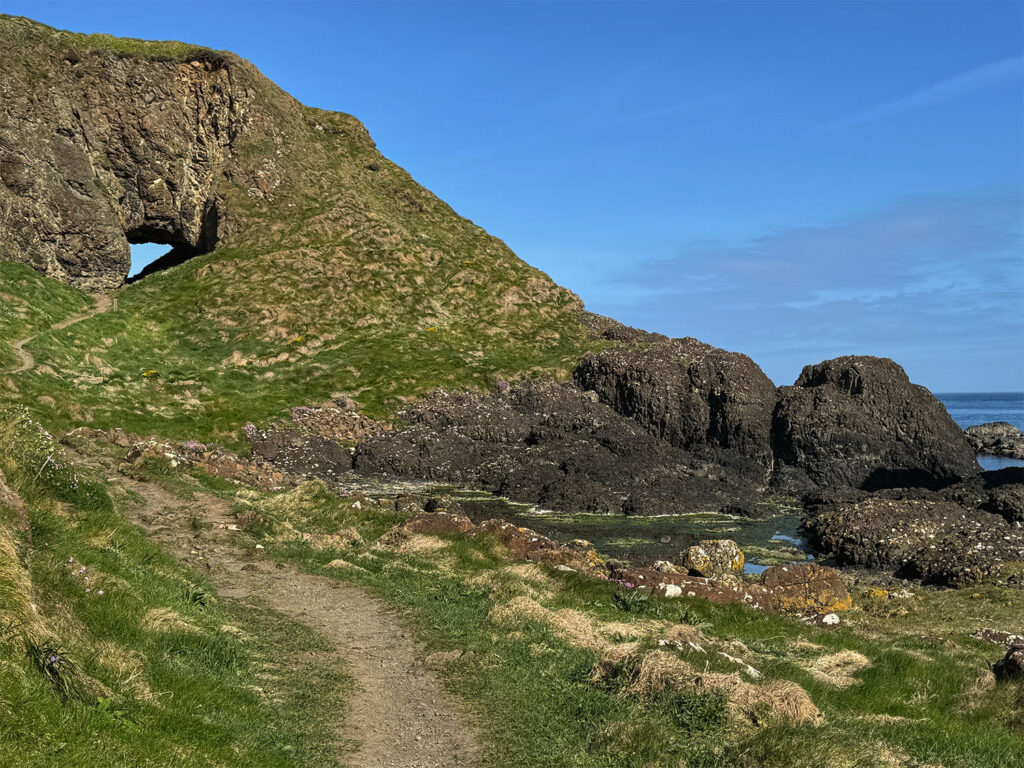
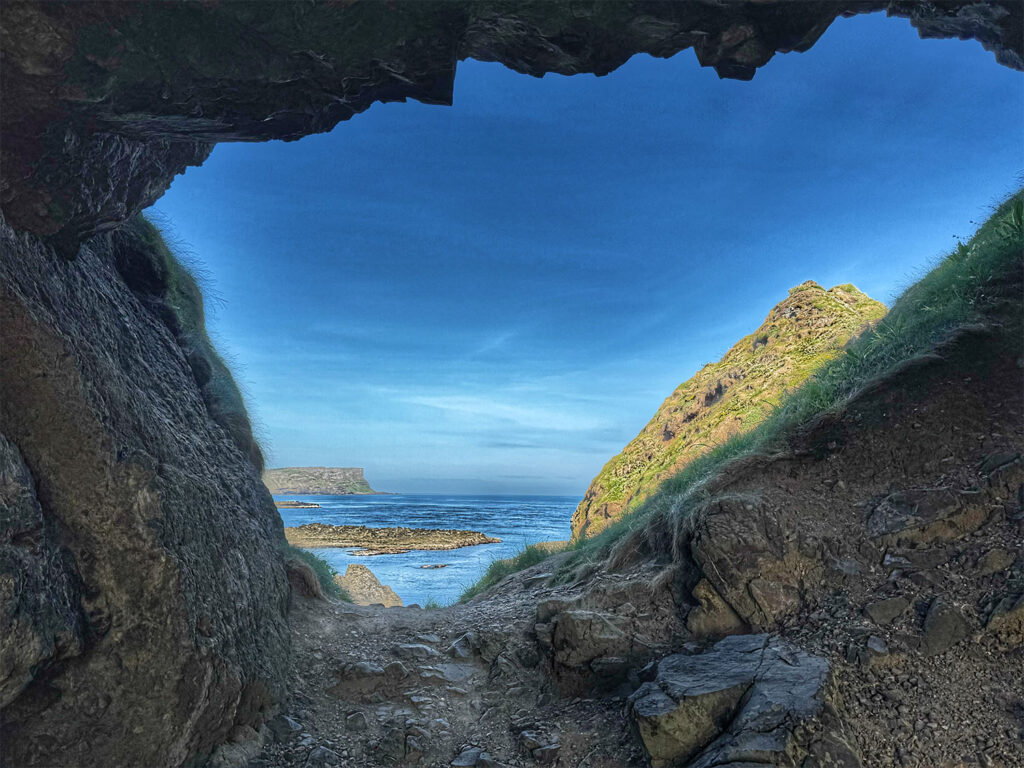
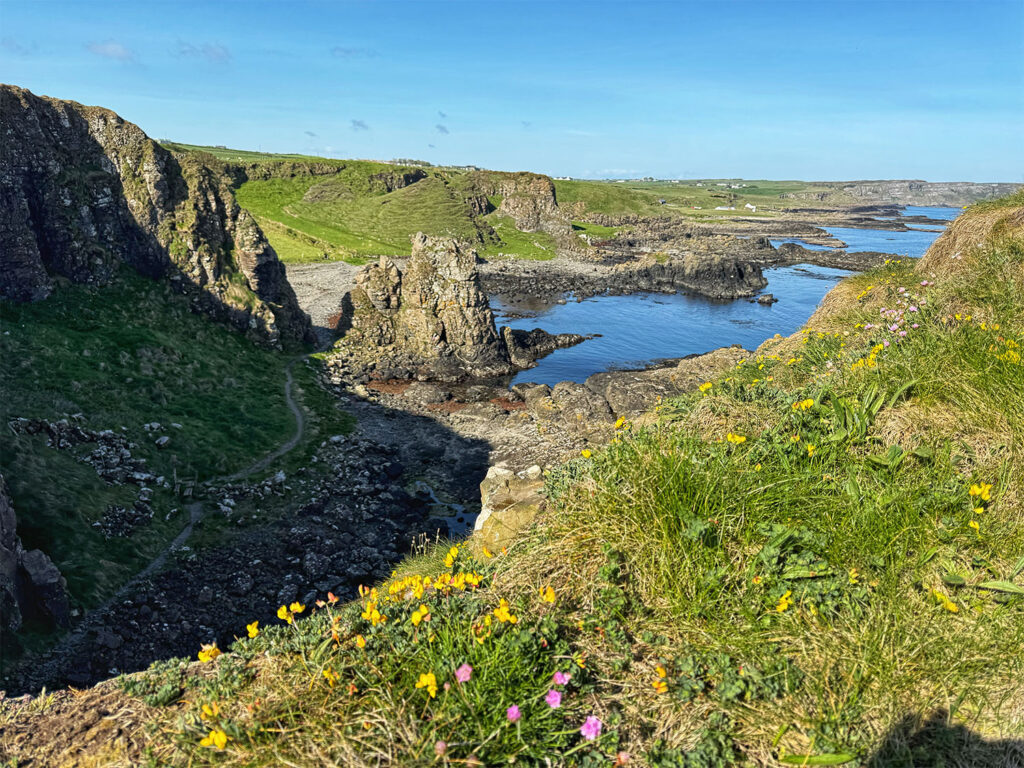
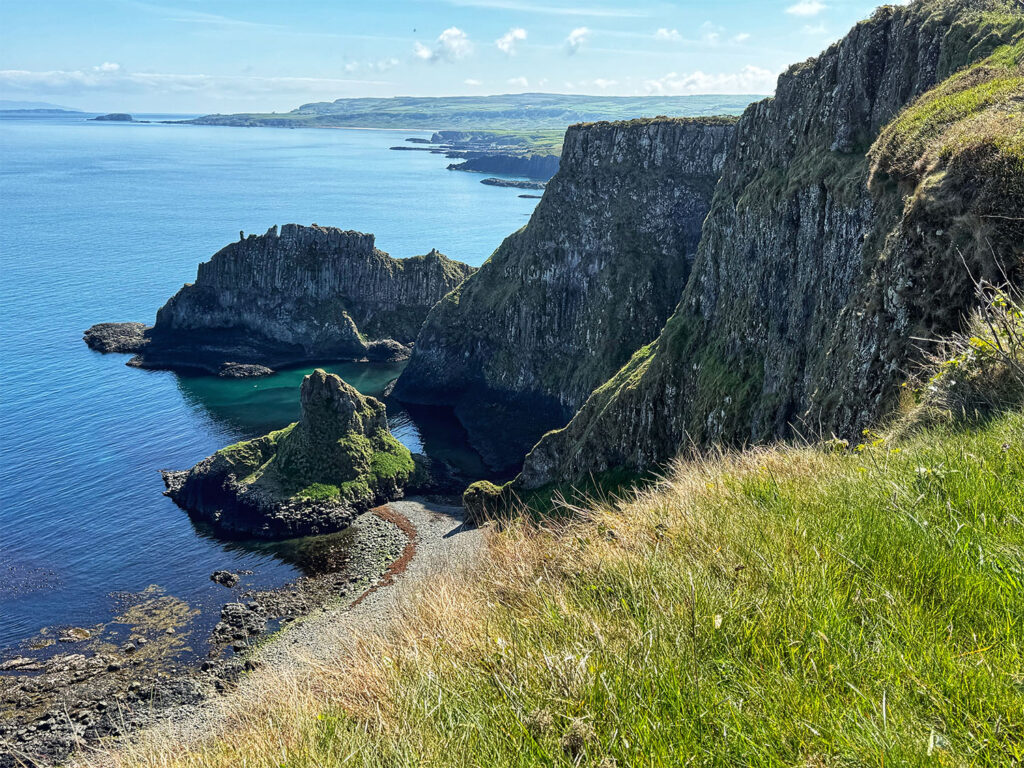
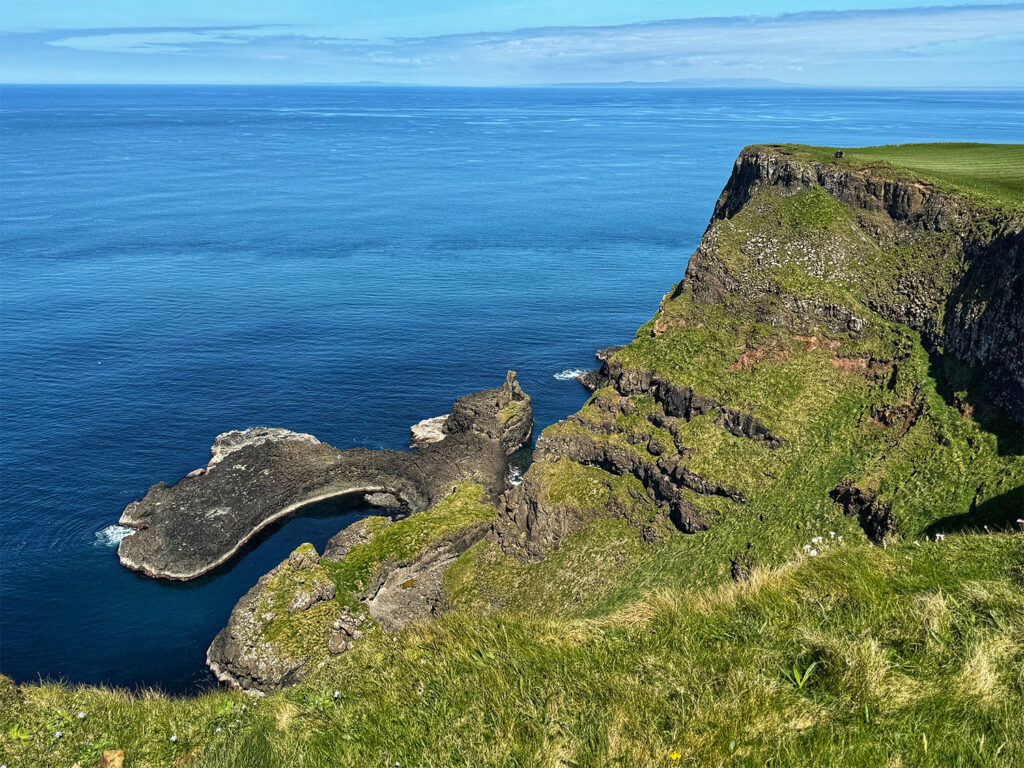
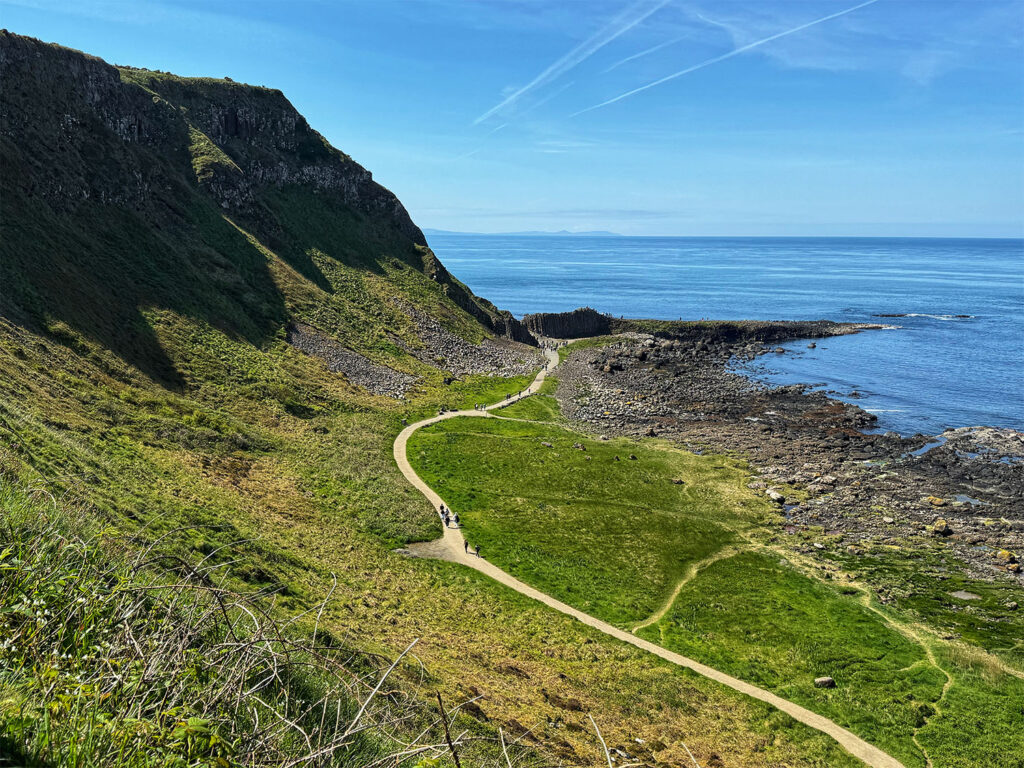
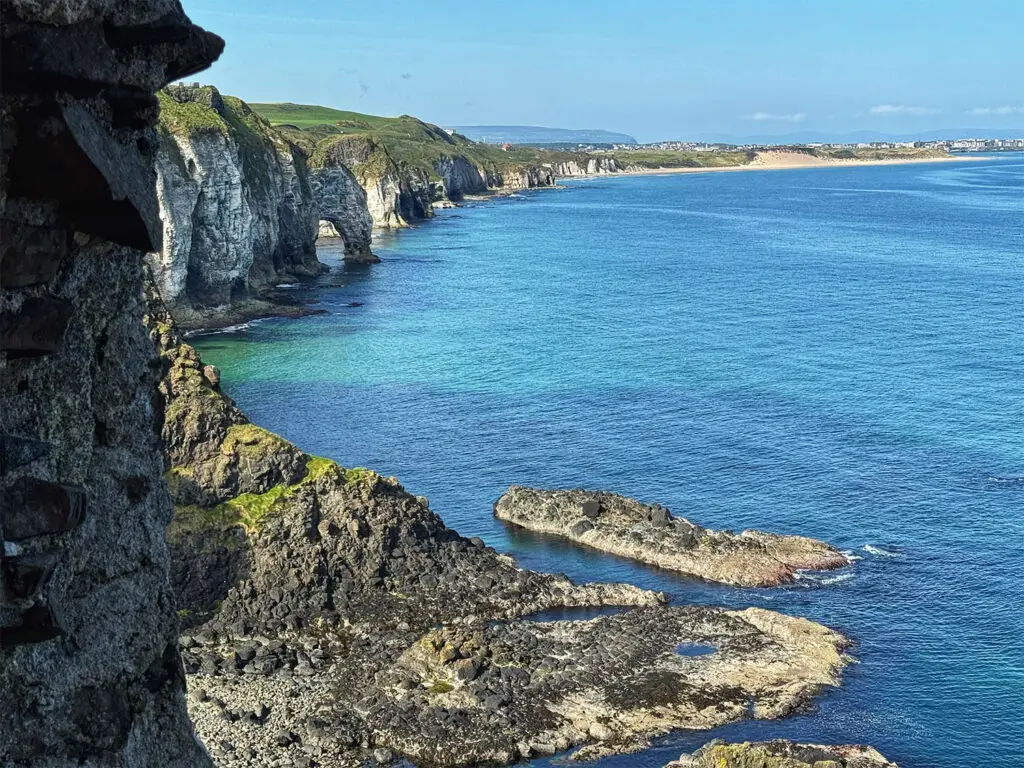
We met our guide at 9 AM, then caught a taxi to Portbraddon, a few miles east of where we were staying. Our plan for the day was to hike back to the hotel along the Coastal Path and the Giant’s Causeway. The weather could not have been better – clear blue skies, and barely a whisper of wind. It was immediately clear that we were in for a spectacular day. We were awe-struck almost immediately. As we rounded the first bend, the path led us through a dramatic opening in the headland – a natural tunnel carved through the rock. After passing through the tunnel, I scrambled up to the top of the headland, rewarded with sweeping views that were nothing short of breathtaking.
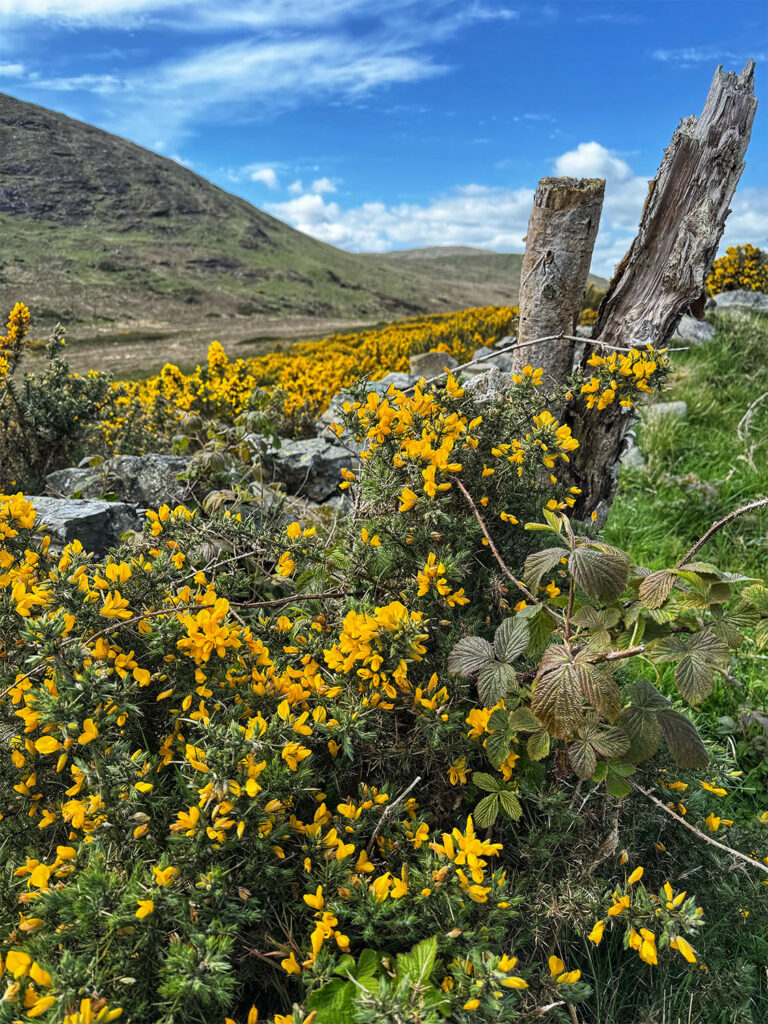
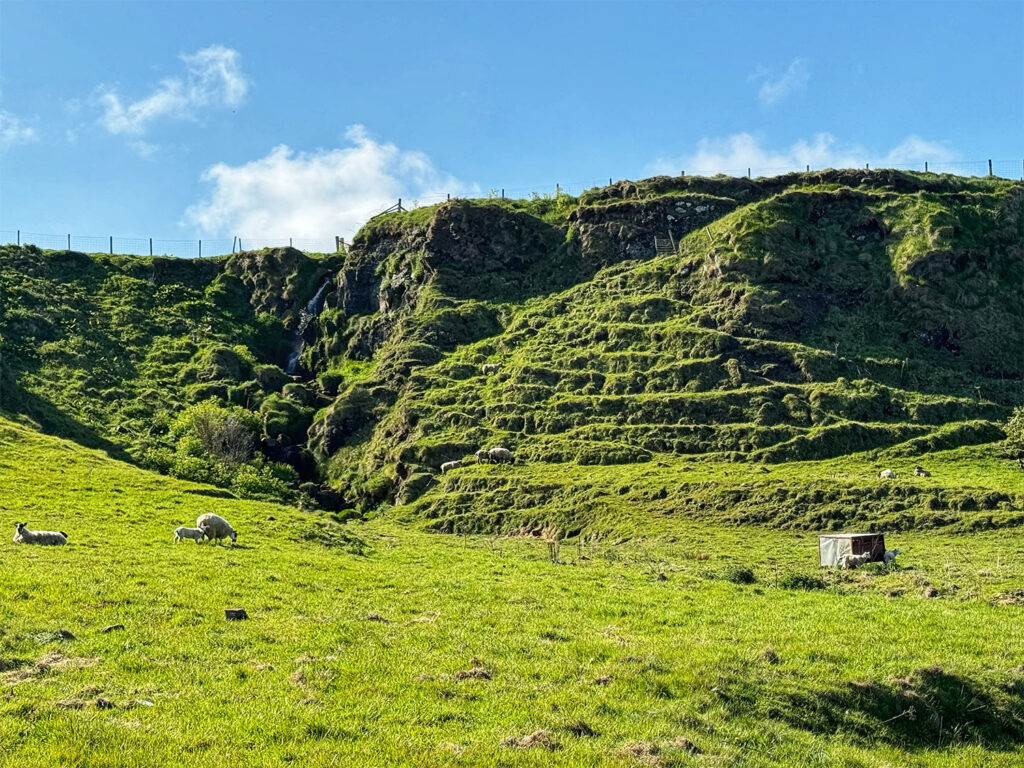
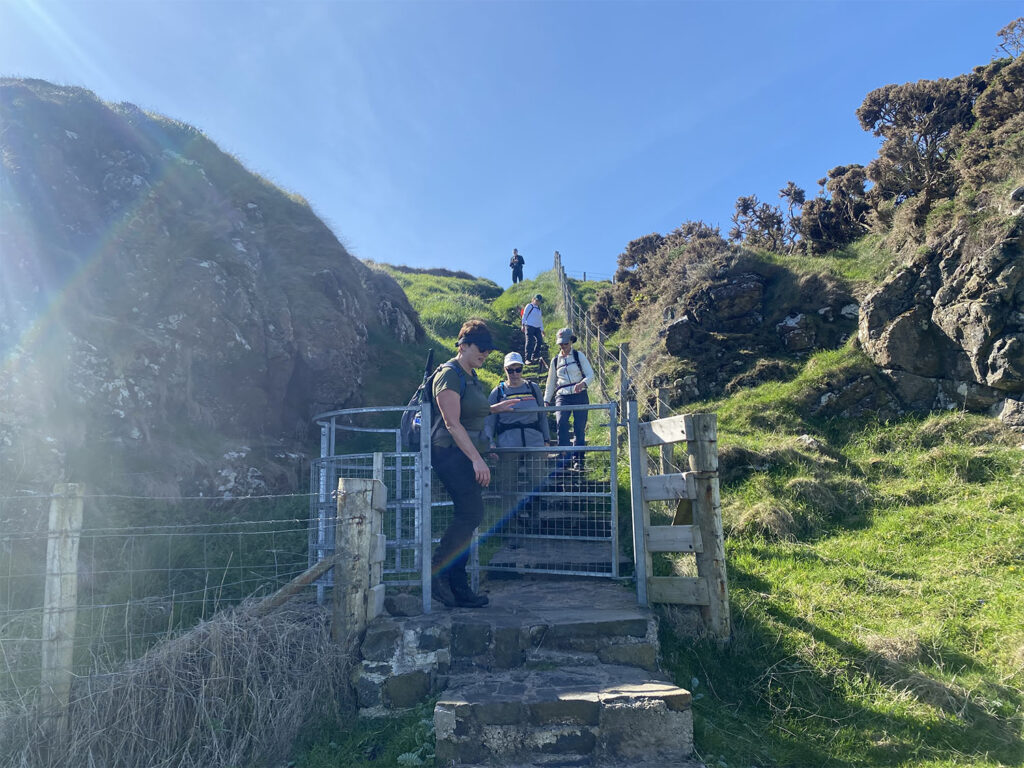
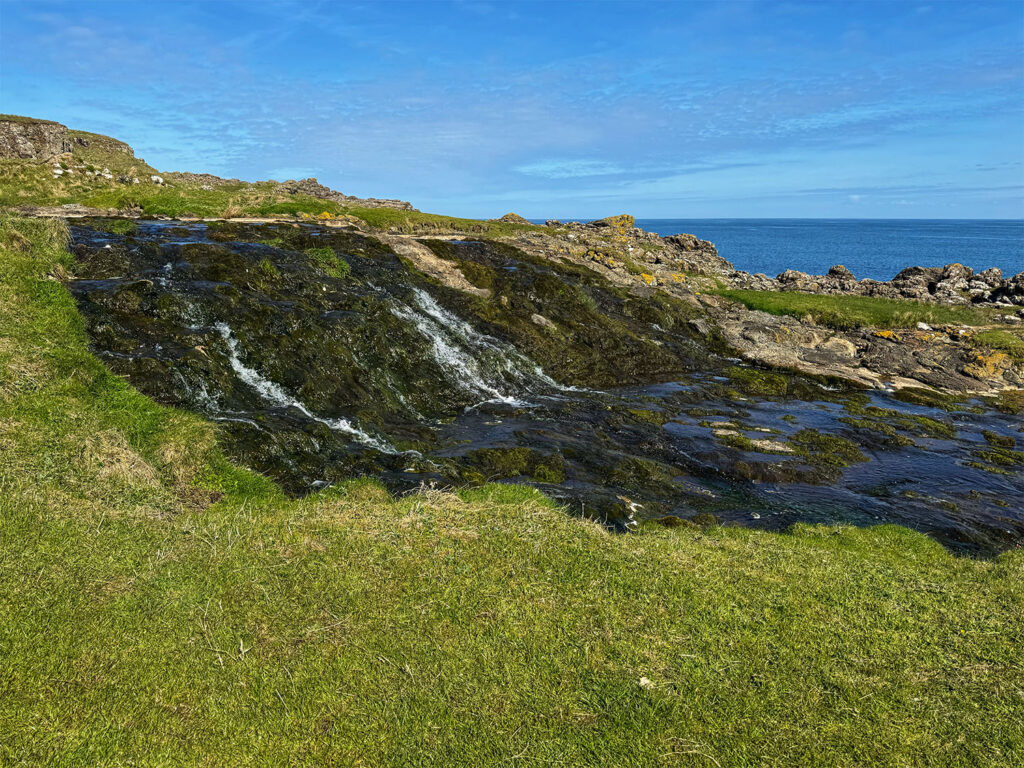
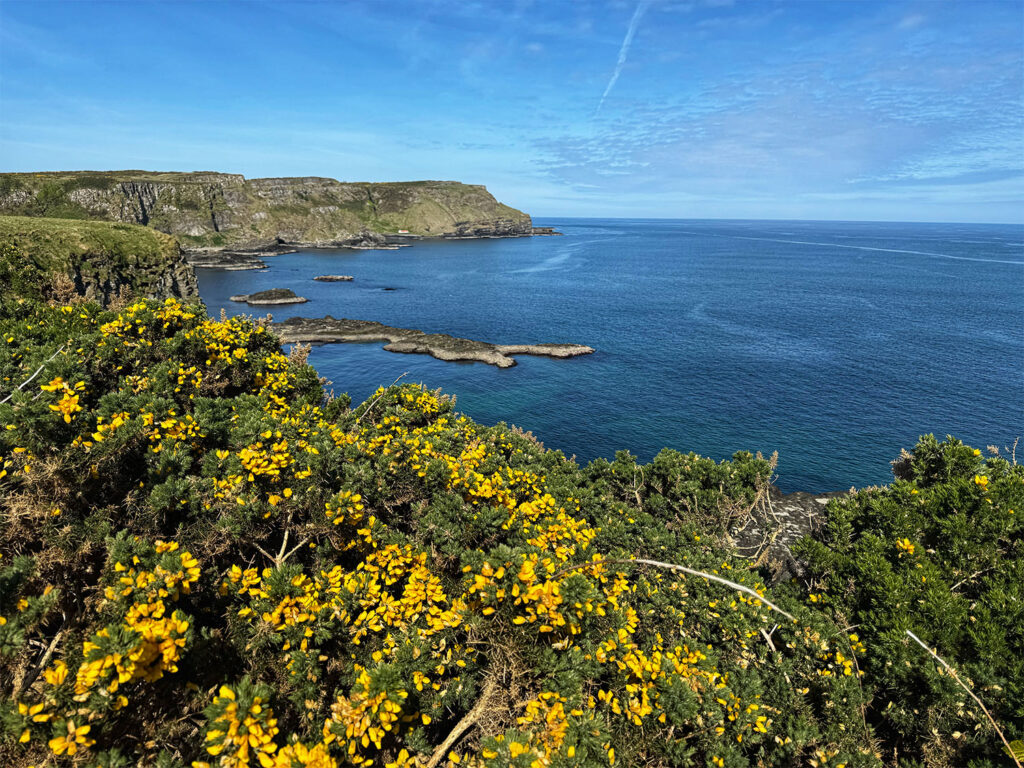
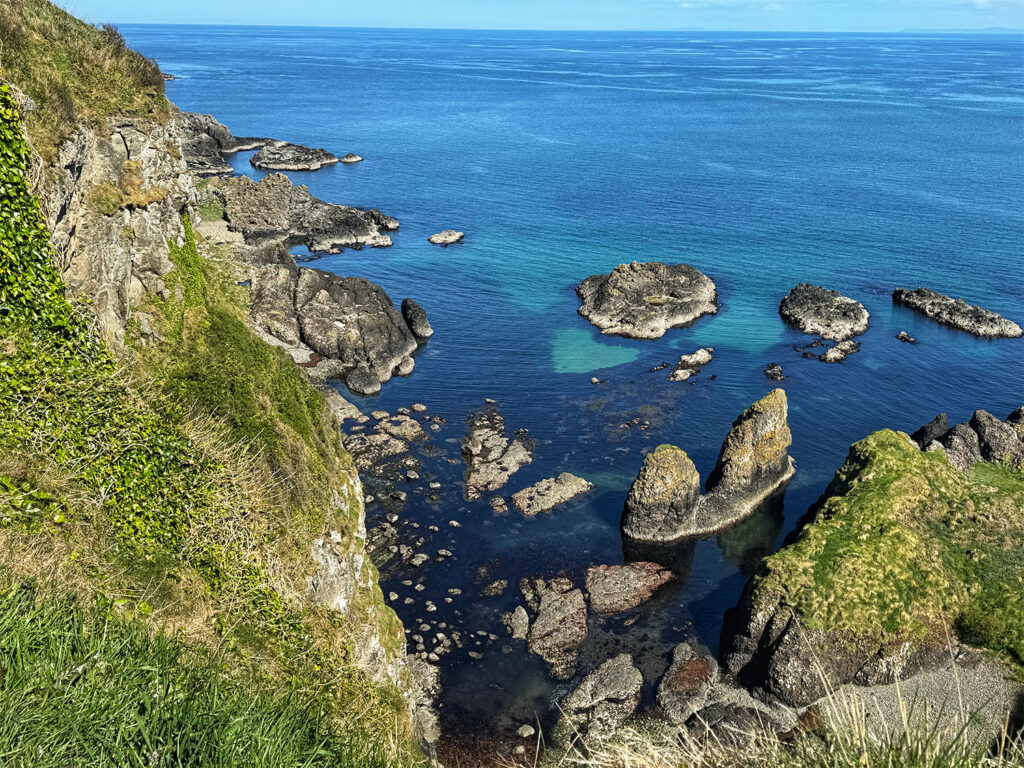
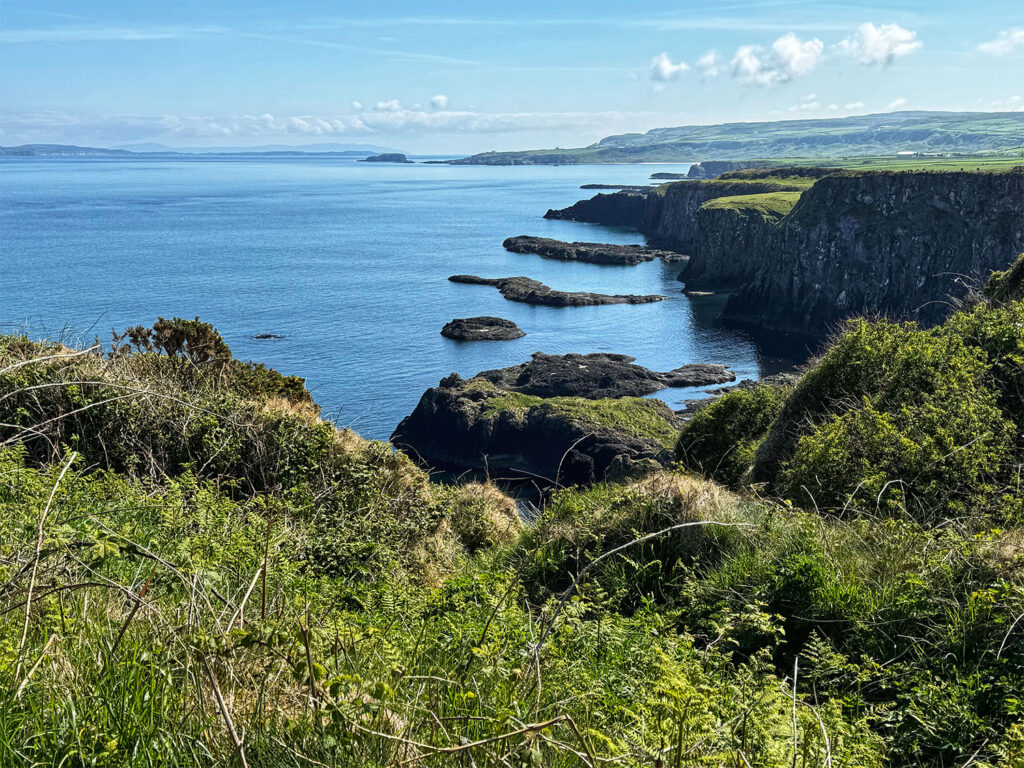
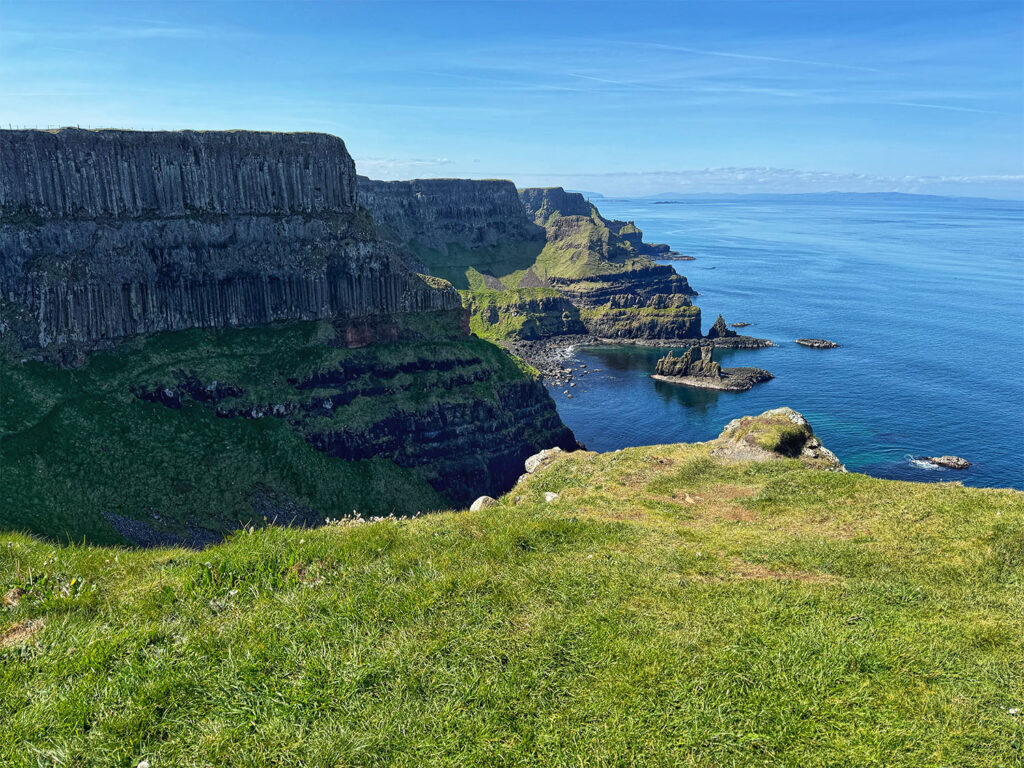
The landscape throughout the day was utterly enchanting. To our left, vibrant, green pastures dotted with sheep stretched into the distance, bordered by bursts of golden Gorse. To our right, sheer sea cliffs dropped into deep blue waters, blending seamlessly into the sky. The trail itself undulated gently, mostly dirt and grass, with frequent livestock gates that added a rustic charm to our journey. We crossed a spot called “The Cascades,“ though with the recent stretch of dry weather, there wasn’t much cascading to be seen.
We paused briefly to admire the ruins of Dunseverick Castle from a distance while our guide shared its long and storied history. Originally fortified in the fifth century by the chieftain Sobhairce, it later became a key stronghold for various groups, including the Earls of Ulster, the O’Cahans, and eventually the McDonnells. The site endured Viking attacks in 871 and 924, and later destruction by the Scottish army in 1642. Captured by Cromwellian forces in the 1650s, it was never reoccupied.
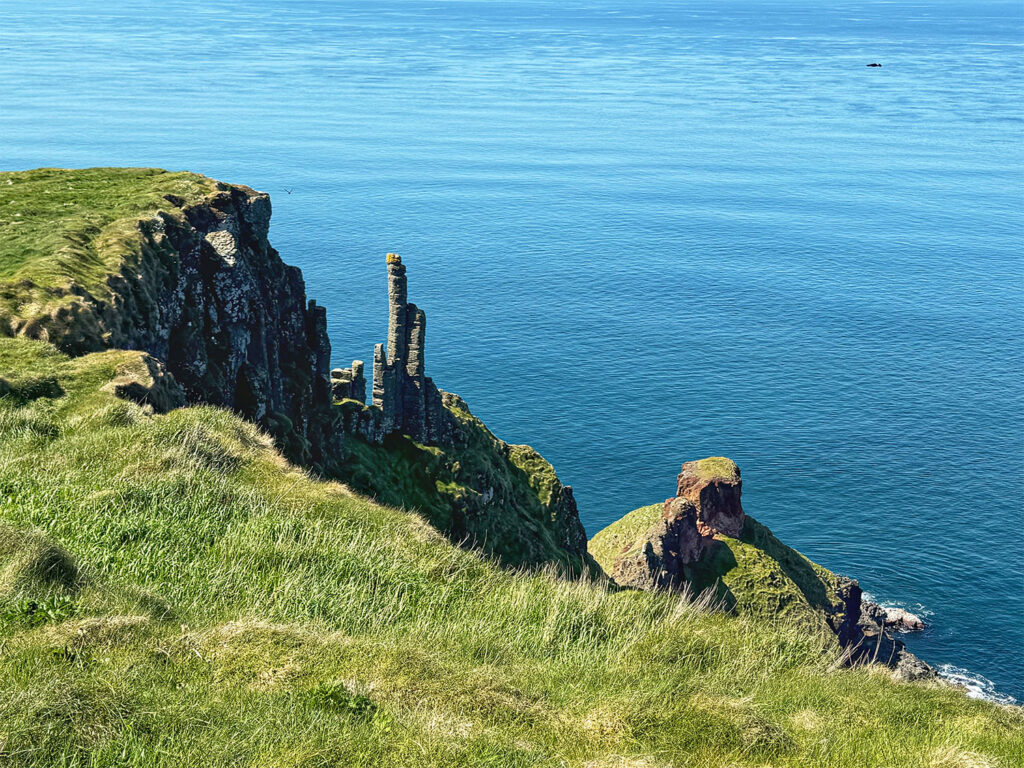
Continuing on, we passed Benbane Headland, and paused for lunch, overlooking a dramatic natural amphitheater with a view of “The Chimneys “ in the distance. According to local legend, if there’s no smoke rising from The Chimneys, it means Finn McCool (a giant) isn’t home – so it’s safe to pass. After a quick 15 minute power nap in the sun we pressed on along the Coastal Causeway. The trail became noticeably busier as we approached the more popular areas, with hikers heading toward us from the opposite direction.
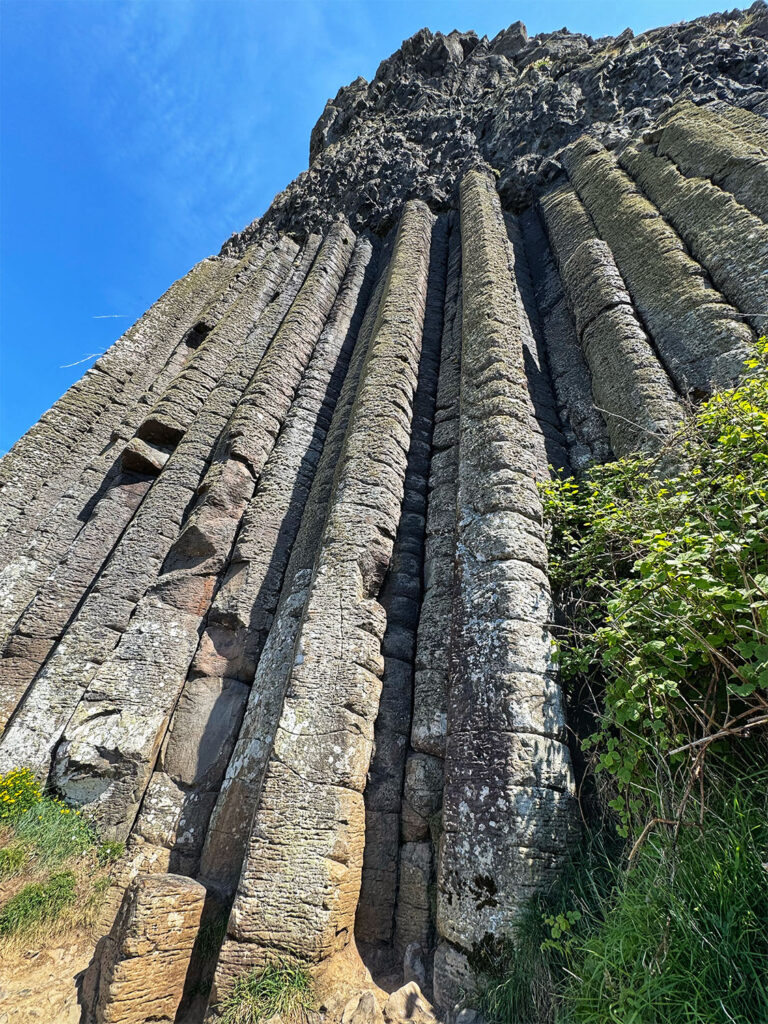
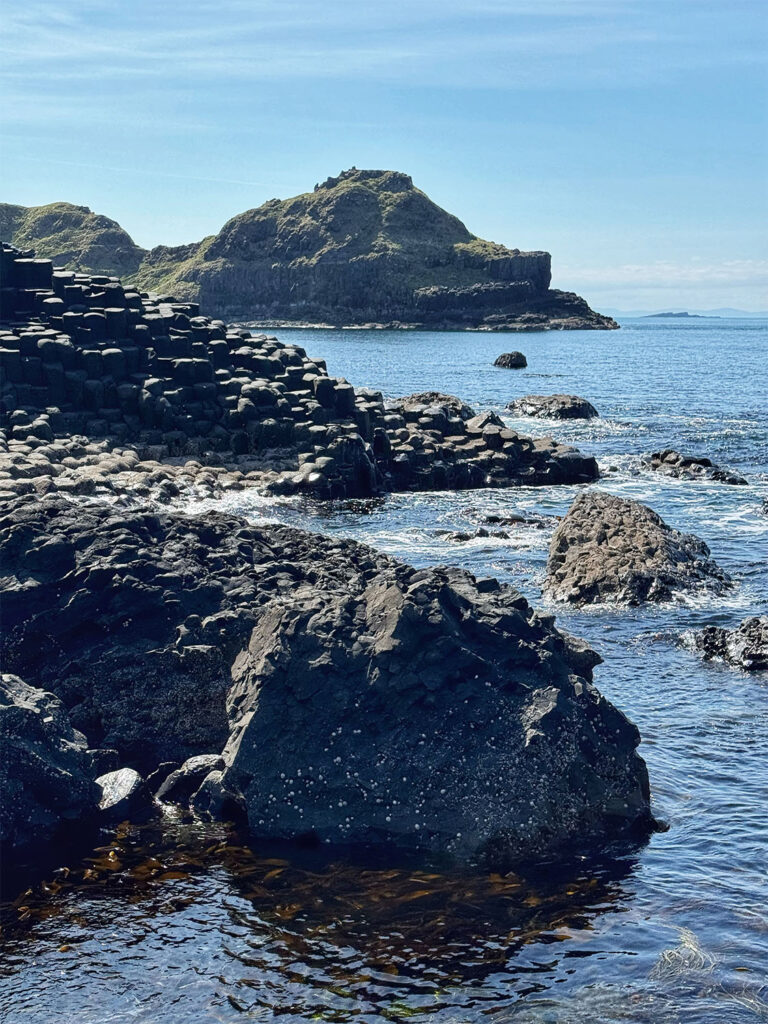
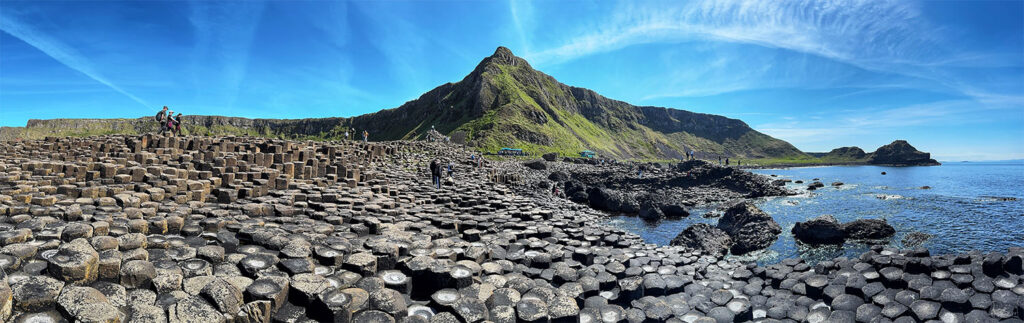
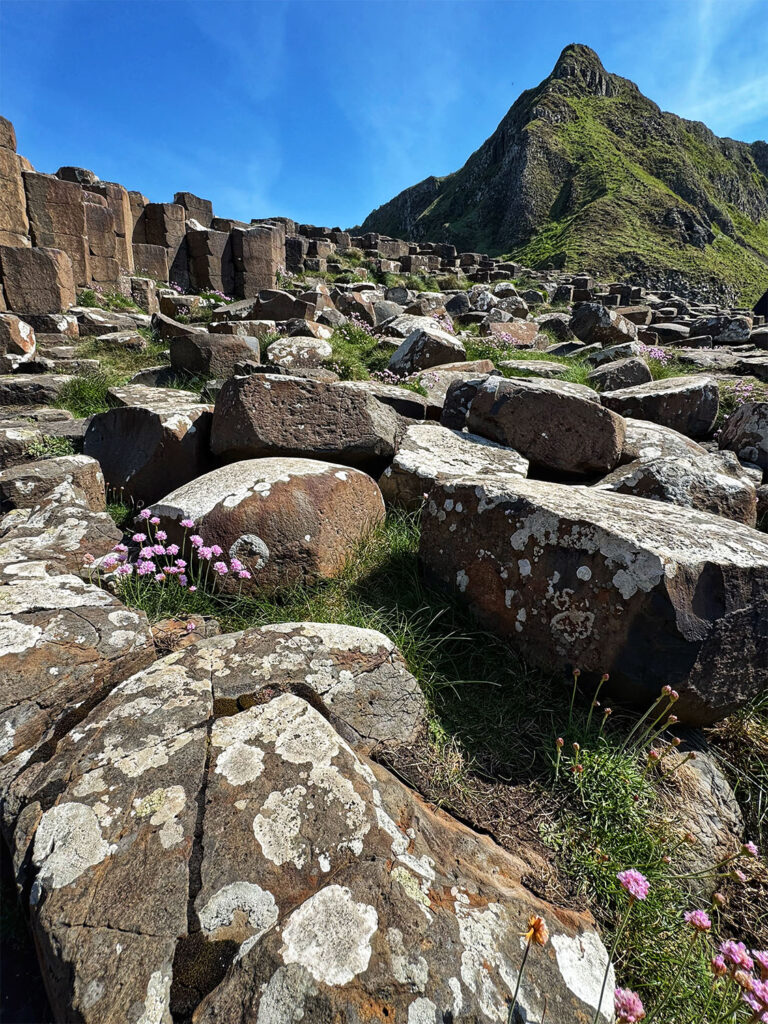
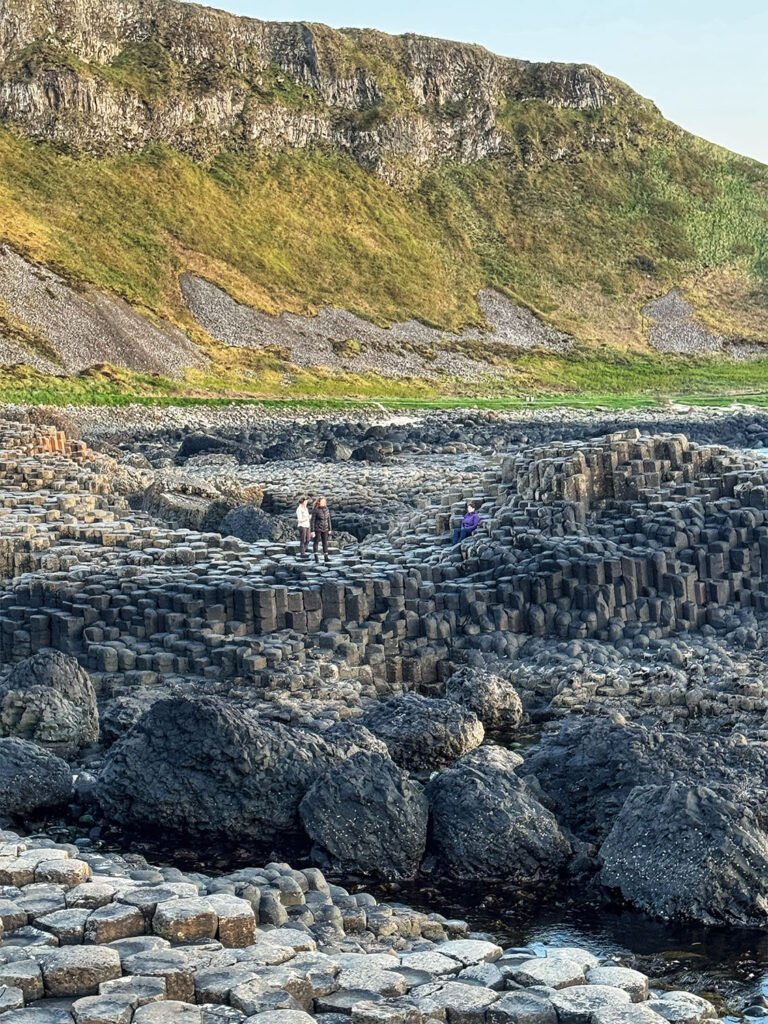
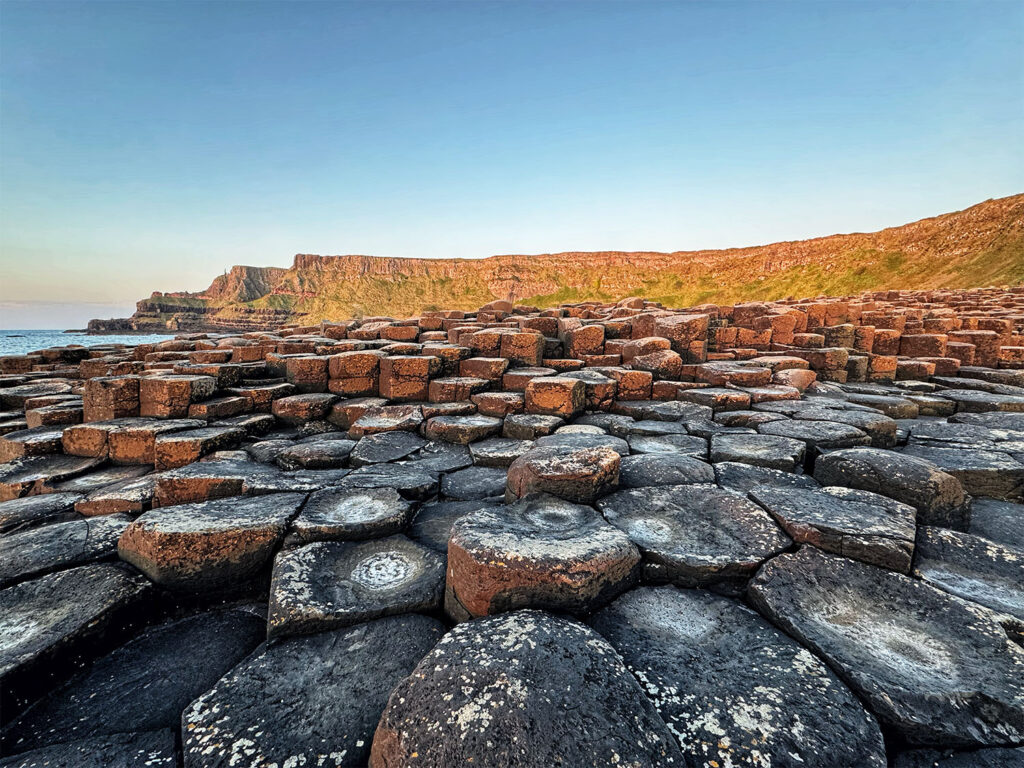
Eventually, we reached a fork in the path and descended a steep staircase toward the Giant’s Causeway (there’s also a shuttle bus from the visitor center at our hotel for those less inclined to climb). At the base, we came across The Organ Pipes, a striking rock formation of tall, vertical columns that resemble the pipes of a church organ. A short distance later, we finally arrived at the Giant’s Causeway itself – an extraordinary geological wonder comprising around 40,000 interlocking basalt columns. Their flat tops form natural stepping stones that stretch into the sea. Formed by ancient volcanic activity, the site reminded me of Iceland’s Reynisfjara Black Sand Beach and sections along the Laugavegur Trek. Though the area was busier than the rest of our hike, our guide mentioned it was relatively quiet by typical standards, so we were fortunate.
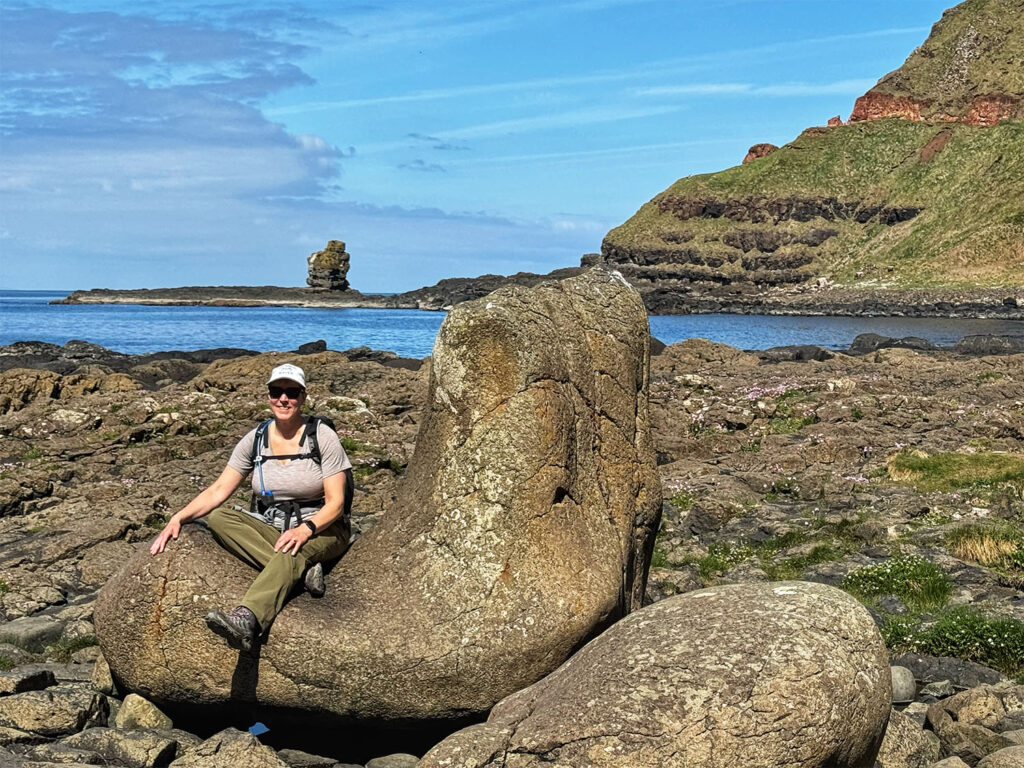
The Causeway is steeped in mythology. According to legend, the Irish giant Finn McCool built the Causeway to confront his Scottish rival, Benandonner, but upon seeing the size of Benandonner, Finn retreated. His clever wife disguised Finn as a baby and placed him in a cradle. When Benandonner saw the “child“, he panicked, imagining the father must be a giant beyond comprehension. Benandonner fled back to Scotland, destroying the causeway behind him. On his way, he lost a boot – now a well-known landmark visitors can even sit on.
We dined at Gray’s in Bushmills, another wonderful restaurant choice, although not within walking distance of the hotel. Later in the evening, we returned to the Giant’s Causeway to watch the sunset. While it was lovely, the area was more crowded than the previous night’s view point, and I found myself missing the tranquility of that earlier experience.
Day 6 Binevenagh
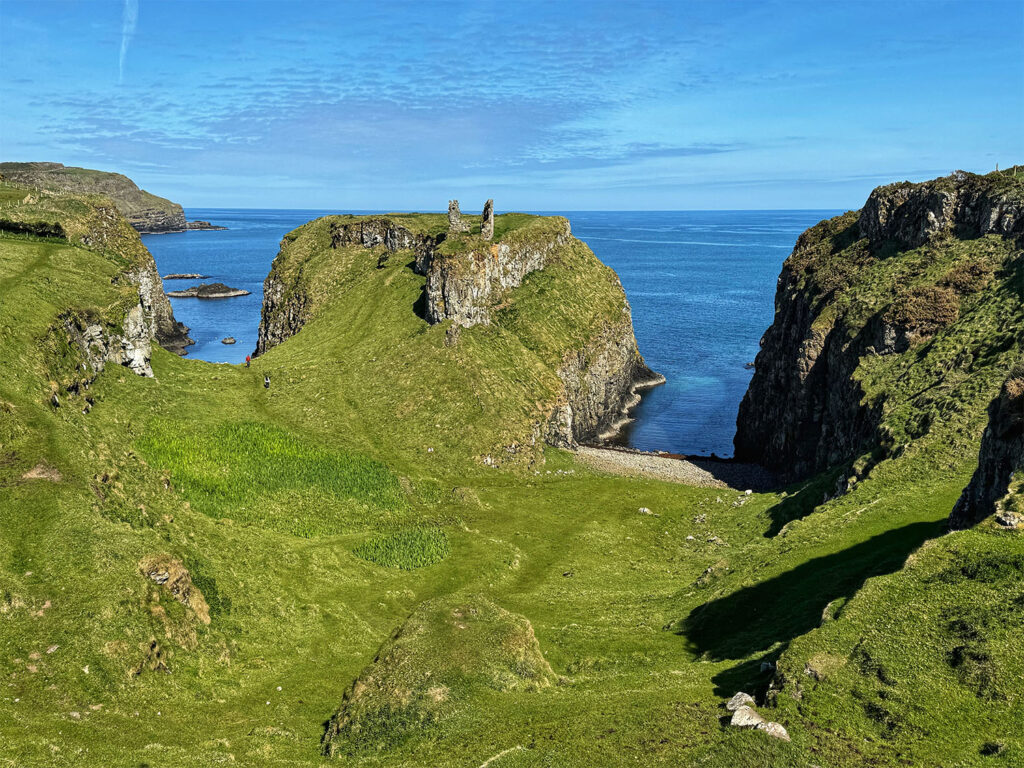
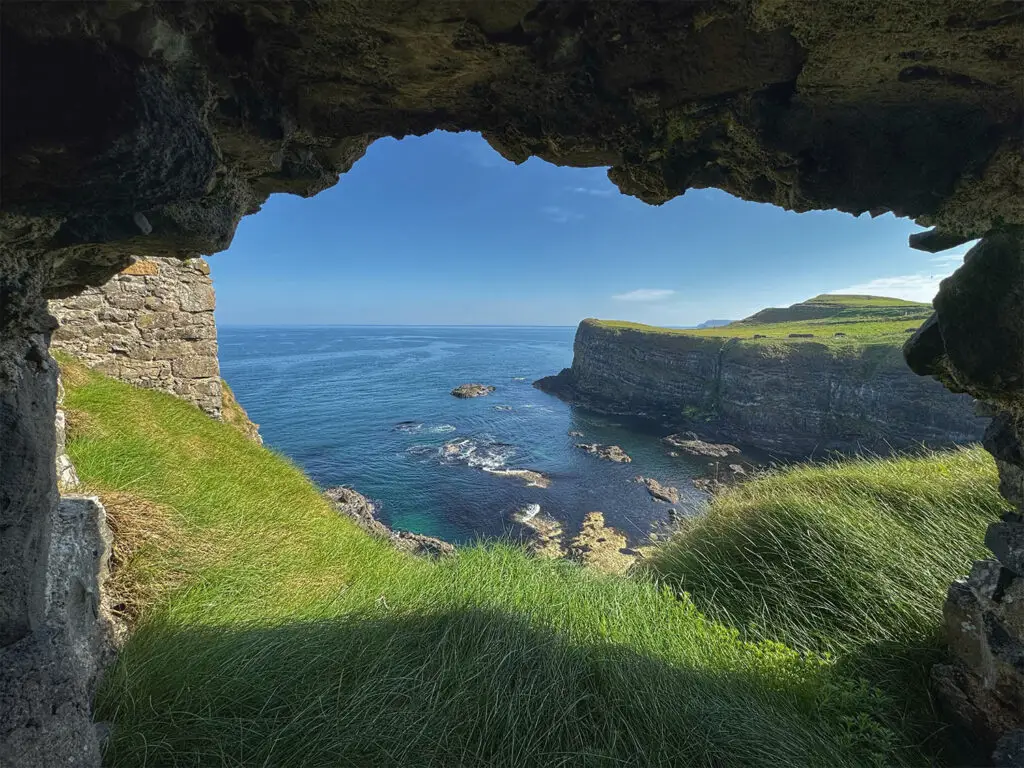
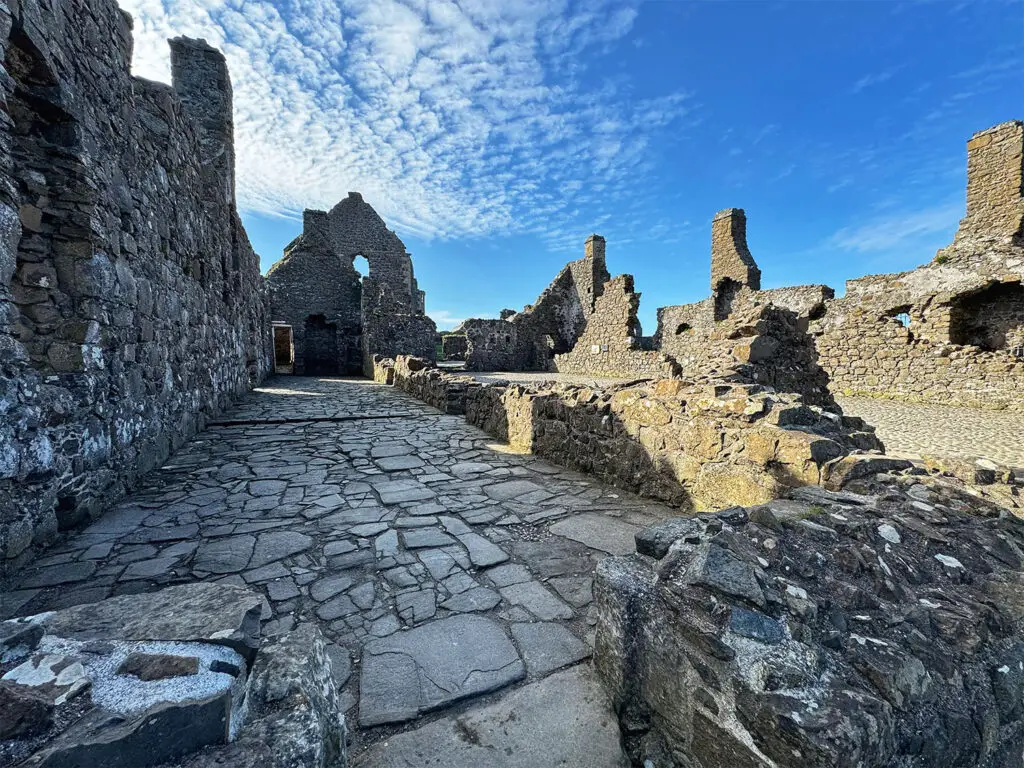
I woke once again to blue skies – eight days in a row. Am I sure I’m still in Ireland? After breakfast, we set off westward toward Binevenagh, a striking mountain in County Londonderry. Only a few minutes into the drive, our guide, surprised us with a stop at the dramatic ruins of Dunluce Castle. Perched high atop the cliffs, this photogenic fortress served as the exterior for Pyke Castle, the seat of House Greyjoy in Game of Thrones. While the site likely saw some form of habitation as early as the first millennium, the current ruins date mainly to the 16th and 17th centuries, and were once home to the feuding McQuillan and MacDonnell clans. I must have taken 100 photos – inside the ruins, from the outside, and through the castles windows that framed the sea like paintings. We lingered nearly an hour while our guide shared tales of its tumultuous history and imagined what life might have been like within these walls.
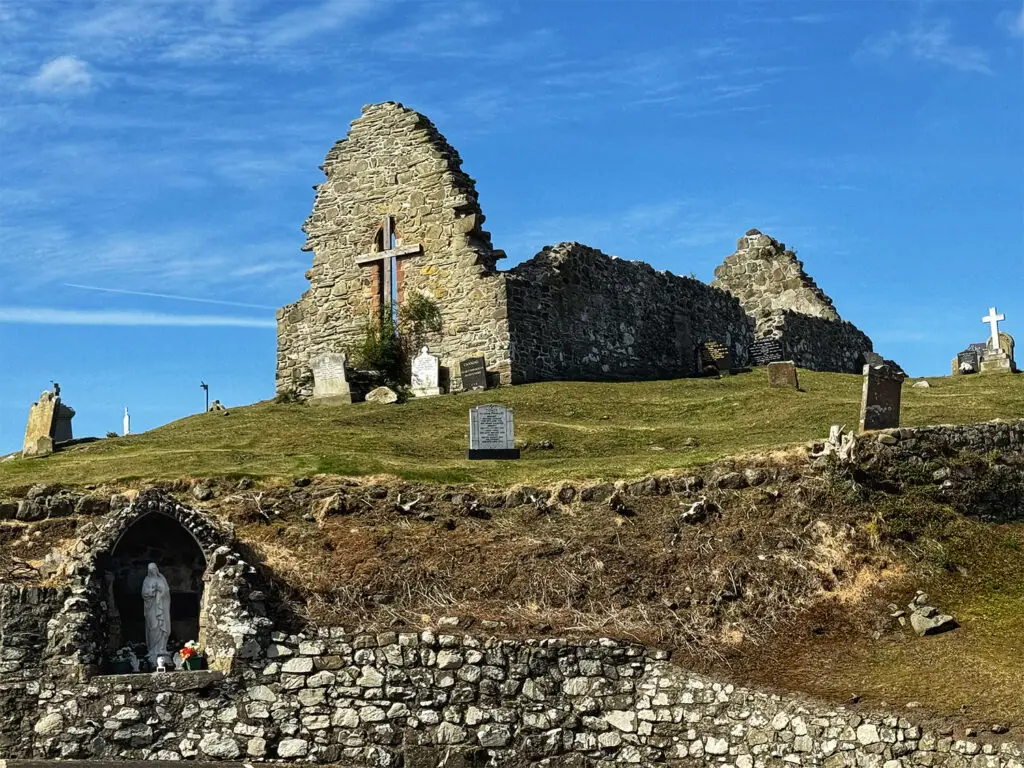
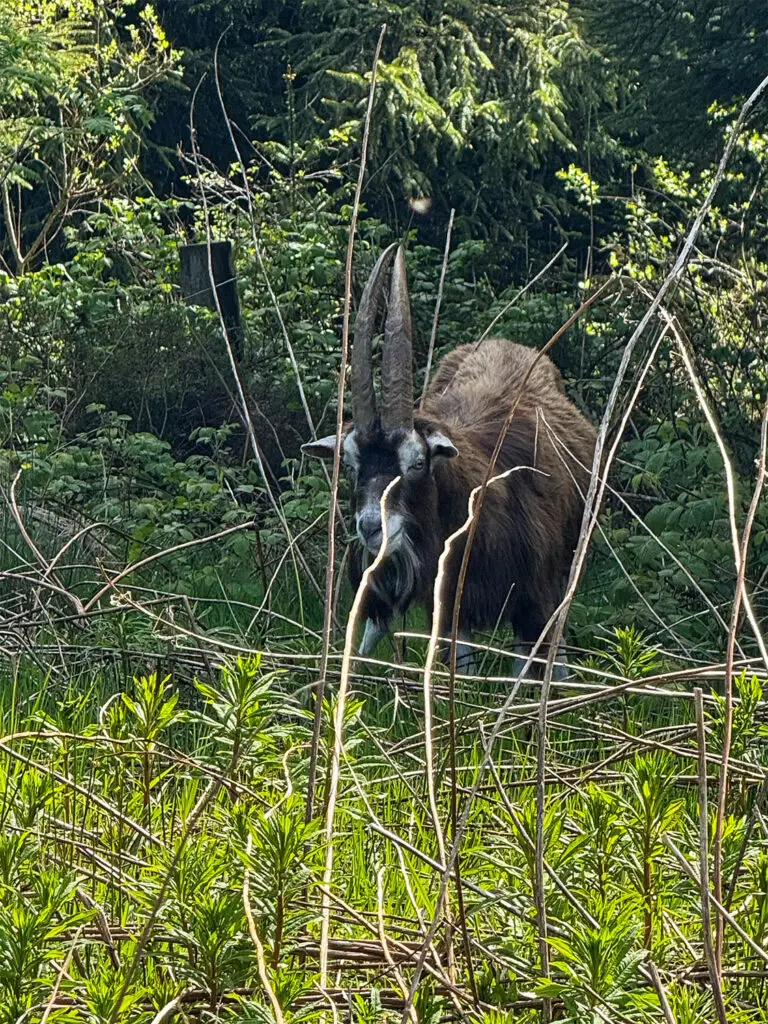
We continued our journey west, passing through Portrush, and by the Royal Portrush Golf Club, which is set to host the British Open this July. After about 45 minutes, we arrived at Saint Aiden‘s Parish in the quiet town of Limavady, nestled at the base of Binevenagh. This was meant to be the starting point of our hike, but we ran into an unexpected obstacle. The trail has been closed for some time due to a disagreement between hikers, the town, and the church. We left the church and continued driving up the mountain, eventually pulling off onto a dirt road signposted for Binevenagh Lake. In hindsight, I wish we’d simply driven all the way to the lake – the hike along the dirt track was unremarkable, though we did have a brief encounter with a small herd of goats, which added a bit of charm.
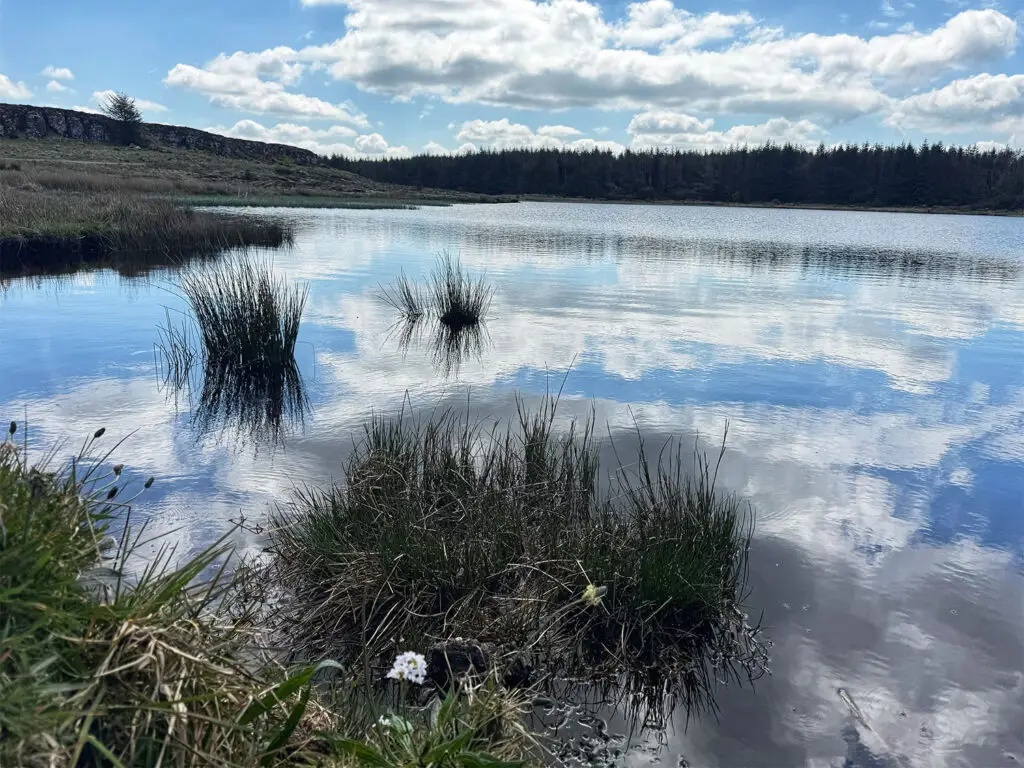
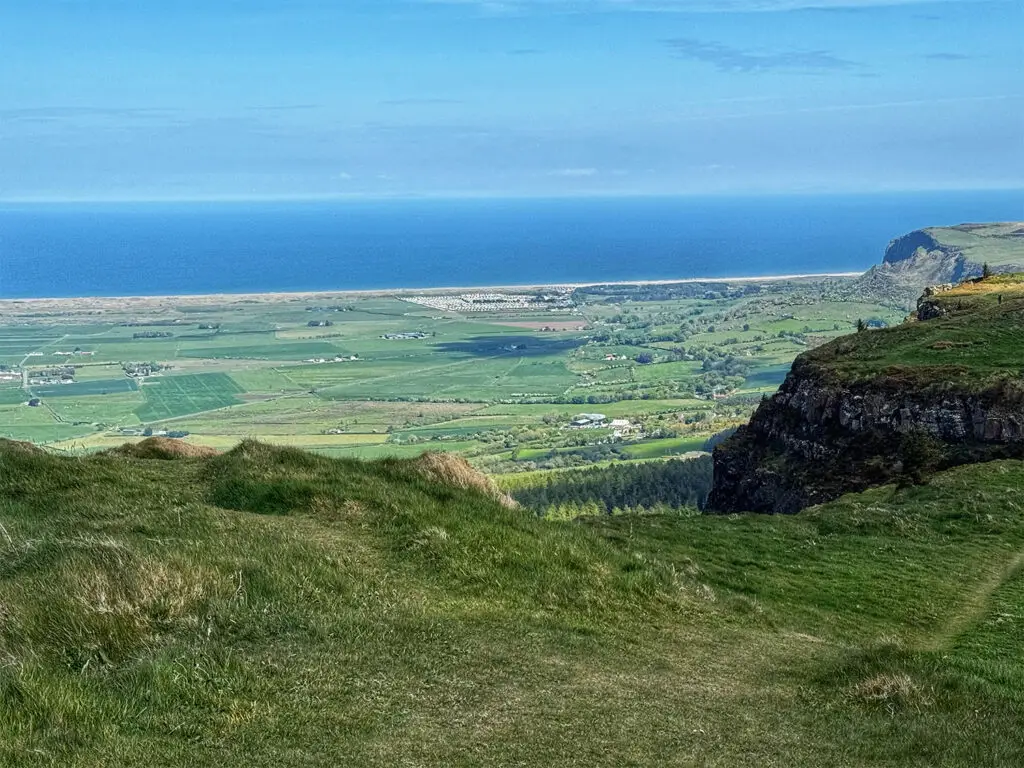
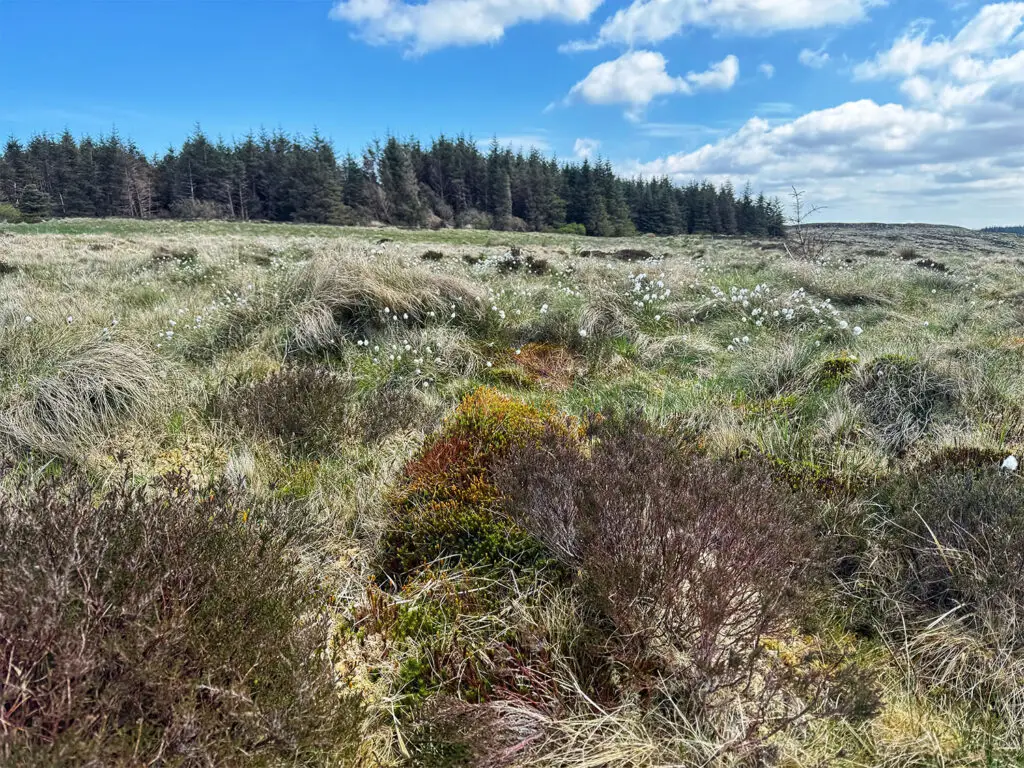
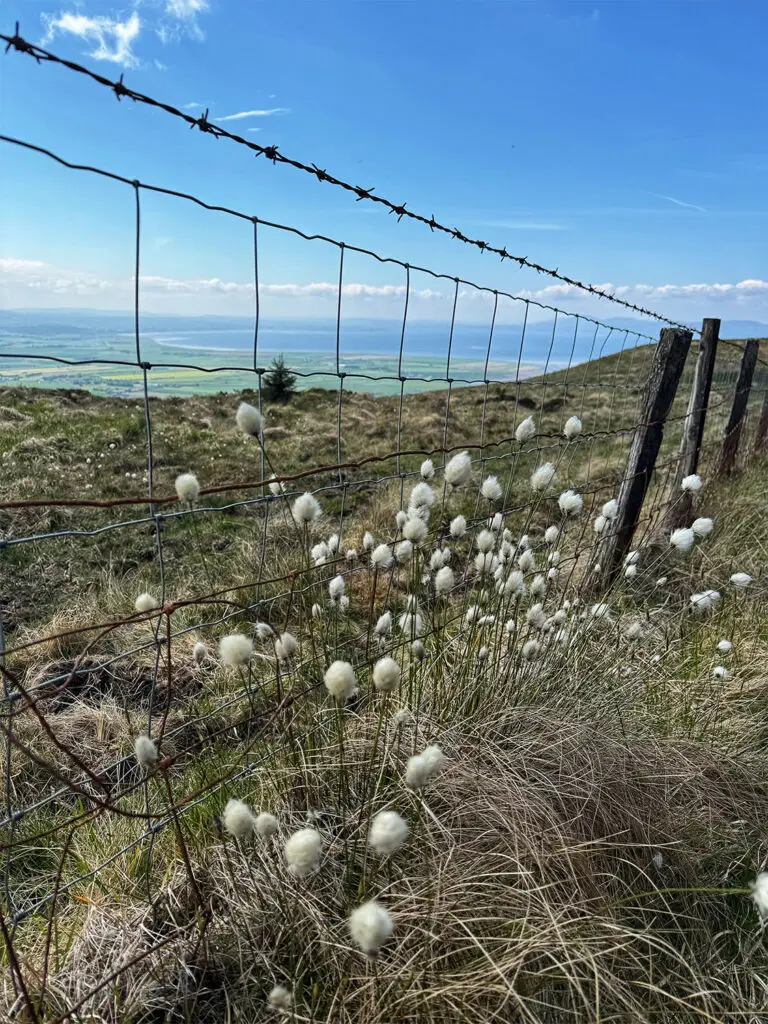
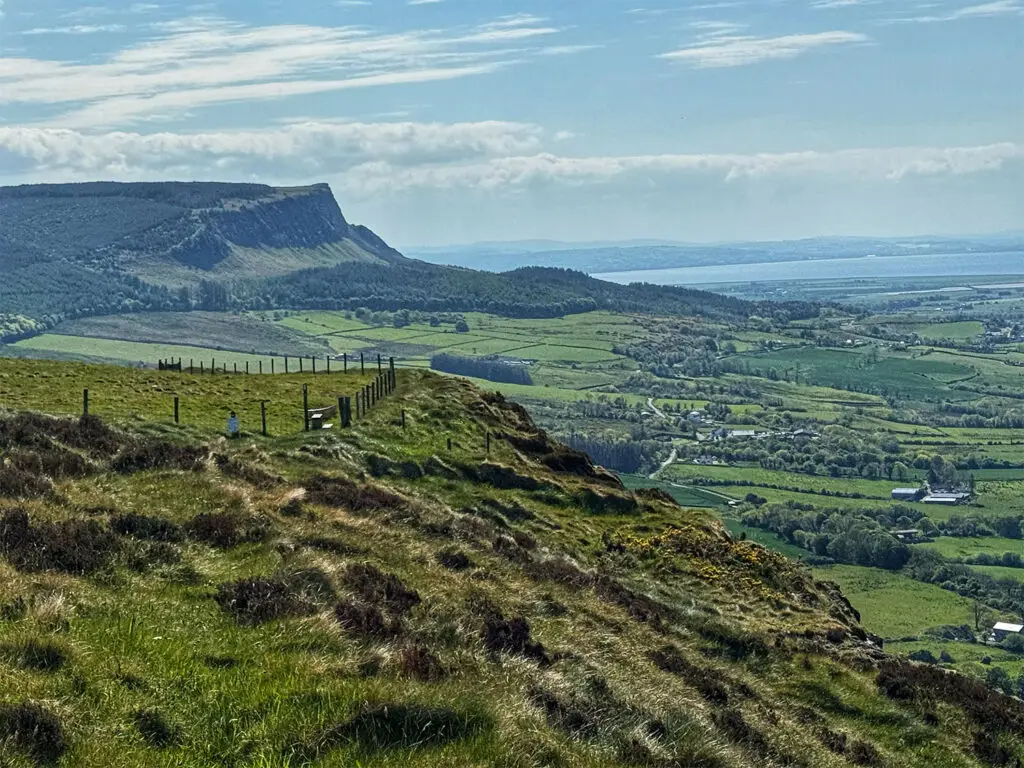
The artificial lake, perched on the cliffs, was a beautiful spot for lunch. From there, we looked out over the sweeping sands of Benone Strand. After eating, we set off toward the summit. The trail was fairly level, but let us through soft bogland, dotted with tufts of hare’s- tail, cotton grass swaying in the breeze. At the summit, we were rewarded with expansive views of Derry, the the Inishowen Peninsula, and even Donegal across the border in the Republic of Ireland. After soaking in the views, we retraced our steps back to the van.
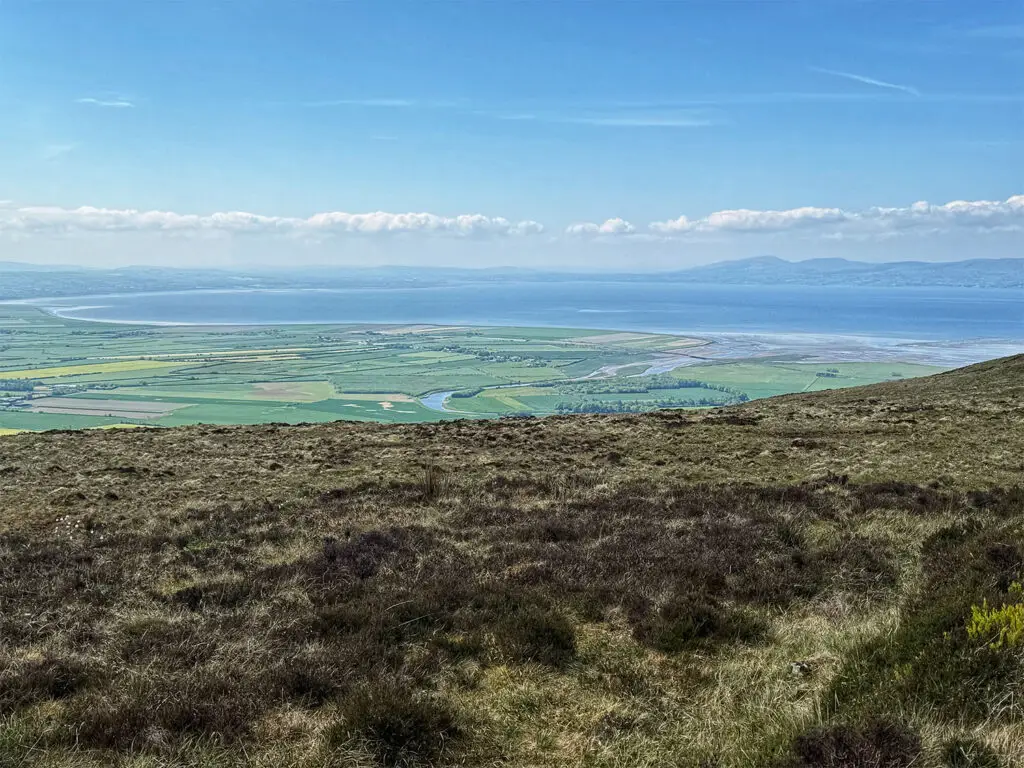
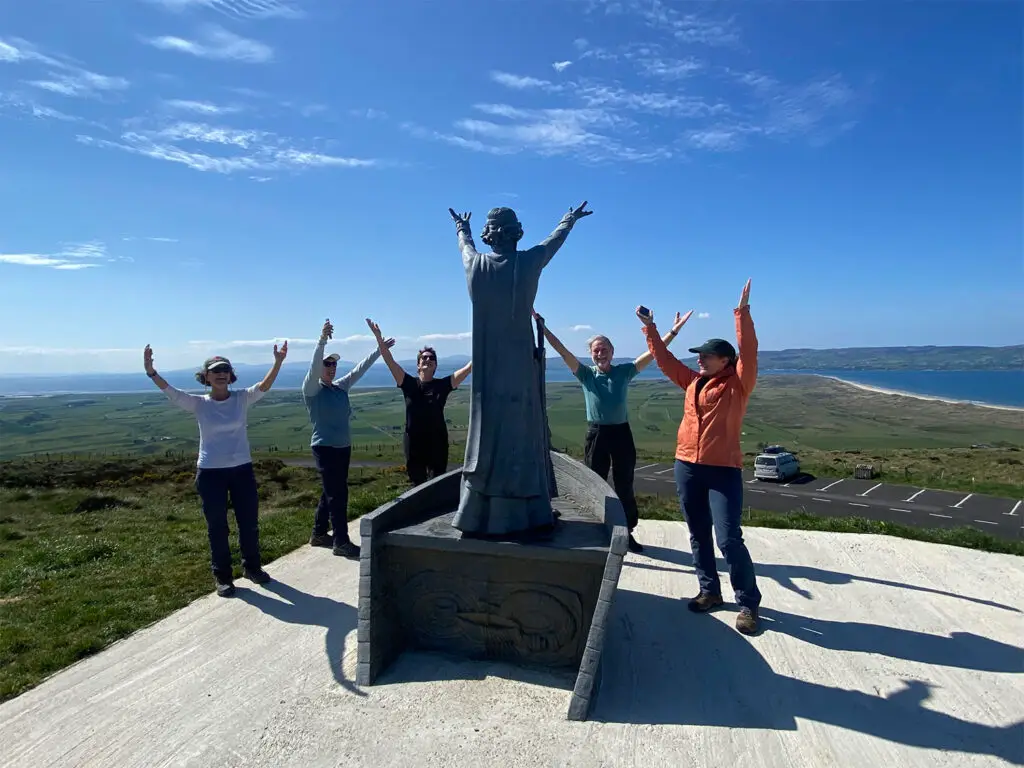
On the drive home, our guide opted for an unfamiliar route that looked promising on the map. It turned out to be a brilliant decision. We followed the Bishop’s Road, a scenic route that led us to the Gortmore Viewpoint, where we were greeted with panoramic vistas of Lough Foyle, the Inishowen Peninsula, and even the distant Scottish islands of Islay and Jura. A sculpture of Manannan Mac Lir, the Irish sea god, gazed out solemnly over the water. The statue had its own legend – it was stolen in 2015 and later discovered 300m away, badly damaged. A replacement was installed in 2016 at a cost of €10,000.
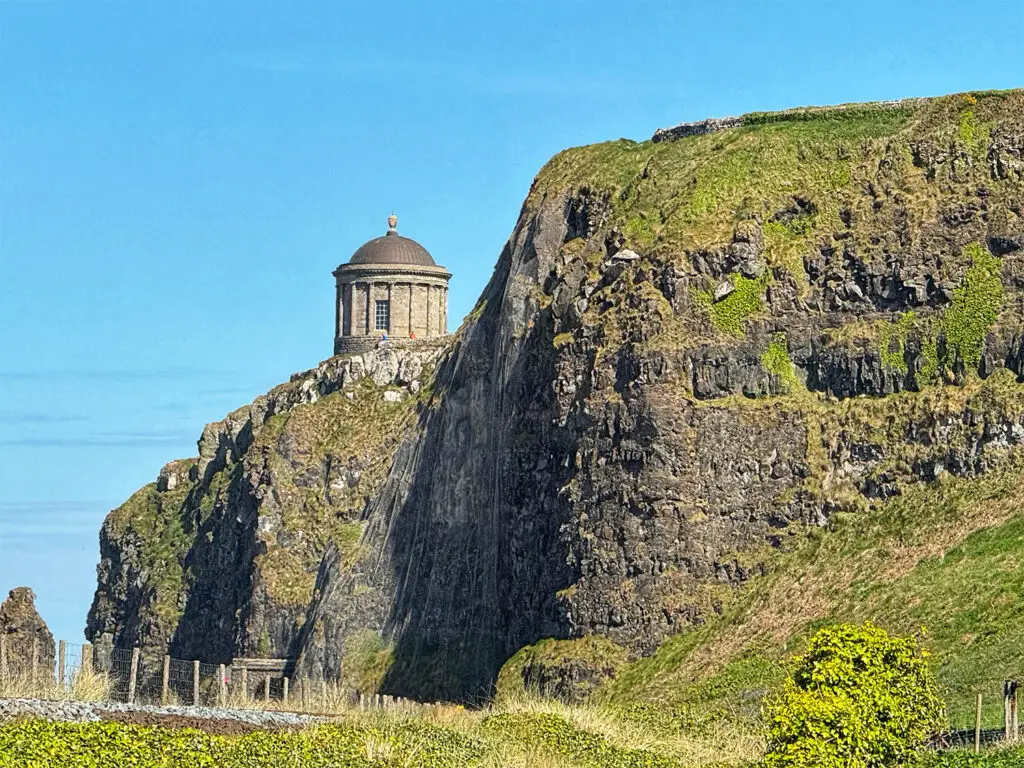
As we continued east, we passed Downhill Beach, another Game of Thrones filming location. The Mussenden Temple, perched dramatically on the cliffs, served as the exterior of Dragonstone in Season 2.
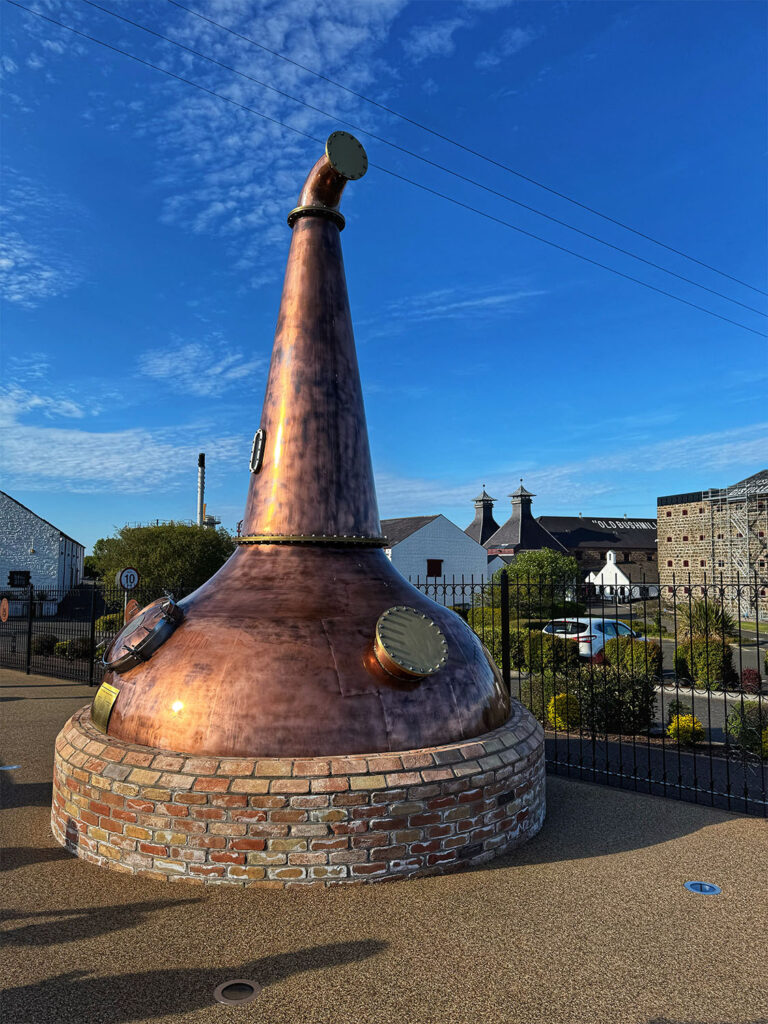
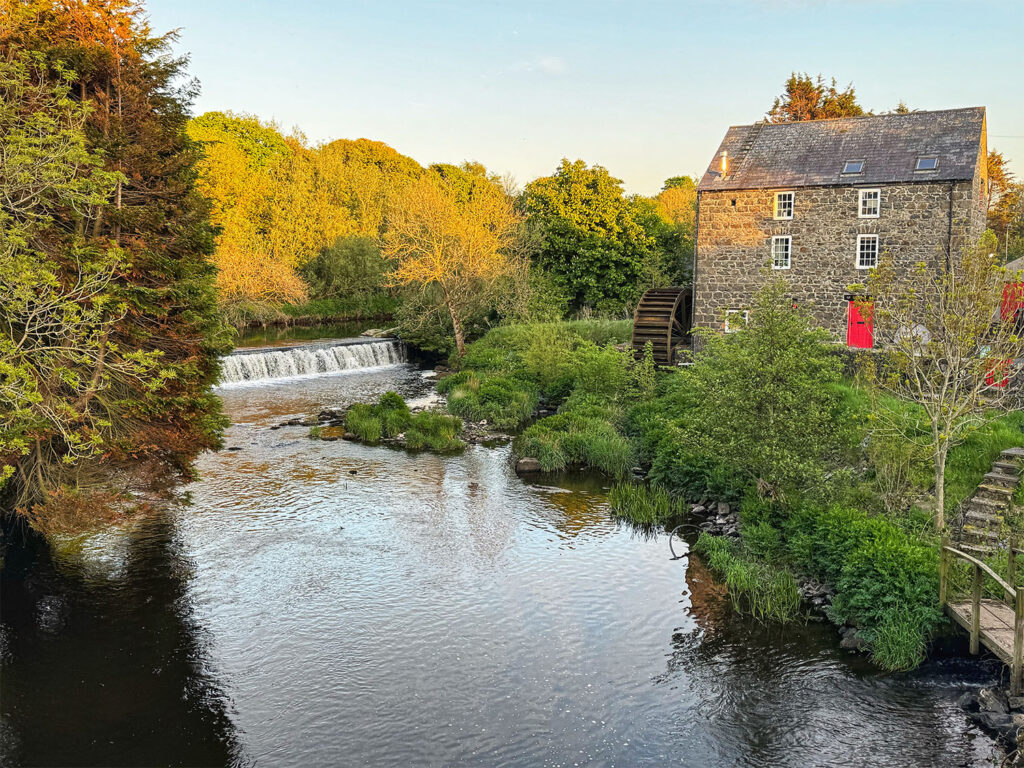
We returned to the hotel with just enough time to explore the Giant’s Causeway Visitor Center. It boasted one of the finest gift shops I’ve ever seen – and my wallet certainly took note. Dinner tonight was our farewell meal at Tartine in Bushmills. Before heading to the restaurant, we made a quick photo stop at the Bushmills Distillery. Established in 1608, it’s the oldest licensed distillery in the world. Tonight’s dinner was my favorite of the trip: baked hake served with a rich seafood, hot pot and creamy mashed potatoes. For dessert, I indulged in a slice of peanut butter cheesecake topped with whipped cream and ice cream – a decadent end to a memorable day. After dinner, we took a gentle stroll through Bushmills. The Bush River winds through the town, which owes its name to the many mills that once operated along its banks. As the Irish often do, they name the place, exactly as it was.
We returned to our hotel, just in time for one final walk westward to watch the sunset – our last from the Northern Coast.
Day 7 Derry/Londonderry
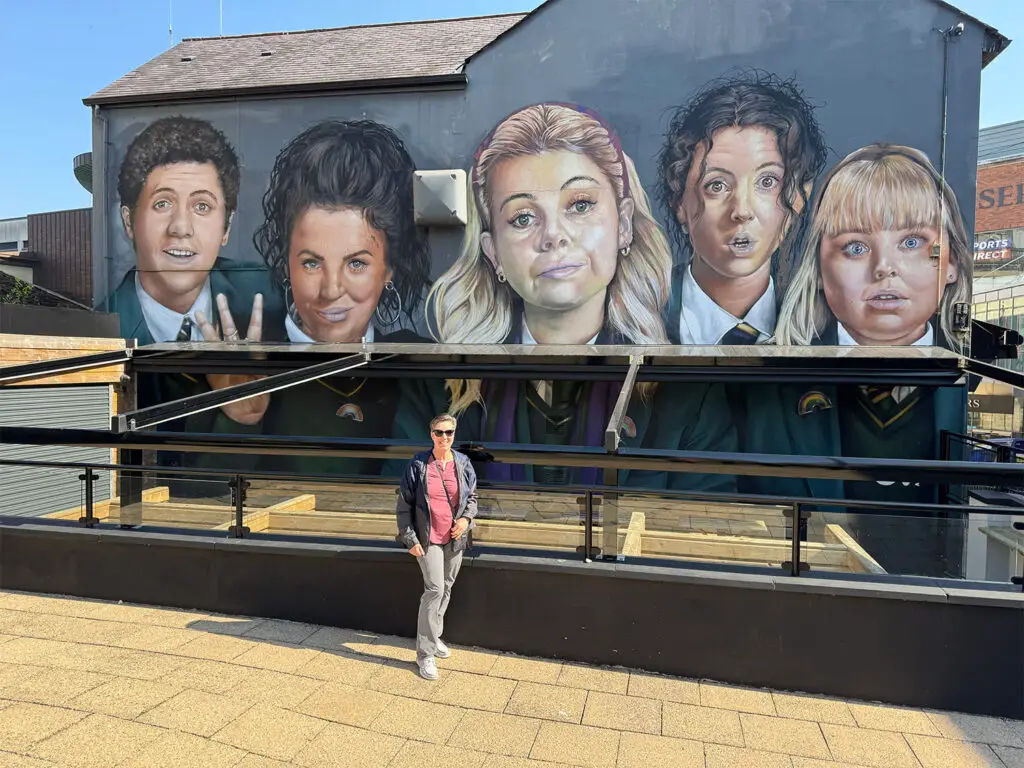
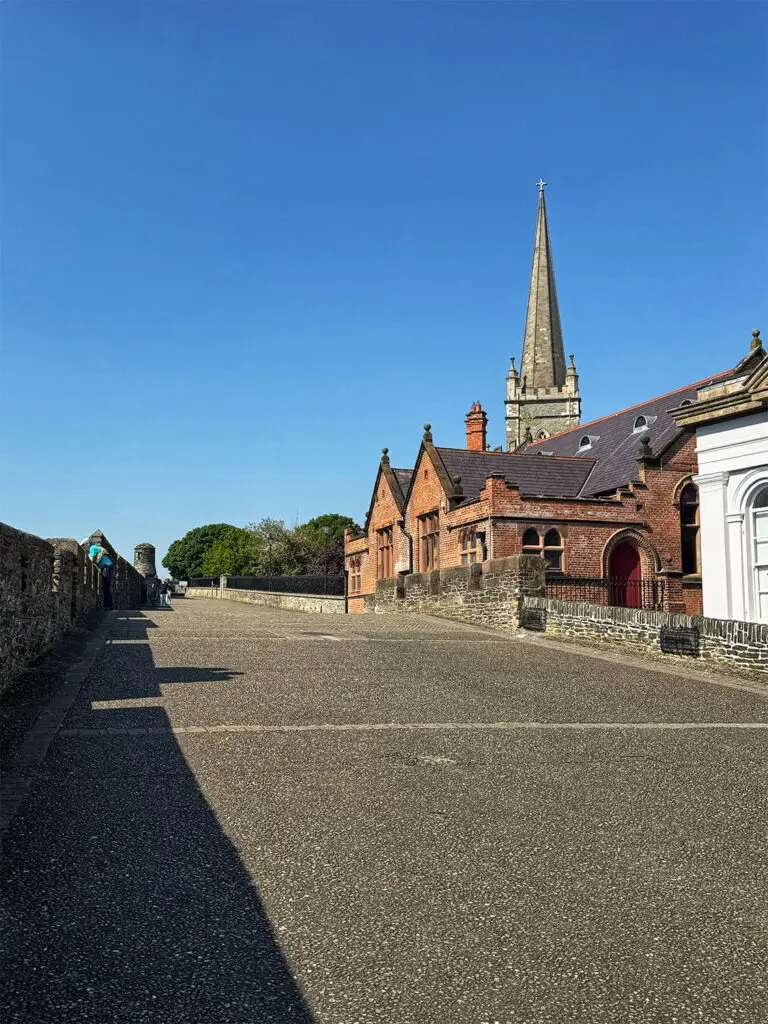
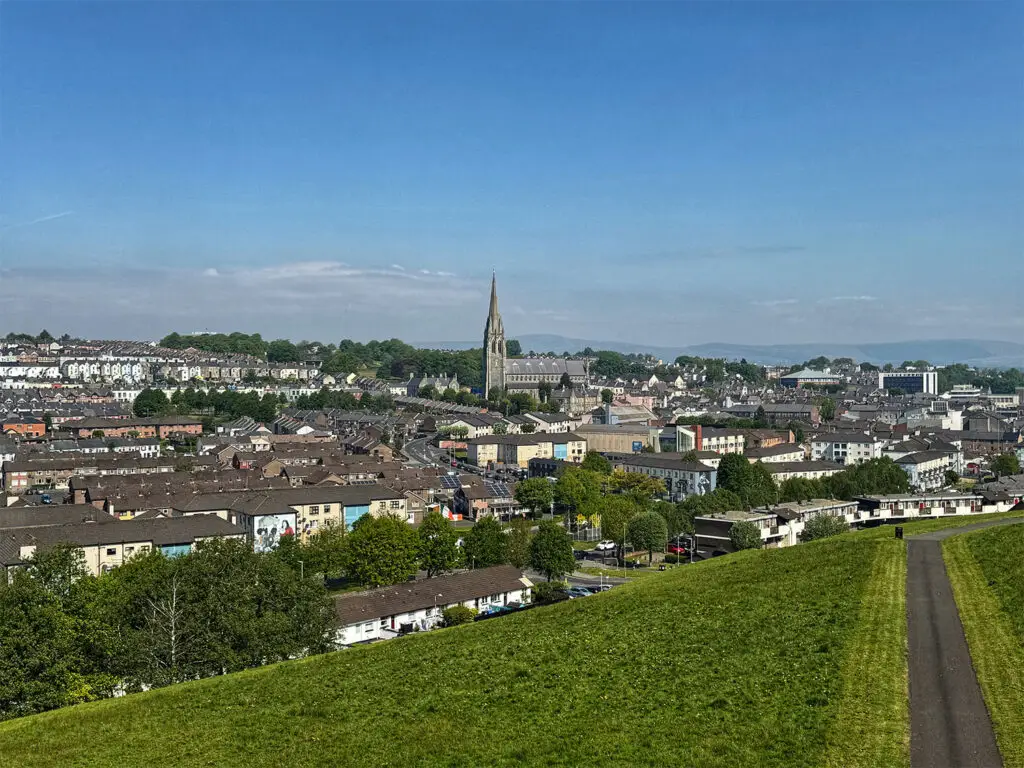
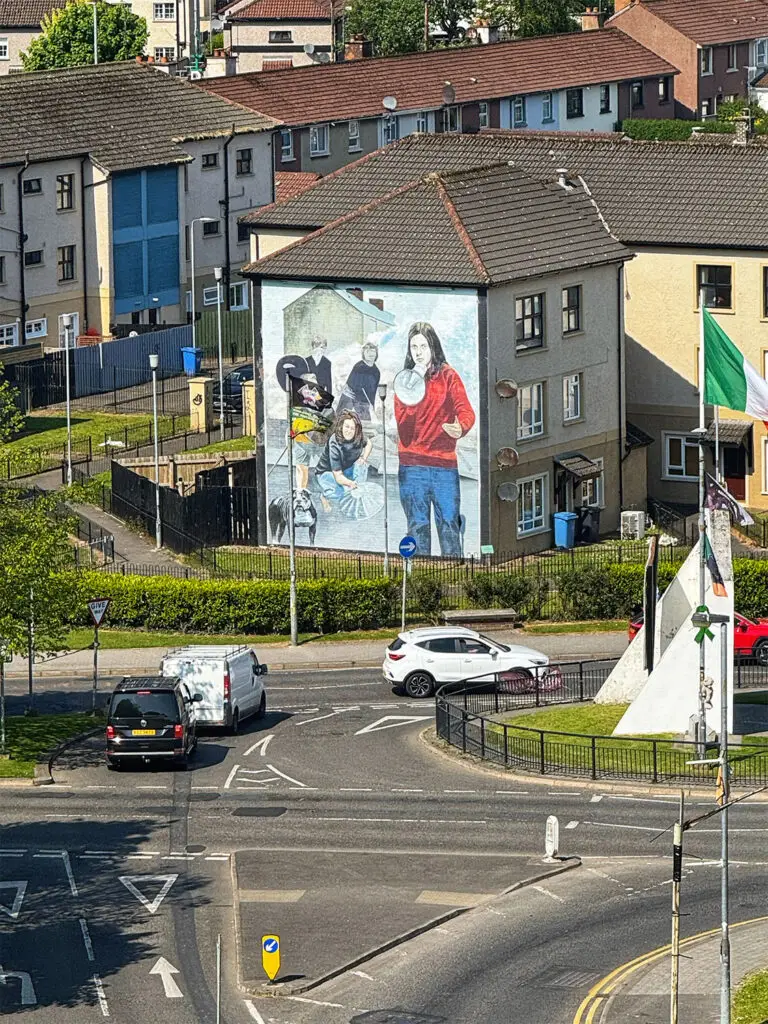
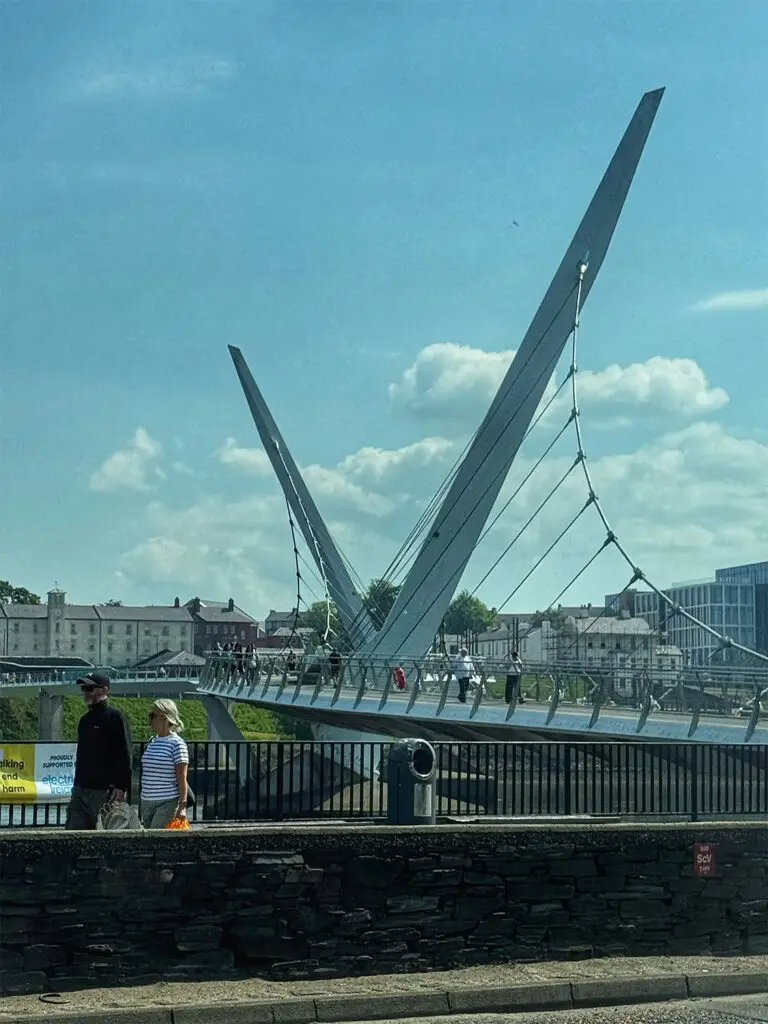
I was genuinely sad to say goodbye to the Causeway Hotel – it had been such a warm and memorable place to stay. Our group piled into the van for one final drive together. The morning journey took about an hour and by 10 AM we had arrived in Derry. Upon arrival, we were greeted by our guide from Martin McCrossan City Tours for a fast paced, yet fascinating, walking tour of the walled city. Our first stop was the iconic Derry Girls mural, located just outside a sleek new shopping center.
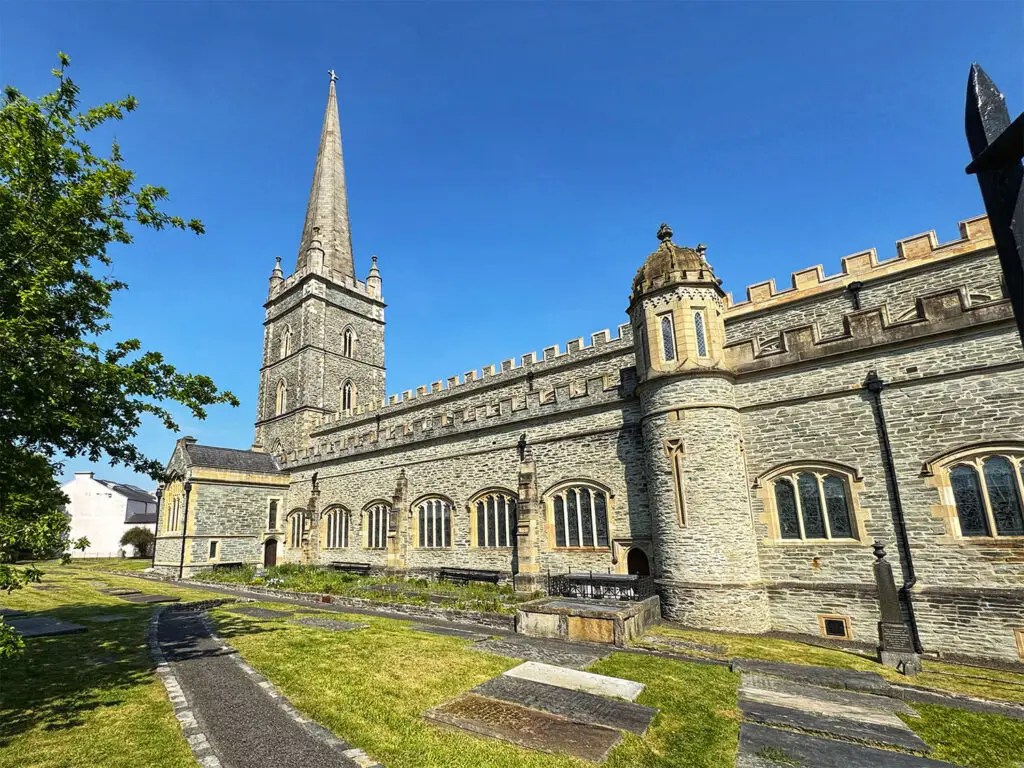
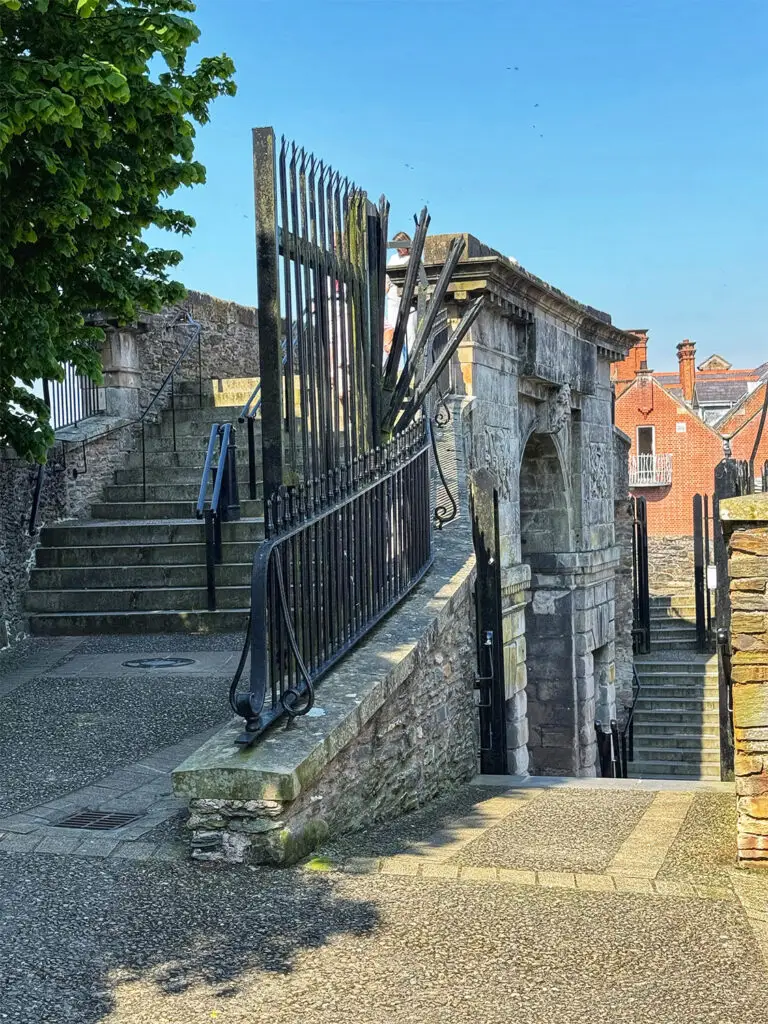
Our guide was exceptional – engaging, knowledgeable, and full of both historical insight and local anecdotes. As we walked, we learned about the city’s ancient gates, powerful memorials, and the evocative, Bogside murals, each one layered with meaning. One particularly striking part of the tour was the story of the Apprentice Boys of Derry, a Protestant fraternal society established in 1814 to commemorate the Siege of Derry in 1689, when Protestant defenders held off the forces of the Catholic King James II. Legend has it that 13 apprentices closed the city gates in December 1688, preventing Jacobite forces from entering. The societies commemorative parades still take place today and remain a point of cultural and political tension.
After our city tour ended, it was time for heartfelt farewells. This had been such a wonderful group of people to explore Northern Ireland with, and I felt truly lucky to have shared the experience with them. Now it was off to Galway for the start of a new adventure with a new group of hikers tomorrow.